Vindication for He Jiankui? Seven years after the Chinese scientist’s pioneering work landed him in jail, scientists and ethicists are exploring the inevitably of gene edited babies

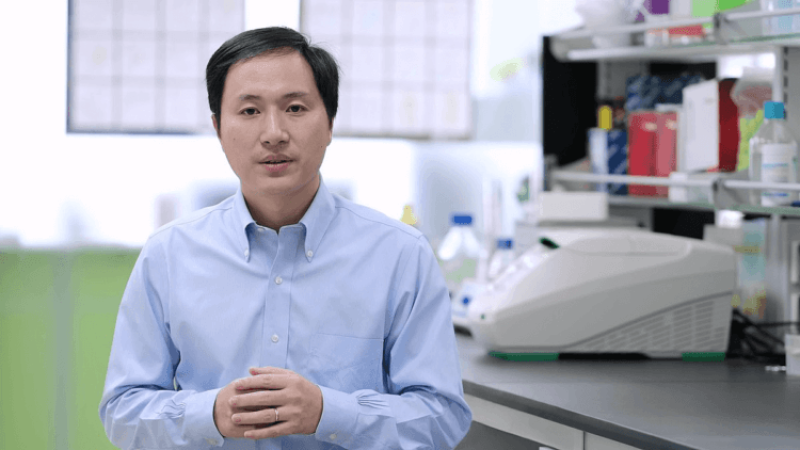
Challenging bioethical taboos: Chinese scientist He Jiankui who modified the genes of human embryos to protect them from HIV reopens his lab
Credit: The He Lab, CC BY 3.0, via Wikimedia Commons

A Chinese scientist horrified the world in 2018 when he revealed he had secretly engineered the birth of the world’s first gene-edited babies.

His work was reviled as reckless and unethical because, among other reasons, gene-editing was so new and the technology’s full risks were unknown.

China imprisoned the scientist, He Jiankui, for three years for violating medical regulations.

Mis- and disinformation are distorting science and public policy. Subscribe to our Daily and Weekly Digests for incisive coverage of ‘disruptive’ innovations in AI, agricultural biotechnology, food, chemicals, nuclear energy, vaccines, and other disruptive innovations.

Fast forward to today: Mainstream scientific organizations are encouraging very careful basic research to explore gene-editing and human reproduction. But they still warn any attempts to create more genetically modified children anytime soon should remain strictly off limits.

Now, however, Silicon Valley venture capitalists, futurists, East Coast entrepreneurs, and pronatalists — who fear falling birth rates pose an existential threat to the human race — are eager to push the technology forward. And that’s kindling both great hopes and intense fears.

…
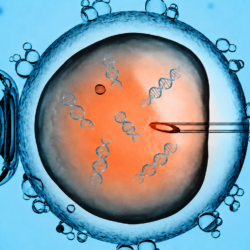
U.S. regulations prohibit editing genes in embryos that could become babies. But that could change, given the Trump administration’s deregulatory stance and support for reproductive technologies like in vitro fertilization, some observers say.


This is an excerpt. Read the original post here

Related Articles

Infographic: Global regulatory and health research agencies on whether glyphosate causes cancer

Infographic: Global regulatory and health research agencies on whether glyphosate causes cancer

Does glyphosate—the world's most heavily-used herbicide—pose serious harm to humans? Is it carcinogenic? Those issues are of both legal and ...

Most Popular

ChatGPT-Image-Mar-10-2026-01_39_01-PM
Viewpoint—“Miracle molecule” debunked: Why acemannan supplements don’t work
Screenshot-2026-09-17-at-1.07.08-PM
'We are dangerously addicted to antidepressants': Should we heed RFK Jr.’s sobering warning?
Screenshot-2026-09-03-at-10.51.20-AM
Viewpoint: Why do online health lies outlive the evidence that debunks them? Read "Everyone Else Is Lying to You"
ChatGPT-Image-Sep-23-2026-01_52_03-PM
Viewpoint: 4 very real AI doomsday scenarios
ChatGPT-Image-Sep-2-2026-02_03_32-PM
How much of a problem is AI’s water use?
Screenshot-2026-09-23-at-11.55.01-AM
How can we know if social media bans actually help teens?
Screenshot-2026-09-23-at-3.15.09-PM
Anti-GMO activists in Pakistan rev up their campaign of dire warnings
Screenshot-2026-09-22-at-11.40.28-AM
After Idaho criminalized abortion providers in 2022, one-third of obstetricians fled. Health care advocates are making rural health the case for repealing the ban
ChatGPT-Image-Aug-26-2026-12_46_16-PM
Viewpoint: The fake controversy over whether combining childhood vaccines is dangerous— a debate science resolved 25 years ago
ChatGPT-Image-Sep-22-2026-10_32_46-AM
There has been a slew of recent reports of food recalls and foodborne outbreaks. Do we face an escalating problem?
Screenshot-2026-09-17-at-12.00.30-PM
Investigative group ProPublica finds links between ectopic pregnancy deaths and abortion bans
Screenshot-2026-09-10-at-12.20.19-PM
'Jet fuel didn't melt the steel': 9/11 conspiracy theories debunked
glp menu logo outlined

Get news on human & agricultural genetics and biotechnology delivered to your inbox.