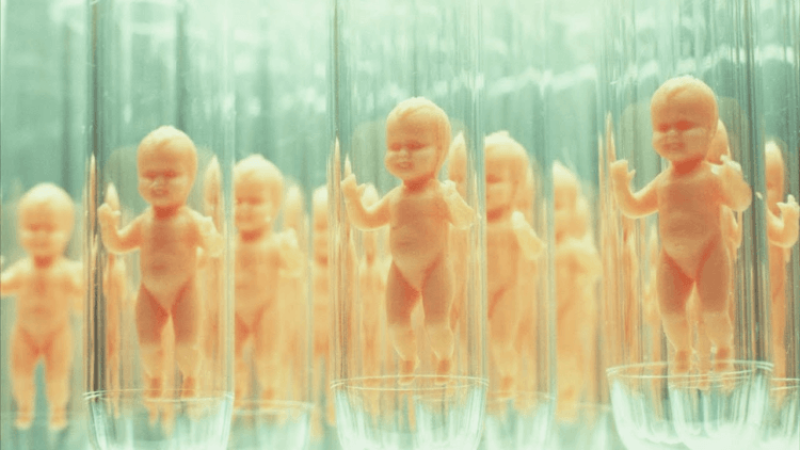

Subway ads promising parents their “best baby” are a sign that eugenics has returned in a sleek, consumer-friendly form, argues author Jan Grue in an essay for The Guardian. Grue, who has lived with a rare neuromuscular condition since childhood, warns that today’s “liberal eugenics” swaps state coercion for parental choice but keeps many of the old assumptions.
The ads from Nucleus Genomics claimed “height is 80% genetic” and “intelligence is 50%,” steering customers toward an IVF package that screens up to 20 embryos for genetic disorders as well as traits from eye color to insomnia and male-pattern baldness. Grue notes those figures are contested population-level heritability estimates. They don’t mean parents can reliably choose how tall or smart a child will be.
Eugenics once drew support across the political spectrum before culminating in forced sterilizations and, in Nazi Germany, mass murder. Now it has been rebranded. “In the 20th century, eugenics was a project for the nation state; in the 21st century, it has reinvented itself as the logical extension of capitalist individualism,” Grue writes.
Philosophers such as Nicholas Agar and Julian Savulescu have defended liberal eugenics as fundamentally different from its coercive predecessor. Meanwhile, prenatal screening has been routine for decades; in Denmark, over 95% of pregnancies in which Down syndrome is identified are terminated.
Grue argues that selecting for desirable traits inevitably means selecting against others. “Positive eugenics and negative eugenics are two sides of the same coin,” he writes. And the new ideal has a telling shape: “The ideal human is strikingly close to the ideal worker, someone who is smart, efficient and unlikely to ever take a sick day.”



The argument is personal. Diagnosed with spinal muscular atrophy (SMA) at age three, Grue spent his youth dreaming of a cure. When the drug nusinersen finally offered SMA patients real hope, genetic testing revealed he didn’t have SMA after all, but a rarer condition less likely to attract research funding. The news, he writes, “felt like a wave of sorrow, tinged with relief.”
He isn’t against cures — “If there was an actual cure for my condition, I would take it” — but notes that most disabilities stem from genetic variation interacting with “the wear and tear of the world,” not genes alone. “I believe we should direct our efforts toward making better societies rather than making better people,” he writes.
Invoking Hannah Arendt’s concept of natality, Grue counters the notion of a single “best baby”: with each birth, “something wholly unique comes into being.”