‘Stop farmers from being a science experiment; Get glyphosate off the market’

mark bittman large

The issues surrounding G.M.O.s — genetically modified organisms — have never been simple. They became more complicated last week when the International Agency for Research on Cancer declared that glyphosate, the active ingredient in the widely used herbicide Roundup, probably causes cancer in humans.

Roundup, made by Monsanto for both home and commercial use, is crucial in the production of genetically engineered corn and soybean crops, so it was notable that the verdict on its dangers came nearly simultaneously with an announcement by the Food and Drug Administration that new breeds of genetically engineered potato and apple are safe to eat. Which they probably are, as are the genetically engineered papayas we’ve been eating for some time. In fact, to date there’s little credible evidence that any food grown with genetic engineering techniques is dangerous to human health — unless, like much corn and soybeans, it’s turned into junk food. But, really, let’s be fair.

Fair, too, is a guess that few people are surprised that an herbicide in widespread use is probably toxic at high doses or with prolonged exposure, circumstances that may be common among farmers and farmworkers. There is a sad history of us acting as guinea pigs for the novel chemicals that industry develops. For this we have all too often paid with our damaged health.

We don’t need better, smarter chemicals along with crops that can tolerate them; we need fewer chemicals.

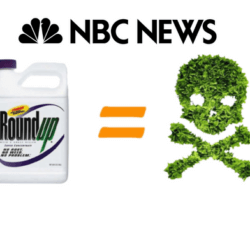
Meanwhile, how about getting glyphosate off the market until Monsanto can prove that it’s safe to use? There’s no reason to put the general population, and particularly the farming population, at risk for the sake of industry profits.

Read full, original article: Stop Making Us Guinea Pigs

Related Articles

Infographic: Global regulatory and health research agencies on whether glyphosate causes cancer

Infographic: Global regulatory and health research agencies on whether glyphosate causes cancer

Does glyphosate—the world's most heavily-used herbicide—pose serious harm to humans? Is it carcinogenic? Those issues are of both legal and ...

Most Popular

Crumbling MAHA Stage Portrait
Cataloging the RFK Jr.-MAHA crushing midterm collapse
Microscopic IVF Egg Injection
With technical barriers to human embryo editing falling, ethical concerns escalate
ChatGPT-Image-Mar-10-2026-01_39_01-PM
Viewpoint—“Miracle molecule” debunked: Why acemannan supplements don’t work
Blue Checklist in Centered Hand
Viewpoint: From Medicaid cuts to MAHA-backed anti-vaccine and chemical hysteria, voters reject Republicans’ science-skeptical agenda
Reaching Through the Woven Sky
Challenging genetic modification rejectionists: Our evolving food system has relied on science for thousands of years
Picture1
Viewpoint: How badly is the U.S. food-safety net fraying? FDA’s bungled handling of the tainted lettuce crisis deepens concerns over cuts to disease tracking and response
Hipster eugenics: better babies for billionaires
Viewpoint: “Positive eugenics”: Reviving a movement reviled and condemned for a century
Smiling-Woman-Over-Teal-Abstract-Shapes
Viewpoint: RFK Jr.’s latest foray into junk science: Even Kennedy’s hand-picked NIH director balks at appointment of crackpot mental health director
Bayer Crop Circle in Golden Wheat
Making fertilizer from thin air: Bayer’s gene-editing innovation could dramatically cut chemical fertilizer use in growing food
Screenshot-2026-10-29-at-11.18.34-AM
Viewpoint: ‘Just the flu’: Skipping your child’s flu shot could be a fatal mistake
Screenshot 2026-11-04 at 12.02
Ever wonder why AI can so easily be duped into manufacturing health misinformation?    
Neon Genome_ Fetal Dreamscape
The race to genetically engineer babies
Screenshot-2026-11-02-at-11.34.28-AM
Farmers are collateral damage in the PFAS “forever chemicals” crossfire. Here’s what they need to know.
Screenshot-2026-11-03-at-12.31.18-PM
Gene editing once viewed with suspicion by UK  farmers, upwards of 90% now open to their sustainability benefits
glp menu logo outlined

Get news on human & agricultural genetics and biotechnology delivered to your inbox.