How do astronauts deal with microbes in space?

The GLP aggregated and excerpted this blog/article to reflect the diversity of news, opinion and analysis. 

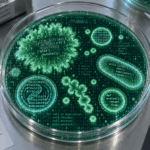
State-of-the-art molecular analysis of dust samples from the International Space Station (ISS) has been employed to reveal new information about some of the potential bacterial agents present in the astronauts’ space environment. The research reported presence of the opportunistic bacterial pathogens that are mostly innocuous on Earth but can lead to infections that result in inflammations or skin irritations.

The ISS is a unique built environment, experiencing microgravity, space radiation and elevated carbon dioxide, and constant presence of humans. Understanding the nature of the communities of microbes — the microbiome — in the ISS is key to managing astronaut health and maintenance of ISS equipment.

Traditional microbiology techniques, which culture bacteria and fungi in the lab, have previously been used to assess the composition of this community. Now scientists from NASA’s Jet Propulsion Laboratory have used the latest DNA sequencing technologies to rapidly and precisely identify the microorganisms present on the ISS, filling in the gaps left by traditional methods, and highlighting pathogens that may pose a threat to astronauts.
The team collected air filter samples and vacuum bag dust from the ISS. They then compared these samples with dust from NASA ‘cleanrooms’, environmentally controlled and closed built spaces on Earth. Their results show that Actinobacteria, a type of bacteria associated with human skin, made up a larger proportion of the microbial community in the ISS than in the cleanrooms, which the authors conclude could be due to the more stringent cleaning regimes possible on Earth.

Read full, original post: What’s In The Microbiome Of Space?

Related Articles

Infographic: Global regulatory and health research agencies on whether glyphosate causes cancer

Infographic: Global regulatory and health research agencies on whether glyphosate causes cancer

Does glyphosate—the world's most heavily-used herbicide—pose serious harm to humans? Is it carcinogenic? Those issues are of both legal and ...

Most Popular

ChatGPT-Image-Mar-10-2026-01_39_01-PM
Viewpoint—“Miracle molecule” debunked: Why acemannan supplements don’t work
ChatGPT-Image-Sep-2-2026-02_03_32-PM
How much of a problem is AI’s water use?
ChatGPT-Image-Aug-26-2026-12_46_16-PM
Viewpoint: The fake controversy over whether combining childhood vaccines is dangerous— a debate science resolved 25 years ago
ChatGPT-Image-Sep-22-2026-10_32_46-AM
There has been a slew of recent reports of food recalls and foodborne outbreaks. Do we face an escalating problem?
ChatGPT-Image-Sep-18-2026-01_38_09-PM
Microsoft exec: AI is a ‘doom loop’ scraping the ‘largest theft of labor in human history'
ChatGPT-Image-Sep-10-2026-01_44_53-PM
Viewpoint: Why medical and health nonsense spreads so casually on pop culture media
Screenshot-2026-09-17-at-12.00.30-PM
Investigative group ProPublica finds links between ectopic pregnancy deaths and abortion bans
ChatGPT-Image-Sep-21-2026-03_41_02-PM
Viewpoint: Does IQ really measure intelligence? BBC gets it wrong.
ChatGPT-Image-Sep-23-2026-11_47_32-AM
Facing pressure from Trump administration, fewer hospitals offer medical treatment for transgender minors
Screenshot-2026-09-16-at-3.14.20-PM
19%: Plunging support for Trump-RFK, Jr. measles vaccine safety oversight
ChatGPT-Image-Sep-17-2026-11_03_54-AM-2
AI sparks a bioweapons race
Screenshot-2026-09-16-at-2.26.42-PM
Viewpoint: How to ecologically damage America’s forests: Ban glyphosate
ChatGPT-Image-Sep-17-2026-12_28_43-PM
Vitamin D, omega-3 fish oil and glucosamine supplements could cause brain damage 
glp menu logo outlined

Get news on human & agricultural genetics and biotechnology delivered to your inbox.