New GMO book shifts debate from science to fears of ‘corporate control’ of food and farming

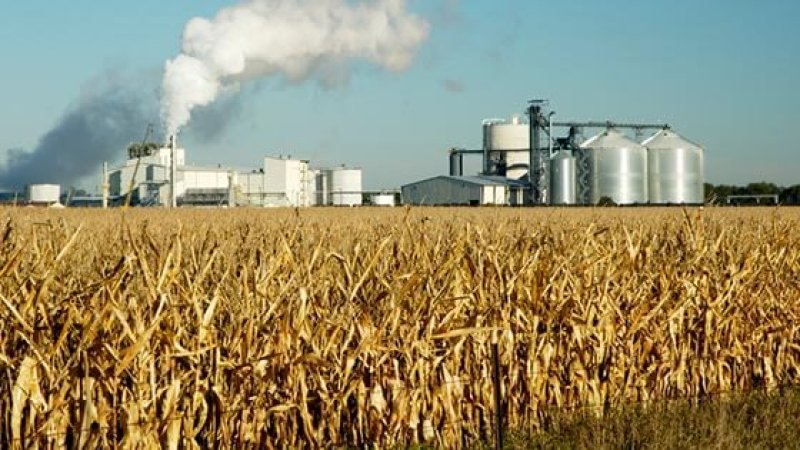
Corn Field Factory

The Pew Research Center recently polled Americans on their concerns about genetically modified foods. Predictably, given the popular consternation around GMOs, a considerable plurality said they had concerns: 49 percent worried about the effects of GMOs on our health; the same number believed that GMOs would harm the environment.

But McKay Jenkins, a journalist who spent several years researching GMOs, says both of these concerns fundamentally miss the mark. In his new book, “Food Fight: GMOs and the Future of the American Diet,” Jenkins makes the case that it’s not GMOs we should single out for criticism — it’s the industrial agricultural system that they power.th

After all, Jenkins points out, genetic engineering has thus far been limited to America’s largest commodity crops, such as corn and soybeans. (According to the Department of Agriculture, 92 percent of U.S. corn acres are planted with GM varieties; for soybeans, it’s 94 percent.) Both corn and soy are typically grown in vast Midwestern monocultures, doused with nitrogen fertilizers and synthetic pesticides. They also supply the vast amounts of corn syrup, soybean oil and cheap livestock feed needed to power both the fast food and processed food industries.

The GLP aggregated and excerpted this blog/article to reflect the diversity of news, opinion, and analysis. Read full, original post: We’re having the wrong argument about GMOs

Related Articles

Infographic: Global regulatory and health research agencies on whether glyphosate causes cancer

Infographic: Global regulatory and health research agencies on whether glyphosate causes cancer

Does glyphosate—the world's most heavily-used herbicide—pose serious harm to humans? Is it carcinogenic? Those issues are of both legal and ...

Most Popular

ChatGPT-Image-Mar-10-2026-01_39_01-PM
Viewpoint—“Miracle molecule” debunked: Why acemannan supplements don’t work
Screenshot-2026-09-10-at-11.50.46-AM
Did COVID vaccines kill 2,500 service members? RFK Jr. hires an investigator who compares vaccine promoters to Nazi doctors
ChatGPT-Image-Sep-13-2026-10_24_17-AM
Bayer urges court to approve $7.25 billion Monsanto Roundup settlement that could limit its future liabilities
Screenshot-2026-09-11-at-2.26.23-PM
Newly approved GMO chestnut trees planted across from the White House are stirring debate
ChatGPT-Image-Sep-15-2026-06_05_13-PM
CRISPR fine-tuning unlocks vitamin C-rich potatoes without yield loss
ChatGPT-Image-Sep-15-2026-05_59_18-PM
RFK Jr. spent two years distancing himself from Children’s Health Defense. Now he’s keynoting its anti-vaccine DC conference.
Screenshot-2026-09-10-at-12.20.19-PM
'Jet fuel didn't melt the steel': 9/11 conspiracy theories debunked
ChatGPT-Image-Aug-28-2026-03_33_46-PM
Viewpoint: Bad science—Five bogus Trump administration claims about vaccines and autism
Screenshot-2026-09-15-at-11.04.54-AM
Viewpoint: Childhood deaths in dispute: Why the CDC vs Pennsylvania conflict over measles vaccines matters
Screenshot 2026-09-10 at 11.28
A meaty problem: How to make cell-grown protein taste like steak, chicken, and seafood
organic-labeling-slide-dcba-aa-c-a-dde-a-fcd-e-c-d-
Viewpoint: Organic food costs more—but is it healthier, safer, and more nutritious? The latest science findings may surprise you.
ChatGPT-Image-Sep-2-2026-10_30_14-PM
Zero: That is the official American measles death toll for 2026. Here is what RFK Jr.’s CDC leaves out.
glp menu logo outlined

Get news on human & agricultural genetics and biotechnology delivered to your inbox.