Dissecting MIT computer scientist Stephanie Seneff’s claim that glyphosate herbicide causes autism

correlation

[Editor’s note: Josh Bloom is director of chemical and pharmaceutical sciences at the American Council on Science and Health. He has a Ph.D. in organic chemistry from the University of Virginia.]

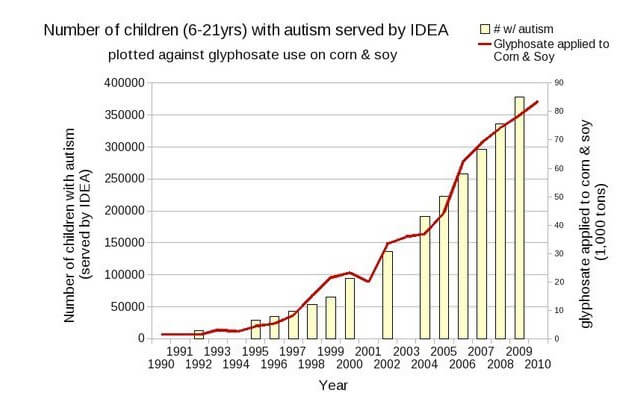
Back in 2014, Stephanie Seneff, a Senior Research Scientist at the MIT Computer Science and Artificial Intelligence Laboratory, when speaking at a panel discussing GMOs (she’s against them, of course), made the following statement:

At today’s rate, by 2025, one in two children will be autistic.

[Read the GLP’s coverage of MIT computer scientist Stephanie Seneff’s claims here and here.] 

OK, anyone with even one working neuron knows that such a claim is nonsense. One-half of children having autism in eight years? Please. But you may not understand the basis of the claim, or why it is nonsense. Let’s take a look. There are a few dead giveaways.

One of them is the website on which the article about Dr. Seneff’s statement appeared. In about five seconds, things start to make sense.

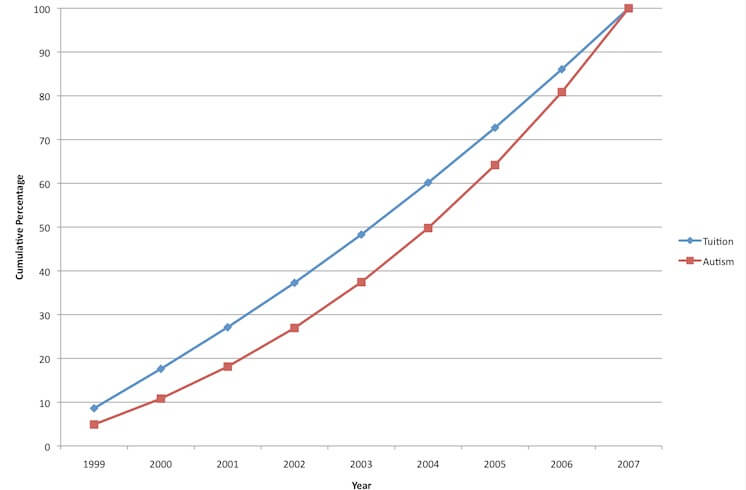
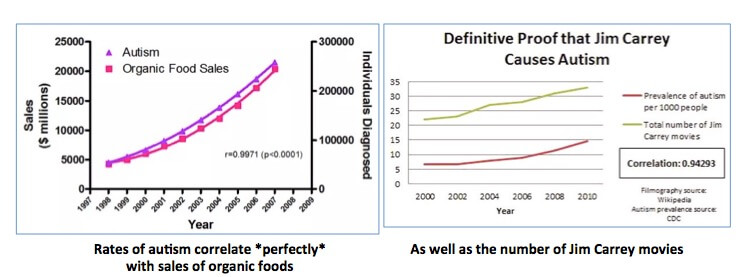
Had Stephanie Seneff looked hard enough she may have uncovered other “causes” of autism. Perhaps the number of yellow Volkswagens on the road, the daily humidity in Boise, or maybe even the number of paisley ties worn by guys named Steve. Which should you believe? None of them. In fact, one prevailing theory about the rise in autism is due to more diagnoses, not more cases. And, David Warmflash, writing for the Genetic Literacy Project, argues that autism is genetic.
Screen Shot at PM Screen Shot at PM Screen Shot at PM

The GLP aggregated and excerpted this blog/article to reflect the diversity of news, opinion, and analysis. Read full, original post: MIT Researcher: Glyphosate Will Cause Half Of All Children To Be Autistic By 2025. Yeah, Sure.

{{ reviewsTotal }}{{ options.labels.singularReviewCountLabel }}
{{ reviewsTotal }}{{ options.labels.pluralReviewCountLabel }}
{{ options.labels.newReviewButton }}
{{ userData.canReview.message }}

Related Articles

Infographic: Global regulatory and health research agencies on whether glyphosate causes cancer

Infographic: Global regulatory and health research agencies on whether glyphosate causes cancer

Does glyphosate—the world's most heavily-used herbicide—pose serious harm to humans? Is it carcinogenic? Those issues are of both legal and ...

Most Popular

ChatGPT-Image-Jun-11-2026-01_15_03-PM
Selective Pressure, Selective Silence
Screen Shot at AM
Facts & Fallacies Podcast: Right-wing politics bad for your health? Separating speculation from science
ChatGPT Image Jun 3, 2026, 03_54_37 PM
Viewpoint: “Turn on, tune in, drop out”—Kennedy embraces the Timothy Leary psychedelic revolution
ChatGPT-Image-Jun-13-2026-11_51_39-AM
Viewpoint: COVID lab leak? Misguided backers of the lab leak theory refuse to give up
drug look like ozempic
Six key health insights from taking weight-loss drugs
ChatGPT Image Jun 3, 2026, 03_14_43 PM
Viewpoint: How Earthjustice became the poster child for the abuse of special interest activist funding
Screenshot-2026-06-05-at-2.12.30-PM
Some plants can poison you. So how did humans figure out what is safe to eat?
ChatGPT-Image-Mar-10-2026-01_39_01-PM
Viewpoint—“Miracle molecule” debunked: Why acemannan supplements don’t work
ChatGPT-Image-Jun-14-2026-09_41_44-AM-2
Viewpoint—‘The gleeful efficiency of an arsonist’: Administration’s health and science research cuts are ‘sabotaging’ America’s future
Screenshot-2026-06-14-at-9.14.26-AM
‘Humanitarian catastrophe’: Trump’s USAID shutdown could help drive nearly 23 million deaths — including 5.4 million children — by 2030, Lancet study warns
Screenshot-2026-06-14-at-9.53.54-AM
Is the World Cup a perfect storm for the spread of infectious diseases?
ChatGPT Image Jun 12, 2026, 02_32_14 PM
‘Have you asked your doctor?’: AMA launches campaign to counter health misinformation
Screenshot 2026-05-26 at 10.15
Viewpoint: Double standard—Why does the wellness industry get a free pass while Big Healthcare is treated as morally suspect?
glp menu logo outlined

Get news on human & agricultural genetics and biotechnology delivered to your inbox.