


Chemical Controversies

Viewpoint: ‘Science does not matter in Europe’ — European Chemicals Agency says weedkiller glyphosate does not cause cancer, but it will be banned nonetheless
The European Chemicals Agency (ECHA) Committee for Risk Assessment is unsurprisingly more literate than a San Francisco jury, so they ...

Combining the best of organic farming with limited, targeted use of pesticides – and saving consumers up to 30%
Cost-prohibitive organic food is being disrupted by an increasingly popular type of farming called integrated pest management (IPM) where natural ...

Viewpoint: Here’s the wacky formula used by Environmental Working Group to stoke unwarranted fears about safe chemicals
“Eating one bass is equivalent to drinking PFOS-tainted water for a month.” Those are the words of Scott Faber, senior ...

GLP podcast and video: ChatGPT more empathetic than doctors? How ideology corrupts science; Testing drugs on mini-organs, not animals
Is ChatGPT more empathetic than your doctor? A recent study seems to suggest so. An emerging consensus of scientists is ...
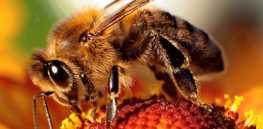
Viewpoint: Social media amplifies misinformation — No, modern pesticides are not the driver of insect declines and no, they are not poisoning us
The aim of the European Seed series on Myths, Fake News, Misinformation and Disinformation is to dive deeper, taking a closer ...
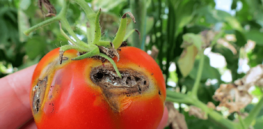
30 years of waiting for an insect-resistant tomato but questions about taste may limit its market
A tenacious plant breeder has developed more than a dozen new lines of naturally pest-resistant tomatoes — foreshadowing a future in ...
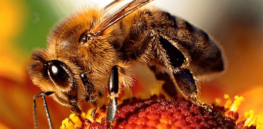
Viewpoint fact check: Honeybees aren’t disappearing and GMOs do not cause colony collapse disorder
In 2020 the EU had approximately 19 million honeybee hives, managed by 615,000 beekeepers. These hives altogether produced 275,000 tonnes ...

Viewpoint: Can the International Agency for Research on Cancer be trusted to dispassionately assess potential dangers of aspartame when its key evaluator claims to know the answer in advance?
The International Agency for Research on Cancer (IARC), a United Nations epidemiology group headquartered in France, could be in ethical ...

Viewpoint: Anti-chemical film polemic “Into the Weeds” is wrong on the facts but a tort lawyer’s dream. Did lawyers and the organic industry fund it?
The organic food industry lobby was in full swing in Brussels with their StopGlyphosateWeek. A collective of NGOs ran an ...
GLP podcast and video: Ice cream cuts obesity risk? Anti-vaccine study retracted; If you’re afraid of chemicals, quit drinking alcohol
Could ice cream reduce your risk of diabetes and obesity? A surprising amount of evidence supports that hypothesis. How do ...
Viewpoint: Without glyphosate, critical wetlands and wildlife could be strangled by invasive plants
Almost two years ago, I wrote an article hoping “we are finally at a place when a few influential scientists with ...

Science-based reasons why Environmental Working Group’s Dirty Dozen list of ‘pesticide-laden’ fruits and vegetables is dangerously misleading
Fruits and vegetables are an important part of a healthy diet providing vitamins, minerals, antioxidants, dietary fiber and other benefits ...

Adult Monarch butterflies not threatened by neonicotinoid insecticides, independent university study finds
Numerous studies have documented the negative effects of neonicotinoids on bees; it remains crucial to examine how neonicotinoids affect other ...

Re-examining 10 science-challenged studies suggesting GMOs are harmful
The blog "10 Scientific Studies Proving GMOs Can Be Harmful To Human Health" is now a fixture on cyberspace. A ...

Does conventional livestock farming use drugs at ‘unnecessarily high levels’, endangering human health, as activist critics claim?
Livestock farming generates some striking external impacts: while production provides 30% of human dietary protein, it occupies 75% of agricultural ...

Long banned in Kenya, insect-resistant genetically-modified cotton brings farmers huge profits
Despite severe drought in much of the country for four years, cotton farmers in Lamu county have had a bounty ...

Bayer CEO ponders breakup as glyphosate litigation continues to depress profits
Incoming Bayer chief executive Bill Anderson says he is keeping an open mind on whether to break up the company ...
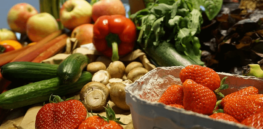
Viewpoint: Environmental Working Group’s Dirty Dozen list of ‘pesticide soaked’ conventional fruits and vegetables contains a confession and caveat: conventional produce is healthy
The Environmental Working Group recently released it’s 2023 Dirty Dozen list. This annual propaganda allegedly ranks the fresh produce with ...

Plastic nanoparticles found in food could potentially impair fetal development
Nanoscale plastic particles like those that permeate most food and water pass from pregnant rats to their unborn children and ...
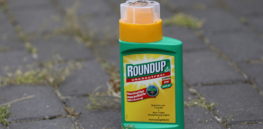
Luxembourg — the first EU country to ban glyphosate — has been ordered by a court to reauthorize the weedkiller. Here’s why
Luxembourg announced on [April 3] that it was reauthorizing the marketing of glyphosate-based products, after being the first European Union ...

Top 10 anti-biotech propagandizers: Who are the science deniers and snake oil peddlers undermining science in agriculture and medicine?
Anti-science beliefs are proliferating, particularly on the biotechnology and genetics front, covering a range of issues from vaccine denialism to ...

Viewpoint: ‘Chemical alarmism’ — Scientist builds case that banning ‘forever chemicals’ PFOS and PFOAs could cause more harm than good
PFOA and PFOS were used early on to solve a problem in protecting human life. The problem? In 1967, a ...
GLP podcast: ‘Only 60 harvests left,’ debunked; Beating pesticide resistance; ‘Regulation through litigation’ threatens sustainable farming?
Have we so badly depleted the world's soil that we only have 60 harvests left? No. New "green" pesticides could ...

Viewpoint: ‘It undermines farmers and confidence in regulators’ — Real impact of Environmental Working Group’s organic-promoting ‘Dirty Dozen’ list
Nutrition experts agree that many Americans should eat more fruits and vegetables, but that can be challenging for those with ...
GLP podcast and video: EWG’s ‘Dirty Dozen,’ debunked; On pesticides, trust experts, not ideologues; Ukraine war derails EU’s Farm-To-Fork proposal
It's the time of year when Environmental Working Group (EWG) puts out its much-ballyhooed "dirty dozen" list of fruits and ...

Here’s how natural biologicals can produce environmentally-friendly fertilizers and pesticides
There are few problems larger than the climate crisis. But one potential solution is so small it cannot be seen ...

Viewpoint: Challenging myths — Organic farming fleeces consumers and does not significantly promote sustainability
As I discussed in Part 1, many Americans have begun to seek “authenticity” in many aspects of their lives. There’s ...
