


Chemical Controversies
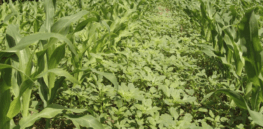
Weeds have long been the bane of farmers. Will the future be different?
[The] International Herbicide Resistant Weed Database reports that there are 534 unique cases of herbicide-resistant weeds globally, with 273 species. In all, ...

Happy 43rd birthday, GMO insulin. FDA approval in 1982 took 5 months. How many years would it take now?
This is the 43rd anniversary of one of biotechnology’s most significant milestones — the approval by the Food and Drug ...

Viewpoint: Environmentalists claim farmers can forego chemicals and genetically engineered crops and grow bumper crops with less environmental impact. If only farming was that easy
At the end of the 20th century, the United Nations (UN) launched the Millennium Development Goals (MDGs). The MDGs were a list of ...

Why scare stories about crop chemicals outlive the science
For years, glyphosate has been the world’s most litigated molecule. The herbicide, first brought to market in 1974 under the ...

Viewpoint: While overall cancer rates remain steady, it’s rising in Midwest farm country. Are pesticides to blame?
Cancer rates among young adults in the Corn Belt, a patchwork of golden fields and straight-line highways stretching across the ...
RFK, Jr.’s bungled science on thimerosal and vaccines
Mercury, the element, is no longer used in thermometers, but it remains at the center of a decades-long debate over ...
Can we expect a wave of corporate breakups as seed industries liberate themselves from litigation-laden pesticide businesses
Companies involved in both the seed and pesticide sectors see a pipeline of pesticide-related class action lawsuits, MDLs and unlimited ...
GLP podcast: Are science journals corrupt? Dr. Kevin Folta examines the ‘replication crisis’
The science community faces an existential crisis as thousands of studies are retracted and dozens of peer-reviewed journals are forced ...

Viewpoint: Glyphosate is agriculture’s scapegoat
Glyphosate has played a central role in modern agriculture’s ability to increase yields, reduce labour costs and conserve soil through ...

“It’s raining neonicotinoids in Japan!” How the French media, environmentalists, and activist scientists conspired to distort science and severely damage the farm economy
Based on only eleven rain collections, researchers from Tokyo and Hokkaido Universities detected five neonicotinoids in Japanese rainwater at sub-nanogram-per-liter ...

Viewpoint: How cancer cultists and health justice vigilantes politicize science
A paper by Cristian Tomasetti and Bert Vogelstein, published in 2015 in Science, found that two-thirds of cancers were caused by "bad ...

Latest Trump and RFK, Jr. health misinformation rabbit hole: No, aluminum in vaccines is not dangerous or causally linked to autism
“We want no aluminum in the vaccine,” Trump said during the White House press conference, surprising even some ardent anti-vaccine ...

Viewpoint: MAHA’s chemophobic agriculture recommendations take a back seat to industry and science as Republican farm policy comes into focus
Robert F. Kennedy Jr. has courted controversy his whole life. Since becoming the Trump administration’s top health official, Kennedy’s outlandish ...

Viewpoint: Wall Street and private equity—The hidden money bankrolling class action tort cases, from glyphosate to talc to Zantac
Have you ever wondered how lawyers manage to bankroll mass toxic tort cases, which are notoriously expensive to finance? Spoiler ...
Consumer Reports is fearmongering (again). No, protein powders don’t contain ‘toxic’ levels of lead
Consumer Reports is at it again, this time, fear-mongering about lead in protein powders. Their latest headline and “report” concludes ...

Chemophobia: From anti-corporate liberal left to MAHA right, it’s getting worse
Chemophobia is complicated, but, in short, it’s a distrust or fear of chemicals and appears in many of aspects of ...

GLP podcast: America’s overdose epidemic, explained
The story most people know about America's opioid epidemic, a public health crisis claiming over 1 million lives since 1999, ...
Viewpoint: The GMO primate study that finally shuts the door on misguided claims of unique harm
One of the most persistent myths surrounding GMOs is the supposed long-term harm on our delicate internal landscapes — the ...
Big Ag vs. MAHA: Who’s winning and why
Health and Human Services Secretary Robert F. Kennedy Jr. has a reputation for bashing powerful corporate interests in his quest ...

Viewpoint: The organic food industry is a $180 billion marketing fraud
As a biomedical scientist, it has never failed to annoy me that the term ‘organic’ has been co-opted to spread ...

Viewpoint: What happened when a liberal food writer makes a science-based case for glyphosate’s safety and importance—in the New York Times
You shouldn’t drink Roundup. You shouldn’t bathe in it, either. But you shouldn’t worry about eating crops sprayed with Roundup ...

GLP podcast: Tylenol maker refuted link to autism. Daily Caller’s fabricated health scare, exposed
Late last month, Daily Caller published a bombshell report claiming that Johnson & Johnson, the former manufacturer of Tylenol (acetaminophen), ...
Why the chemophobia obsession is baked into America’s consciousness
'No nasties’, ‘non-toxic’, ‘natural’, ‘organic’, ‘mineral’ – there are a multitude of health buzzwords sprinkled through grocery store shelves aimed ...
Viewpoint: The fastest growing delusion in America is chemophobia—and organic marketers are to blame
“Organic” might be the most abused word in the English language. Chemists, farmers, and marketers all use it—and none of ...

Viewpoint: Is the MAHA – MAGA alliance fraying
[Zen] Honeycutt and other “MAHA moms” were disappointed by the MAHA commission report released in September that they say lacked meaningful ...

GLP podcast: Media keeps hyping the youth cancer ‘epidemic.’ Problem? It’s a myth
Buoyed by sensationalist reporters eager to write alarming headlines, Robert F. Kennedy Jr. has repeatedly hyped a dramatic "epidemic" of ...
Viewpoint: The MAHA movement’s wrongheaded war on glyphosate is part of a misplaced broader attack on modern agriculture
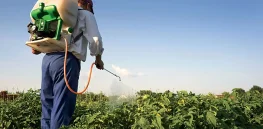
The MAHA movement’s war on glyphosate is part of a broader war on modern farming — not only herbicides and ...
