


Agriculture & Food
Will organic community embrace gene editing if it restores ancient crops?
Precision genetic engineering techniques could bring back beneficial genes from wild relatives of crops without using foreign genes. The concept ...
Conventional (GMOs) vs organic farming: Which is better for animals and the environment?
[Editor's note: Iida Ruishalme is a writer and a science communicator from Sweden who holds a M.Sc. in Biology.] I ...

Hobbyist beekeeping practices and rejection of chemical treatments major driver of bee-killing Varroa mites and disease
Hobby beekeeping is very common. A European Bee Health Report found that in many countries, the majority of beekeepers pursue the activity ...

Tomatoes resistant to fungus and blight developed by 94-year-old West Virginia scientist
Mannon Gallegly, West Virginia University professor emeritus of plant pathology, has made it his mission to develop a disease-free tomato ...

Hawaii documentary claims presence of Big Ag GMO test facilities forces islands to import food
Did you know that the state of Hawaii imports between 80 and 90 percent of its food? This is, among ...

EU Food Safety Authority: Risk from pesticide residue on foods low, unlikely to pose health risk
[Editor's note: The following is from the EFSA's 2015 European Union report on pesticide residues in food, published April 11, ...
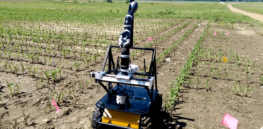
Autonomous robot cornfield scanner reveals how individual crops respond to climate change
Allow me to introduce you to Vinobot, the little rover on a mission to make sure crops weather global warming ...

Is the US unwittingly funding anti-agriculture and anti-Monsanto conspiracy theories?
There is an organization that is using [US] tax dollars and they have replaced fact-based science with conspiracy theories and ...

Monsanto is changing the way people eat — Using traditional breeding to make better fruits and vegetables
Monsanto is no one-trick GMO pony. Founded in 1901, the agricultural biotech company has fueled innovations in herbicides, pesticides, and ...

Should Trump scrap USDA’s National Organic Program?
Federal subsidizing of organics has health as well as economic consequences. Many consumers now believe that organic food is healthier, ...

Video: CRISPR-created seedless tomatoes could eliminate need for bee pollination
Don’t like the seeds in tomatoes? You might be pleased to know that seedless ones have been created by gene editing ...

Will CRISPR plant breeding be used for good — Or mostly to drive corporate profit?
This rapid-fire timing [of agribusiness mergers] may have been a coincidence, but it also may be a sign of what’s ...
Biodiversity on the farm: It’s more complicated than you might think
[Editor's note: William Price is a statistician in the College of Agricultural and Life Sciences at the University of Idaho ...

How to address skeptical concerns about GMOs and ‘violating nature’
The main concern with GMOs seems to be rooted in a disgust for the artificial — “synthetic” has become synonymous ...

Agricultural biotechnology regulations are a mess — Here’s how Trump can unshackle innovation
For ideological or political reasons unsupported by data, and drawing on risk paradigms decades out of date, the US imposes ...
Infographic: The history of modern crop breeding — And how biotech seeds fit in
Biotech crops are an important milestone for agriculture as it continually improves to keep pace with the growing demand for ...
Will China relax GMO cultivation restrictions in wake of Syngenta takeover?
Although China imports preapproved GM foods, the agriculture ministry has never approved a biotech food crop—other than papaya, a minor ...
Epigenetics Around the Web: No, income inequality does not cause epigenetic changes, botching Lamarck, and more
A psychology professor claims that income inequality is causing epigenetic changes and a Huffington Post article on climate change and ...

Agriculture’s Big Data revolution increases efficiency, reduces food waste from farm to table
[A]bout a third of food produced is lost or wasted every year. Globally, that’s a $940 billion economic hit. Inefficiencies ...

Kenyan oncologist: Shift health focus away from safe GMO foods to actual carcinogens — Like alcohol
[Editor's note: David Makumi is an oncologist and chairman of the Kenya Network of Cancer Organisations.] Every time the Health ...

Herbicide use has increased more for non-GMO crops than genetically engineered varieties
[Editor's note: Andrew Kniss is a professor in the Department of Plant Sciences at the University of Wyoming.] Herbicide use is ...

After warning label victory, California activists push for a glyphosate herbicide ban
[A]fter a yearlong legal battle, California’s environmental health agency has announced that it will list it as a known carcinogen ...
President of Senegal bucks anti-biotechnology pressure: ‘I am for the use of GMOs’
President Macky Sall of Senegal has thrown his weight behind the adoption of agricultural biotechnology in the country. .... President ...

Selling marijuana like wine: ‘Flavor’ genes identified that could lead to tastier strains
Scientists at the University of British Columbia have reportedly identified those parts of the cannabis genome which determine flavor, potentially paving ...

How ‘human bees’, biotechnologists and Gates Foundation are rescuing the African cassava staple
Neither conventional breeding nor genetic engineering alone can solve the viruses threatening Africa's key crop. Add some Gates' funding and ...

Microbiomes could help plants grow, resist disease and make agriculture more sustainable
Feeding a growing world population amidst climate change requires optimizing the reliability, resource use, and environmental impacts of food production ...

Ayman Jallad: Mysterious Syrian-Lebanese businessman funds anti-GMO activist network in Europe
Ayman Jallad has two battles on his hands. The Syrian-Lebanese businessman is in the challenging business of selling imported Caterpillar ...
