


Featured in Weekly Newsletter

A ‘New Green Revolution’ is brewing — just in time, as the world population breaks past the 8 billion mark
You can mark the date on your calendar: On November 15, 2022, a mother will give birth to a baby ...

GLP Facts and Fallacies Podcast and Video: ‘Industrial’ farming unsustainable? Junk science and academic freedom; Oxalate, the new dietary bogeyman
Are our current farming practices unsustainable? If so, how do we make them sustainable? Academic freedom enables researchers to pursue ...

Soaring seed prices: What role do patents and regulation play?
Agricultural seed prices have soared over the last 20 years. Conventional seed prices have risen 200%, while genetically modified ones ...
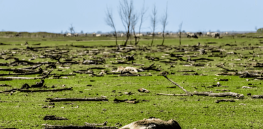
Part II: Nature is complex — Rewilding offers promising ecological benefits, but it is not the panacea its proponents contend — and can cause harm
Nature can be unpredictable, often foiling the best of intentions. And rewilding experiments gone awry are only a fraction of ...
Carbon tax on farming to reduce carbon emissions? New Zealand is pioneering this new policy. Here’s why its touted benefits may not be a sure thing
Agriculture contributes an estimated one-quarter of global greenhouse gas emissions. The economy in New Zealand, a tiny country at the ...

Part I: Europe’s rewilding movement — A victory for environmentalism or a romantic, scientifically-debatable notion that does not revive ancient ecosystems? Or both?
It’s less than half a mile from the crowded marina to the site of cannibalistic excess — at least, that’s ...
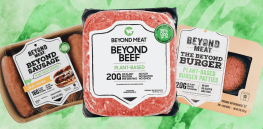
‘Like turning a golf ball into string’: Making meat substitutes is not easy
If you’re an environmentally aware meat-eater, you probably carry at least a little guilt to the dinner table. The meat ...

What would happen if the male-determining Y chromosome continues to deteriorate and eventually disappears? The mole vole offers hope
The sex of human and other mammal babies is decided by a male-determining gene on the Y chromosome. But the ...

Viewpoint: ‘Pesticide treadmill’? — Latest research challenges activist meme, shows pairing GM crops with pesticides yields environmental benefits
Almost three decades ago, activist groups began making all sorts of troubling predictions about the dangers of growing genetically engineered ...

Precision animal breeding: How gene editing could revolutionize animal agriculture and disease control
Given my interests as a veterinarian, indeed the only vet in the House of Lords, my contribution to the Second ...

67 tons: Harvest of first commercial-quality GMO beta carotene-enriched Golden Rice nears completion in Philippines
More than 67 tons of fresh paddy of beta carotene-enriched rice have been harvested in 17 Golden Rice production sites ...

‘The harder you push, the better you’ll perform’: Here’s how physical activity boosts your brain’s processing power
You have heard it before, but it’s now even clearer: Physical activity leads to improved performance at school, at least ...

Viewpoint: Could crop biotechnology mitigate dislocations from climate change? Anti-GMO activists say ‘no’. Here’s why they are wrong
We’ve heard a lot about climate change, and its impact on crops, especially in tropical and sub-tropical regions of the ...

‘The Hemsworth Alzheimer’s disease gene’: Revisiting the nature-nurture debate
It's frightening when your future health seems indelibly determined, and the prospects are not good. That’s what Chris Hemsworth, the ...

Viewpoint: Precautionary near zero-risk standard is an impossible policy stifling European innovation and productivity. Here’s a safe alternative
After 30 years of squandering the peace dividend, deindustrialising economies and ignoring facts and evidence in their ideology-driven policies, Western ...

Viewpoint: ‘The Dawn of Everything’ blurs lines between scientific research and political advocacy
In 1885, Thomas Henry Huxley delivered a speech in which he famously declared that science “commits suicide the moment it ...

Viewpoint: Can large-scale agriculture overcome stigma it is not sustainable? Here’s a 10-step regulatory guide to make that happen
Regulators seem blissfully unaware, especially in Brussels, how much their pandering to the idealistic aspirations of small environmental activist groups ...

‘Time for a reality check’: How close is artificial intelligence (AI) to thinking like humans?
Last month, Deepmind, a subsidiary of technology giant Alphabet, set Silicon Valley abuzz when it announced Gato, perhaps the most ...

Viewpoint: Inside two decades of anti-industry attacks by green activists in media, film and politics
Humanity is (hopefully) coming out of a global pandemic thanks, in a large part, to the massive, rapid development and ...
Podcast and video: GE chestnut tree coming soon? Tylenol doesn’t cause autism; Damar Hamlin-COVID vaccine controversy
After years of delay, a genetically engineered chestnut tree may finally receive USDA approval. Is it headed for a new ...

Evolution of humor: How laughter may have helped early humans survive and thrive
Until now, several theories have sought to explain what makes something funny enough to make us laugh. These include transgression ...

Viewpoint: Tobacconization of corporations — How green activist groups delegitimize industries regardless of the benefits of their products
I am often bemused by how industry actors think of themselves. Often they are content with being the second slowest ...

‘Mania of zero risk’: How environmentalists inflame concerns about farm chemicals, increasing anti-GM food rejectionism and the degradation of waterways
Food Watch warns, wrongly, that trace amounts of mineral oil can get into our food and seriously endanger consumers, calling ...

XBB.1.5 spreading rapidly through the US: Why the coronavirus continues to confound scientists and public health officials
The SARS-CoV-2 virus is threatening to surge again. In the past few weeks alone, a recent version, XBB.1.5, has quickly ...

Viewpoint: Is the FDA following ‘sound science’ in green lighting new Alzheimer’s drug Aduhelm?
The prominent economist Milton Friedman said that in order to understand the motivation of a person or organization, you must look ...

Viewpoint: Glyphosate and other ‘toxic herbicides’ in school lunches? Food Chain Radio hosts disinformation specialist Zen Honeycutt
School lunches might not be the perfect sustenance, I don't know. When I was in school, the institutionalized food was ...

‘Free to fabricate’ or ‘barred from teaching’? Discord over COVID underscores threats to academic freedom — and the public
Two scientists. Two prominent institutions. One is a tenured professor running a microbial research laboratory where she investigates mechanisms of antibiotic ...
