


Featured in Weekly Newsletter
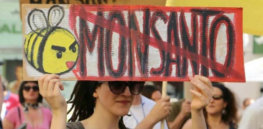
Viewpoint: ‘Big Ag’ owns scientists who endorse safety of GMOs? Busting the anti-biotech movement’s favorite myth
Scientists are generally inclined to dislike big companies--but they know that biotechnology has made our food supply safer and more ...
Could blood from babies’ umbilical cords rejuvenate our grandparents’ brains?
Protein in umbilical cord blood rejuvenates cells in the brain’s memory center, improving learning and memory in aging mice. Could ...

Chasing freedom from food allergies through controversial oral immunotherapy treatments
An idea based on a century-old concept could soon receive FDA approval. But will it cause more anxiety than relief? ...

Podcast: Farming without chemicals: Pesticide-carrying bees poised to revolutionize agriculture?
While the GMO controversy rages, a handful of companies are taking another innovative approach to crop protection ...

Experimental blood tests for Alzheimer’s could boost research, treatment of the disease
Narrowing in on diagnostic biomarkers could make an illusive disease easier to catch early ...

Examining Sweden’s ties to anti-GMO conference in Africa, through taxpayer-funded Swedish Society for Nature Conservation
How the environmental movement neglects the environment ...

Sustainable dyes and fabrics created through synthetic biology promise to revolutionize fashion industry
The fashion industry is responsible for 10 percent of global carbon emissions; that is more than air and sea transport ...

Viewpoint: How organic industry opposition to CRISPR gene editing encourages pesticide use
The organic food movement has a bigger problem than the double standard it relies on to attack synthetic chemicals ...
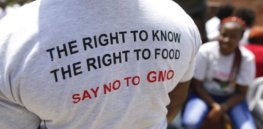
Viewpoint: ‘GMO’—the dirty three-letter word used to demonize life-saving biotechnology
The demonization of this technology funds numerous NGOs and has even become a cottage industry ...

Oxitec’s GMO mosquitoes spread their genes in the wild? Separating science from hype after controversial new study
Did the mosquito experiment go wrong? ...

From GMOs to BPA, why the wealthy are more likely to fall for food pseudoscience
Socioeconomics play a significant role in attitudes about food ...

Evolution, the human diet and the meat vs. plant conundrum
Evidence suggests our hominin ancestors turned to meat when climate change reduced resource-rich vegetation. The signatures of these changes may ...

If pain is subjective, how do we measure it in a meaningful way?
You can’t exactly ask a rat to point to where it hurts ...

Viewpoint: Activist myth-making, anti-science lobbying undermine Uganda’s path to food security
The president's trepidation about crop biotech is science-free and largely due to the influence of Western environmental groups ...

Tackling Stone Age stereotypes and misconceptions including this: They made tools out of more than just stone
Although most depictions of Stone Age hunters are male, women and children played a huge part in the creation and ...
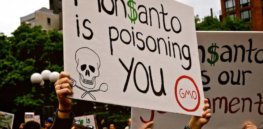
Viewpoint: ‘Roundup game plan’—How ‘environmental’ activists, IARC’s Chris Portier plotted attacks on Monsanto-Bayer to get glyphosate banned and cripple ag biotechnology
The failure to retract the monograph despite overwhelming rejections from the scientific community points to a Glyphosate Gameplan at IARC ...
Viewpoint: Public supports CRISPR, gene drives to battle infectious disease, plant pests—despite activist opposition
Consumers are less wary of biotechnology when they know how it's being deployed ...

Did a ‘flawed’ bioterror plot doom Netflix’s ‘Designated Survivor’?
The bioterror plot succeeded, in tone if not in detail, by illuminating the idiocy of white supremacy ...

Length matters? DNA testing companies claim to assess stress, health and aging by measuring your telomeres
By determining length of your chromosome tips - also known as telomeres - testing companies claim to offer an insight ...

Viewpoint: GMO, CRISPR-edited crops can cut pesticide use—if environmental activists do not block them
Anti-GMO activists should take a step back and look closely at some of the benefits that new genetically modified crops ...

Artificial intelligence could revolutionize health care, but there’s no guarantee that will be a good thing
AI-driven medical tools could democratize health care, but some worry they could also worsen inequalities ...

Viewpoint: Organic industry anti-pesticide ‘propaganda’ threatens to cripple American agriculture
Misleading half-truths and outright misstatements offer a teaching moment about “advocacy research.” ...

Podcast: GMO rice could yield affordable treatment to stem HIV in developing world
A research team developed an ingenious solution to a logistical public health problem—adding anti-HIV proteins to rice ...

Viewpoint: Hidden conflicts of interest cripple IARC’s biased glyphosate-cancer evaluation
IARC has no clear understanding of what a conflict of interest is (or doesn’t care) ...

New weapon in the fight against antibiotic resistance: Tricking bacteria ‘into killing themselves’
Sneaky molecular biology tricks bacteria into killing themselves, in place of antibiotics ...

NY Times’ Eric Lipton defends anti-biotech, anti-vax Moms Across America, which harasses scientists
Journalists like Eric Lipton need to recognize where the real danger lies ...

Using young blood to battle Alzheimer’s could be ‘an exciting new start in a frustrating field’
The idea of therapeutic benefits from 'young blood' has been around a long time ...
