


Featured in Weekly Newsletter

‘Rebooting the brain’: Our fight to bring people back from the dead
We may be on the verge of redefining 'brain death' following the partial revival of a man in France ...

Viewpoint: African agricultural biotechnology advancing swifty in labs to address food security threats — but implementation slowed by European opposition
From the beginning, genetically engineered (GE) crops (also known as GMOs) have been controversial. Europe has always been at the ...

GLP Podcast: Don’t fight science denial like this; CO2-sucking GE trees; Organic industry hates hydroponics
A new book outlines a method for changing the minds of "science deniers"—and it's terrible, according to a particularly harsh ...

The dog nose knows: Bio-detection dogs can save your life. Here’s how
Stories of life-saving dogs who use their power of smell to rescue humans are legendary. One of the most famous ...
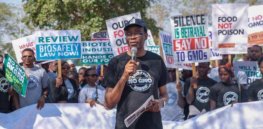
Part 2: How scientists beat back anti-biotechnology activists’ ‘insidious campaign’ to block Nigeria’s approval of pest-resistant GMO cowpea
The standard for how to conduct a safely assessment is laid down by the Codex Alimentarius, a food code established ...

Part 1: Addressing food security in Nigeria — Seeds of hope for subsistence farmers as insect resistant GM cowpeas finally come to market
Not a lot has improved for Nigeria’s subsistence farmers over the years. Most can’t afford fertilizer and chemicals; there’s no ...

Video: Beyond the science ideology trap — GLP’s Jon Entine challenges media and activist misinformation on GMO crops, nuclear energy, insect declines and climate change
From rampant COVID vaccine rejectionism to nuclear energy skepticism to activist attacks on GMOs and CRISPR crops, anti-science ideology is ...

A daily pill to treat COVID could be just months away, scientists say
Within a day of testing positive for covid-19 in June, Miranda Kelly was sick enough to be scared. At 44, ...

Japan ushers in CRISPR gene edited food revolution as hypertension-reducing tomato now on sale
In the coming years, a genetically engineered tomato may be your first line of defense against high blood pressure. Biotech ...

Viewpoint: ‘Green neo-colonialism’ — Utopian visions of organic farming promote starvation in Africa
Across Africa, farmers and governments are struggling to feed growing populations. Ongoing and deadly locusts and Fall Armyworm infestations, cancer-causing ...
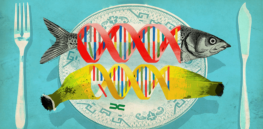
Viewpoint: Should genetically edited food be on your dinner plate? A synthetic biologist and a sociologist say ‘yes’
Nicola Patron: Oil from soybeans gene-edited to produce a “high oleic” oil with no trans fats and less saturated fat is already ...
GLP Podcast: Abortion muddies COVID vaccine debate; Coffee is heart healthy again; Genetics of homosexuality
If women have a right to abortion, does everyone else have a right to refuse a COVID shot? The "my ...

Dismissing sizable sustainability benefits, organic industry petitions USDA to block hydroponics from being classified as organic
Organic food producers, which eschew synthetic pesticides for "natural" ones, regularly market their products as more sustainable than conventional offerings, but they're not ...

Viewpoint: Does mounting evidence for vaccine “durability” suggest we delay boosters for all until we learn more?
When President Biden announced that beginning the week of September 20, “anyone vaccinated on or before January 20 will be ...

Managed honeybee and bumble bee colonies in the US are up as much as 85%, a 60 year high, as independent researchers challenge bee apocalypse narrative
The Western honey bee (Apis mellifera) is amongst the best-monitored insects but the state of other managed pollinators is less well ...

‘Regulatory Wild West’: The US fertility industry is often derisively characterized. Here’s why — and what should be done
When embryologist Joseph Conaghan arrived at work at San Francisco’s Pacific Fertility Center on March 4, 2018, nothing seemed awry. He ...

Kiel University study: Double disaster — Europe’s Green Deal Farm to Fork plan would undermine environmental sustainability goals with no significant economic payoff
A significant reduction in agricultural production in the European Union with full implementation of the Farm to Fork Strategy of ...

Viewpoint: Did men evolve to be better athletes than women? Here’s a rethink
As the Summer Olympics gear up to kick off in Tokyo, Japan, on July 23—delayed a year thanks to the ...

Genetically engineered trees offer dual sustainability benefits: Carbon sequestration boosts and the ability to grow more trees on less land
The startup Living Carbon claims their fast-growing genetically engineered (GE) trees could increase forest carbon capture by 1.4-2 gigatons per year, ...
GLP Podcast: End climate ‘alarmism’; FDA vs kratom; Is ‘GMO’ ice cream dangerous? Nope
Human-caused climate is occurring, but the science community may be amplifying the public's skepticism with failed "alarmist" predictions. Is kratom ...

Uganda’s costly dithering on GMOs
Uganda has a very extensive research and confined field-testing program for GMO crops that include disease-resistant potatoes, cassava and bananas, ...

Coronaviruses thrive in animals. Could a far more lethal COVID variant emerge in pets?
The recent suggestion that ministers may have to consider culling or vaccinating animals to prevent the coronavirus from picking up another ...
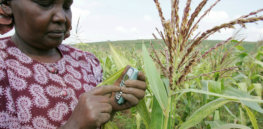
Kenya opens the door to GMO cultivation
On December 19, 2019, the Kenyan government approved the cultivation of GMO cotton after five years of field trials and ...

COVID vaccine and mask guidance confusion? Why we should cut the CDC some slack — It’s the norm when dealing with fast-evolving disease crises
There is continuing confusion, and even consternation, over what seem to be disparate policies, recommendations and mandates emerging in response ...

Baby talk: What we can learn from bats about how human moms and babies communicate
“Mamama,” “dadada,” “bababa” – parents usually welcome with enthusiasm the sounds of a baby’s babble. Babbling is the first milestone ...

It’s not going away: We need a real, non-political debate about the best way to live with COVID or countries will fracture
In 1968, at the height of the last great influenza pandemic, at least a million people worldwide died, including 100,000 ...

Instituted to protect our food, the ‘precautionary principle’ often perpetuates fears and does more harm than good
The origin of the term “better safe than sorry” goes back to a book written in 1837, Rory O’More. The rest ...
