


Featured in Weekly Newsletter

GLP Podcast: End climate ‘alarmism’; FDA vs kratom; Is ‘GMO’ ice cream dangerous? Nope
Human-caused climate is occurring, but the science community may be amplifying the public's skepticism with failed "alarmist" predictions. Is kratom ...

Uganda’s costly dithering on GMOs
Uganda has a very extensive research and confined field-testing program for GMO crops that include disease-resistant potatoes, cassava and bananas, ...

Coronaviruses thrive in animals. Could a far more lethal COVID variant emerge in pets?
The recent suggestion that ministers may have to consider culling or vaccinating animals to prevent the coronavirus from picking up another ...
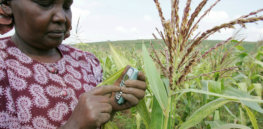
Kenya opens the door to GMO cultivation
On December 19, 2019, the Kenyan government approved the cultivation of GMO cotton after five years of field trials and ...

COVID vaccine and mask guidance confusion? Why we should cut the CDC some slack — It’s the norm when dealing with fast-evolving disease crises
There is continuing confusion, and even consternation, over what seem to be disparate policies, recommendations and mandates emerging in response ...

Baby talk: What we can learn from bats about how human moms and babies communicate
“Mamama,” “dadada,” “bababa” – parents usually welcome with enthusiasm the sounds of a baby’s babble. Babbling is the first milestone ...

It’s not going away: We need a real, non-political debate about the best way to live with COVID or countries will fracture
In 1968, at the height of the last great influenza pandemic, at least a million people worldwide died, including 100,000 ...

Instituted to protect our food, the ‘precautionary principle’ often perpetuates fears and does more harm than good
The origin of the term “better safe than sorry” goes back to a book written in 1837, Rory O’More. The rest ...
GLP Podcast: Climate change enhances farming? Lawyers target paraquat; NYT vs anti-GMO groups
Climate change could boost crop yields in the coming decades, but pests enabled by the warmer temperatures may offset whatever ...

Viewpoint: Anti-science GMO rejectionists won’t disappear anytime soon but the past year has demonstrated their increasing irrelevance
Just six years ago, America was engaged in a ferocious debate over GMO food labels; March Against Monsanto could assemble thousands ...

If evolution encourages reproduction, why do people have same-sex preferences?
Same-sex sexual behaviour may seem to present a Darwinian paradox. It provides no obvious reproductive or survival benefit, and yet ...

Viewpoint: Let’s stop the fear mongering in food labeling
Between his former and current terms as U.S. Secretary of Agriculture, Tom Vilsack in a 2019 opinion piece called for a ...

How important is testosterone for male success?
There’s a widespread belief that your testosterone can affect where you end up in life. At least for men, there ...
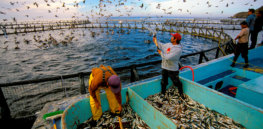
How can we protect wild salmon from interbreeding with farmed salmon? CRISPR gene editing is a solution
Upon an otherwise unruly landscape of choppy sea and craggy peaks, the salmon farms that dot many of Norway’s remote ...

GLP Podcast: ‘Big Fears, Little Risks’ — Documentary featuring GLP experts tackles GMO, vaccine skepticism
The evidence is in: genetic engineering promotes sustainable farming; vaccines save lives; and nuclear energy is our best hope of ...

The ‘storm in their minds’: How the gap between laboratory insights and clinical analysis is narrowing
When someone close to you develops signs of mental illness, you spring into detective mode. You ask questions, but the answers ...
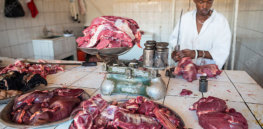
Reducing meat consumption to tackle climate change: What role will Africa play?
A burning issue in the world today is climate change. Across Africa, the effects are complex. They range from the ...

Mice: The intrepid soldiers helping us fight COVID-19
As highly infectious variants of COVID-19 emerge and devastate regions across the world, scientists continue to rely on unexpected foot ...
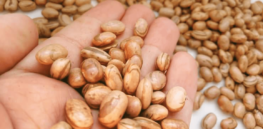
The story behind the 100% public GM bean reaching Brazilian plates
In some Brazilian supermarkets, it is already possible to buy a new genetically modified (GM) common bean, which bears the ...

Freezer burn wastes food. Now scientists are developing bio-based solutions to prevent recrystallization
Open the freezer door and there, way in the back, may be an old carton of ice cream growing spikes ...

Israel’s early COVID vaccine rollout went 1100% better than in the United States. What did they do differently?
[As of January 8, we had only] vaccinated 1.38% of our population [in the United States, while Israel had] vaccinated ...

Part 3: ‘Fallacious and wrongheaded’ — The Cartagena Protocol’s categorization of ‘living products’ of agricultural biotechnology as GMOs was a ‘nonsensical’ blunder that disrupted technological innovation and trade
Ten years after the coming into force of the Cartagena Protocol, its own supporters noted that effective implementation was fragmentary ...

Part 2: Viewpoint — Digging into the ‘prejudices’ that have plagued the Cartagena Protocol’s misguidance on international regulation of agricultural biotechnology
The Cartagena Protocol on Biosafety (Convention on Biological Diversity 2000), which was adopted in 2000 and entered into force in ...
GLP Podcast: Anti-smoking drug fights COVID; Designer babies unethical? Scientists invade social media GMO debate
Could a re-purposed smoking cessation drug help prevent the spread of SARS-COV-2? An increasing number of parents are screening their ...

Male investment: Humans are one of the few species in which men supply a lot more than sperm
Lee Gettler is hard to get on the phone, for the very ordinary reason that he’s busy caring for his ...
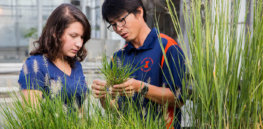
Part 1: Viewpoint — ‘Misguided and counterproductive’: Why the world needs to scrap the Cartagena Safety Protocol that influences regulation and impedes global trade of GM seeds and plants
According to a long-time and widespread scientific consensus, agri-food biotechnology regulation should focus on the risks and benefits of each ...

Podcast: Are we on the edge of an ‘insect apocalypse?’ GLP Founder Jon Entine debunks this pervasive myth
Could we be on the edge of an insect apocalypse — one that results in 'ecological collapse that would break ...
