


Sustainability & Climate Change

Preventing spread of parasites, not cutting pesticide use, key to protecting bees
For as long as beekeeping records have been kept, 1,100 years, there have been accounts of colony collapse disorder. Just ...
Sustainable farming advances: Global movement to ban pesticides and GMOs spur next-generation biotech pest controls
Their target remains GMOs—a range of agricultural products made with modern techniques of genetic engineering, from eggplant grown mostly in ...

Despite past warnings from Fidel Castro, Cuba green lights GMO crop cultivation amidst severe food shortages
Cuba officially opened the door to GM crops on [July 23] as a “complement to conventional agriculture”, in the midst ...

‘Greenwashing’: Does plant-based marketing mislead consumers about sustainability?
"Greenwashing” is the term used to describe the promotion of a product based on misleading claims of superiority to other ...

Agricultural technology key to protecting nature and preventing pandemics
Scientists are urging governments across the globe to adopt technology to reduce agriculture’s impact on the environment and slow the ...
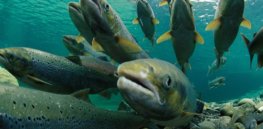
Viewpoint: Fast-growing GMO salmon poised to hit US stores in 2020, but why did it take 30 years?
In a few months, the first transgenic (GMO) salmon will be sold in the US, produced in an AquaBounty farms ...

Nanotechnology helps farmers battle drought, pests but GMO rules could slow adoption
Agriculture is responsible for 75% of global deforestation, 70% of water consumption and 30% of greenhouse gas emissions. The expected ...

GMO ‘halo effect’: How biotech crops benefit farmers who don’t grow them
Agricultural Economist Graham Brookes of PG Economics is the latest featured expert in the ISAAA Webinar series. His talk focused ...

Pandemic postpones Florida Keys’ decision on releasing GMO mosquitoes until August
The five-member commission of the Florida Keys Mosquito Control District voted unanimously to postpone a decision on the experiment for ...

Viewpoint: Organic fungicide copper sulfate and other copper products widely used by wine growers endangers humans, animals and insects
Organic farming is not chemical free. Copper sulfate is a popular one. How does it work and how does it ...
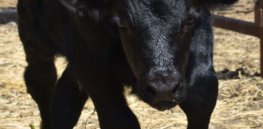
More meat with less environmental impact? CRISPR and one gene change could improve the sustainability of beef production
Scientists at the University of California, Davis, have successfully produced a bull calf, named Cosmo, who was genome-edited as an ...

Bayer launches carbon capture program to support ‘eco-friendly’ farming
Bayer AG launched a pilot program in the United States and Brazil on [July 21] that will pay farmers for ...

Food crops could be engineered to summon wasps that kill deadly plant pests
Plagued by stemborers, a type of crop parasitism, maize can launch a chemical defense that essentially calls in the cavalry ...

CRISPR could yield cyanide-free cassava, helping protect health of a billion people
“Roughly a billion people around the world rely on cassava as a source of calories, including around 40 percent of ...

Filipino farmer: Growing GMO crops ‘changed my life completely’
Ryan Lising, a biotech corn farmer from Magalang, Pampanga said that planting biotech corn changed his life completely. Before planting ...

Flood-proof crops? Plants engineered to grow taller may survive unstable environments
Stature matters to plants. Short crops can carry more grain without bending under their own weight—a key trait that helped ...

Over 90 percent of US corn, cotton and soybean produced from GMO crops, latest USDA data show
Genetically Engineered (GE) seeds were commercially introduced in the United States for major field crops in 1996, with adoption rates ...

After planting illegal GMO herbicide-tolerant cotton, Indian farmers poised to grow biotech eggplant, soybean and corn
The member farmers belonging to the Shetkari Sanghatana in Maharashtra, who have already broken the law by planting genetically modified ...

KFC developing world’s first bioprinted chicken nuggets for planned rollout in Russia in fall 2020
KFC is taking the next step in its innovative concept of creating a “restaurant of the future” by launching the ...

Video: Burger King’s lemon-grass fed eco-Whopper not backed by evidence, animal scientist says
On [July 14], Burger King launched promotions for its new “eco-friendly” Whopper, burgers made from cattle that have been fed ...

Consumers are as open to seafood labeled ‘cell based’ as they are to ‘wild caught’ and ‘farm raised’
The research found common names using the word cell — including cell-based and cultivated from the cells of — did ...

Growing fish in space: Lab-grown tuna could feed astronauts of the future
.... [S]ending items into space is extremely expensive—about $10,000 a pound. Space dwellers will need to find a way to ...

10 things everyone should know about GMOs in Africa
1. Biotechnology, genetic modification, genetic engineering and GMOs are terms for essentially the same process: breeding crops and livestock to ...

Why grow GMOs? Over 23 years, biotech crops boosted farm income $225 billion, cut pesticide use and slashed carbon emissions
Farmers who grow biotech crops have earned an additional $225 billion and greatly reduced agriculture's contribution to climate change, according ...

Pesticide fears spark winegrower interest in CRISPR-edited, disease-resistant grapes
According to a study conducted in 2011 by the U.S. Department of Agriculture, wine grapes were first domesticated around 8000 ...

African women are leading biotechnology advance across the continent
Women researchers are strongly influencing the adoption of agricultural biotechnology in Africa. “As African women, we are the ones who ...

Viewpoint: How biotech crops, lab-grown meat and other food innovations could jump start post-COVID economic recovery
COVID-19 threatens to slow or halt agricultural innovation in the US by exacerbating the decline in public R&D and threatening ...
