


Sustainability & Climate Change
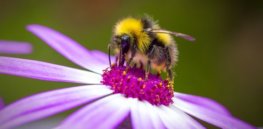
No Bee Armageddon: US honeybee colony numbers stable for 25 years. Thank capitalism?
Warnings of an impending "bee apocalypse" became widespread in 2006, after some commercial beekeepers reported the mass disappearance of worker ...

Viewpoint: Anti-GMO movement’s romanticized notions of ‘natural food’ won’t solve global nutrition challenges
Food science and farm technologies today provide Americans with an unprecedented abundance of safe, healthy and nutritious food. Yet, consumers ...
Podcast: Land use for animal agriculture has declined 140 million hectares since 2000. Can we keep this ‘livestock revolution’ alive?
We're often told raising animals for food takes a devastating toll on the environment, consuming ever more natural resources, hastening ...

What’s the most sustainable, affordable and nutritious sugar: Boutique imported unrefined whole cane v. domestic sugar cane v. sugar beet?
A drive toward The Everglades down US 98 between Yeehaw Junction and Belle Glade, FL takes you around the east ...

Crops engineered to stay green longer could produce more food for growing global population
A team of Clemson University scientists has achieved a breakthrough in the genetics of senescence in cereal crops with the ...

1/3 of the world’s soil is degraded. But technology can bring our farmland ‘back to life’
In Iowa they call it “black gold” – a fertile blanket covering the landlocked Midwestern state. Thousands of years of ...

Scientists urge speedy introduction of GMOs to help Ghana cut food imports
As Ghana’s government rolls out a master plan to drastically cut down on food imports, scientists are urging the speedy ...

Viewpoint: How the ‘Food Justice’ movement reinforces inequality while doing little to improve health outcomes
It’s not clear what concept of justice this activism actually serves ...
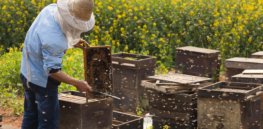
Global farming trends put pollinators at risk, threaten food security, study claims
A multinational team of researchers has identified countries where agriculture’s increasing dependence on pollination, coupled with a lack of crop ...
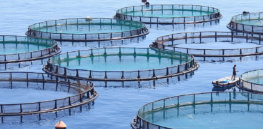
How market forces, self-regulation and GMO crops are making fish farming more sustainable
More sustainable aquaculture and better-managed fisheries are increasingly actionable for consumers ...
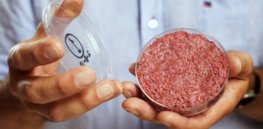
Price of lab-grown burger could drop from $280,000 to $10 by 2021
Lab-grown meat, first introduced to the world six years ago in the form of a $280,000 hamburger, could hit supermarket ...

Manipulating plant mitochondrial DNA could boost crop diversity, promote food security
Researchers in Japan have edited plant mitochondrial DNA for the first time, which could lead to a more secure food ...

‘Second generation’ GMO plants could turn marginal soils into productive farmland
Roughly one-third of the world’s arable land suffers from lack of accessible iron, rendering it inhospitable to staple crops like ...

Viewpoint: ‘We’ll be eating each other in 5 years’? How ‘catastrophic’ environmentalism threatens sustainable farming
In April, the cry of climate catastrophe seized the political agenda. ... It was the only subject driving the zombie ...

Podcast: Biologist Rob Wager takes on anti-GMO scientists at 1st International Conference on Agroecology
Economic growth fueled by market reforms has cut poverty in the developing world drastically over the last 30 years. But ...

Lab-grown protein could make up 35% of meat consumption by 2040 amid growing concerns about animal agriculture
Memphis Meats, based in Emeryville, California, is one of a growing number of startups worldwide that are making cell-based or ...

Hybrid corn boosts grain yields 89%, nitrogen use efficiency 73% over 70 years
During the past 70 years, hybrid corn varieties have increased both yield and nitrogen use efficiency at nearly the same ...

Podcast: Save our forests with GMO trees? Let’s look at the costs and benefits first
We have genetically engineered food; how about trees? In [June 8's] Academic Minute, North Carolina State University's Jason Delborne looks ...
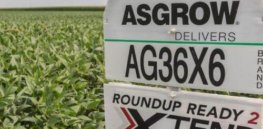
Monsanto’s GMO soybean ‘safe as conventional counterpart,’ EU expert panel confirms
Following the submission of [an] application .... from Monsanto (hereafter referred to as ‘the applicant’), the Panel on Genetically Modified ...
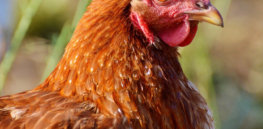
Explaining the debate over GMOs—and what is or isn’t ‘natural’— through the genetics of chickens
Chickens (and their eggs) provide a surprisingly down-to-earth illustration of the profound implications of the modern genetic revolution ...

Promoting lab-grown meat as ‘high-tech’ innovation could fuel consumer fear of alternative protein
In the near future, we will be able to mass-produce meat directly from animal cells. This cultured meat could change ...
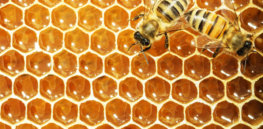
While managed honeybees get all the attention, some native pollinators ‘dwindle toward extinction’
Those honeybees you’ve been fretting over are getting native bumblebees sick. A new study shows that viruses infecting domestic honeybees ...
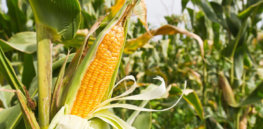
Pakistan marks another GMO crop milestone
Pakistani farmers and scientists are recognizing the need for genetically modified (GM) crops to help the country transition from subsistence ...

Twist upon twist in glyphosate battle: Next generation safer biopesticides on the way thanks in part to anti-chemical activists—who may yet oppose them
Will growers be forced to turn to less effective, more harmful solutions? ...

Alternative meat producers struggle to secure supply of yellow peas as demand for plant-based burger skyrockets
The soaring popularity of plant-based meat substitutes has shone a spotlight on a new star ingredient: the humble pea. From ...
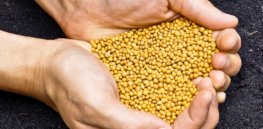
‘Smart’ fertilizers help feed booming global population while cutting pollution, slowing climate change
To feed the world’s growing population, farmers need to increase crop yields. Applying more fertilizer could help. But standard versions ...

African cassava mosaic virus poses serious threat to food security. Is CRISPR gene editing the answer?
.... African cassava mosaic virus (ACMV) has been linked to famine and indirectly to the deaths of thousands of people ...
