


Sustainability & Climate Change
Why do so many rightwing leaders question the science supporting climate change?
"Climate policy and climate research are under heavy attack from the Trump administration," Håkon Sælen recently said at the Cicero ...
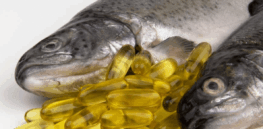
Sashimi that promotes healing and skin rejuvenation? It’s not the latest fad skin care breakthrough, but a yummy-tasting cultivated Omega-3-rich fish fat made using stem cell technology
Sashimi that looks, feels and tastes just like the real deal, but is actually grown in a laboratory. That is ...

Sustainability breakthrough: Scientists targeting the genetic code of pests
Pests can be the make-or-break factor for a season’s harvest. Between 20% to 40% of global crop production is lost ...
What do we need Seed Banks? 75% of plant genetic diversity has been lost since the early 20th century, and its losses are accelerating
Gene and seed banks are not static museums. They are living collections of genetic material, designed to support food security, ...
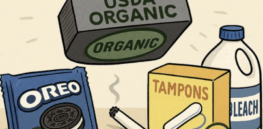
Viewpoint: The fastest growing delusion in America is chemophobia—and organic marketers are to blame
“Organic” might be the most abused word in the English language. Chemists, farmers, and marketers all use it—and none of ...
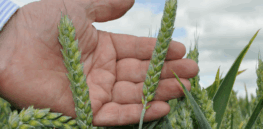
Fungicide alternative: Would your crops benefit from a genetically engineered vaccine?
Disease control within crop production systems has been very much centred on the development of complex organic chemicals such as ...

What’s driving food costs inflation?
From rice to coffee, cocoa to olive oil, extreme weather conditions are driving up the prices of staple foods around ...

Michael Grunwald: ‘How to Fix Our Food System and Save Our Climate?’
When veteran journalist Michael Grunwald set out to write his third book, he was determined not to produce a “Debbie ...
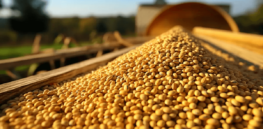
For food companies, GMO was a dirty word. Innovation in gene editing is soaring, changing the public discussion
The BBC reported that scientists at the University of Oxford, working in a collaboration with other international partners, have used ...

What’s the difference between GMO and CRISPR
What is a GMO? GMOs (genetically modified organisms) involve transferring a gene from one species to another to provide an ...
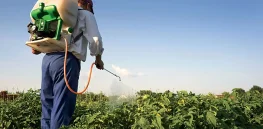
Viewpoint: The MAHA movement’s wrongheaded war on glyphosate is part of a misplaced broader attack on modern agriculture
The MAHA movement’s war on glyphosate is part of a broader war on modern farming — not only herbicides and ...

Video: How our food choices impact climate change
Our food production systems emit greenhouse gas emissions just like fossil fuels. But we don't talk enough about it. This ...

Human carelessness and climate change are killing millions of animals. Gene editing could save them. Should we use it?
It wasn’t our intention that humanity would become the planet’s greatest evolutionary force; yet the fact that we are confronts us ...

Viewpoint: Political paradox—why Trump’s budget plan ending carbon capture could lower climate-polluting emissions
The U.S. Department of Energy’s decision to claw back US$3.7 billion in grants from industrial demonstration projects may create an ...
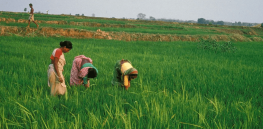
Viewpoint: The promise and challenges facing India’s turn toward gene-edited rice
In a notable milestone for India’s agri-biotechnology sector, the Indian Council of Agricultural Research (ICAR) announced the development of two ...

Unresolved mystery: Why has Bill Gates quietly become the largest private owner of farmland in the United States
Bill Gates, the tech titan turned global philanthropist, has quietly amassed a portfolio of over 100,000 hectares of farmland across the United States, ...
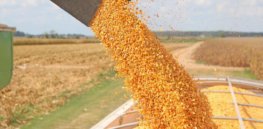
Is the global food supply collapsing as temperatures gradually increase? Just the opposite, as world is on track for record harvests
It’s not uncommon for people to tell me that global food production is already collapsing due to climate change. They ...
India and other warm-weather countries are growing climate resilient crops to blunt climate change
A sweltering heat wave decimated Pritam Singh’s wheat crop in 2022. That year, temperatures reached a record-breaking 127 degrees Fahrenheit ...

Video: Should we revamp our diet to eat mostly organic foods? Harvard gastroenterologist says fears are based on hysteria not science
Dr Trisha Pasricha, a Harvard-trained gastroenterologist and scientist, who also writes the ‘Ask a Doctor’ column for The Washington Post, ...
Can gene editing be a game-changer in improving crop resilience and sustainability?
A Mexico-based research centre believes it may have hit the bull’s eye when it comes to using technology to enhance ...

Viewpoint: ‘An entire ecosystem of antiscience has taken hold and turned deadly’
The ideologically-motivated assault on science threatens us all. Climate change is generating devastating heatwaves, wildfires, droughts, floods and superstorms. ...

How AI is rewriting the book on food and farming sustainability
The food production process begins on the farm, where AI technologies are helping farmers make smarter decisions. Precision agriculture, powered ...

Biotechnology is pushing the limits of beauty products
From fungi-derived ingredients to lab-grown collagen stimulators, biotechnology is rewriting the rules of what beauty products can achieve. At its core, ...
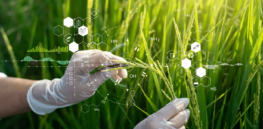
7 ways biotechnology can mitigate climate change challenges
As the world grapples with escalating climate change, the impacts on agriculture have become acute and inescapable. In 2025, rising temperatures, erratic ...

Even biodegradable plastic is stressing plants
Micro- and nanoplastics cause stress to crops such as lettuce and carrots, PhD candidate Laura Julia Zantis found. This can ...
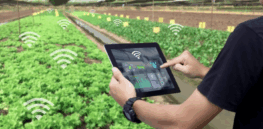
Viewpoint — ‘Less food waste, lower carbon footprints and a socially sensitive food system’: Tech-enabled farming intensification is the only science-based path to sustainability
Several trends become quickly apparent when we engage the public about agriculture. Consumers across the industrialized world reject concepts like ...
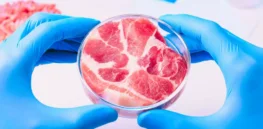
Lab grown meat and other cellular agricultural products face environmental challenges
“Cellular agriculture has the potential to be more sustainable in areas such as water recycling and renewable energy use, if ...
