


Sustainability & Climate Change

Gene editing opens the door in Indonesia to dramatic advances in sustainable farming but skeptics remain
Like other developing countries, Indonesia is facing a familiar dilemma: how to feed a growing population while protecting its extraordinary biodiversity ...

Viewpoint: France’s Le Monde endorses bizarre activist conspiracy disinformation about the ‘dangers’ of gene-edited crops
Le Monde published on December 10 (date on the web) and 11 (date of the print edition, published the day ...
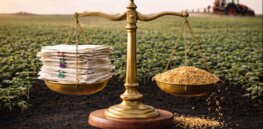
2026 will decide the legal future of the herbicide glyphosate—and could alter the shape of global agriculture
2026 is set to be a pivotal year for the fate of glyphosate, the active ingredient in Roundup and other ...
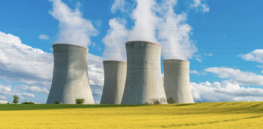
Viewpoint: Trump’s support for nuclear energy is a win for the climate
A president whose pandemic response was viewed by many as incompetent at best and brazen denial at worst spearheaded the ...
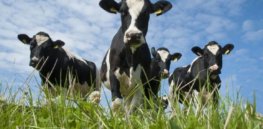
‘A whole lot of (methane) gas’: Grass-fed beef is not better for the climate, experts agree
Roughly a quarter of all global greenhouse gases come from food production, and beef accounts for the single biggest share ...

AI is a revolutionary tool to increase global farming output and food productivity
With the world's population projected to reach nearly 10 billion by 2050, the global agricultural sector faces a defining challenge ...

Disinformation Attacks on Food and Farming: Year in Review
Global farming and food policy is under intensive attack from an alliance of left-leaning environmental activists and the ideologically mushy ...
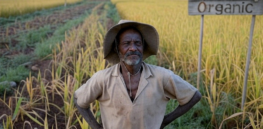
Viewpoint: For the developing world, ‘nature-friendly’ organic and regenerative farming lags in production and sustainability
Across the UK, we face an extensive and growing set of land-related environmental targets - spanning climate change mitigation, biodiversity ...
In the UK effort to align more with Europe, will it mothball its recently relaxed policy on gene-edited crops?
The [UK] government is attempting to negotiate an opt-out from European laws that ban the commercialisation of most forms of ...

Supreme Court may consider blocking further suits targeting the weedkiller glyphosate, which global regulatory agencies have found safe
The Supreme Court is poised to decide whether to take up a case involving weedkillers and cancer that could effectively ...
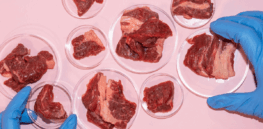
Why are we not eating more cell-based meat? Blame over-regulation, protectionist states, and skeptical consumers
In , we wrote about the excitement consumers and investors had for a new type of protein. By 2013, investors ...

Viewpoint: Organic proponents are wellness vaccine-skeptic grifters but with better branding
The organic industry is a multi-billion dollar cash cow (get it—I love a good pun) that is based on zero ...
Viewpoint: Why nuclear expansion should not be held hostage to oudated science and imagined health risks
With the return of nuclear energy to the public square and serious efforts among policymakers to commercialize a new generation ...
Europe’s small step to unwind its science-free precautionism of crop biotech
The European Union recently agreed to ease restrictions on new genomic techniques (NGTs) for food, in the most significant change to ...

How once food-poor India’s advanced seed genetics usurped China’s global dominance of rice production
India has become the world's largest rice producer, beating China, with a total output of 150.18 million tonnes, Union Agriculture ...
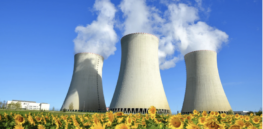
Can AI’s enormous power demands resuscitate the low-carbon nuclear power industry?
Giants like Google, Amazon, and Microsoft have inked numerous deals in recent years with nuclear companies to power data centers; ...

Politicization of Health & Science: Year in Review
Ideology-driven misinformation is a grave and growing threat to science and society. False claims spread faster than facts; confusion has ...
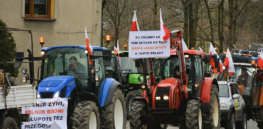
Viewpoint: European farmers protest the nightmare of the Green Deal and other science-rejectionist EU agricultural regulations
Over the past two years, farmers throughout Europe have mobilized on a scale that should dominate news headlines. ... European farmers are ...

Glyphosate’s climate dividend: Weedkiller reduces greenhouse pollution equal to taking 21.8 million cars off the road each year
This paper estimates the annual global carbon dioxide equivalent (CO2e) emissions from the manufacture, distribution and farm level use of ...
Well-intentioned but scientifically misguided activist claims of what constitutes biological diversity hinder actual biodiversity and agricultural progress
... [S]ince the 1990s, well-intentioned laws shifted the governance of biodiversity from a shared global resource to the sovereign control ...

Viewpoint: RFK, Jr., MAHA, and USDA close ranks in support of ‘regenerative agriculture’. Here’s why this trendy concept is bad policy
[On December 10, 2025], Kennedy, USDA Secretary Brooke Rollins, and Dr. “Snakeoil” Oz trotted out in front of the cameras ...

Europe pursues three different regulatory paths in efforts to open the gates to agricultural gene editing
The landscape of agricultural innovation in Europe is undergoing its most significant transformation in decades. New Genomic Techniques (NGTs)—including highly ...
Discovery of growth ‘switch’ in cold-hardy plants could unlock pathways to develop more cold-resilient crops
Scientists in South Korea have discovered a rapid molecular “switch” that reprograms plant growth in response to cold stress. The ...
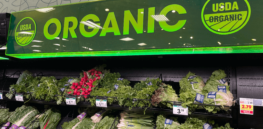
Organic food consumer snapshot: Okay benefits but only if cost premium is under 5%
Understanding what truly drives consumers to choose organic or locally produced foods requires looking beyond assumptions and into real behavior ...

Corporate control, ecological challenges and food safety: Challenges await expansion of the gene-editing crop revolution
Ethical considerations surrounding genome editing are as complex as the science itself. As the debate rages on about the safety ...

Viewpoint: U.S. and Europe lagging behind China’s embrace of crop gene editing
Ships, chips, and missiles dominate discussions about defense. But don’t forget food. Secure supplies are key to supply-chain sovereignty — ...
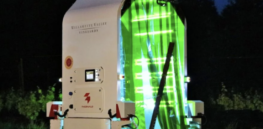
The expanding role of robotics in agriculture … on Earth and in space
Despite challenges, agriculture remains an appealing sector for robotics applications. ... In recent decades, agri-tech companies have been investing in ...
