


Law, Regulations & Ethics

Dicamba herbicide drift damaged 3.6 million acres of soybean crops in 25 states
A weed killer called dicamba has damaged more than 3.6 million acres of soybean crops, or about 4 percent of ...

IQ debate: How much of intelligence is determined by genetics?
[Editor's note: Robert Plomin is deputy director of the MRC Social, Genetic and Developmental Psychiatry Center at King’s College London.] ...

Viewpoint: Gender equity debate demands understanding of biological differences
[Editor's notes: Marta Iglesias is a predoctoral researcher in the Champalimaud Neuroscience Programme, Lisbon. Her research is focused on how ...

Viewpoint: Confirmation bias, conflicts of interest plague ‘science’ behind glyphosate cancer claims
Anti-biotech activists hate the herbicide glyphosate, sold by Monsanto under the brand name Roundup. Those activists won a victory in ...

Creating a brain cell ‘periodic table’ from live tissue
There are 86 billion neurons in the human brain and no two of them are exactly alike. If doctors and ...

CRISPR gene-edited cassava could help stave off food crisis in Nigeria
Cassava brown streak disease can keep a cassava farmer awake at night. It can lead to complete crop loss, is difficult to ...

‘Designer babies’ are coming soon, but who gets to have them?
Designer babies are coming in 20 to 30 years. Your children will be able to select, to some degree, their ...
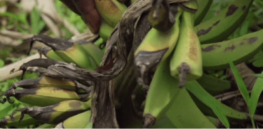
Viewpoint: Anti-GMO activist Doug Gurian-Sherman’s Food Evolution review misrepresents Uganda banana research
[Editor's note: Patricia Nanteza is a science communicator at Uganda's National Banana Research Program. The following is excerpted from her letter to ...

‘Awakened’ vegetative man shows how viral stories raise false hopes
A man recently “woke” from a vegetative state, crying again after “regaining consciousness,” creating a flurry of news coverage. Yet as exciting ...

Two US Congressional committees ask IARC cancer agency to testify, citing ‘scientific integrity’ concerns
Two influential U.S. Congressmen have asked the World Health Organization’s cancer agency to get ready to testify about its work ...

Viewpoint: ‘GMO paranoia’ blocking scientifically sound solutions to food system problems
According to NPR’s All Things Considered, [genetically engineered pigs] could save farmers millions of dollars on heating and food. ...
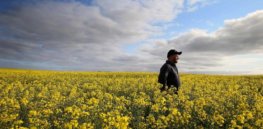
Australia imports over 60 GMO food crops—but farmers can only grow one
Food derived from 60 genetically modified crops can be imported into Australia, but local growers can only grow one GM ...

GM yeast grows non-psychoactive marijuana compound for potential epilepsy treatment
A non-psychoactive compound found in marijuana plants called cannabidivarin (CBDV) has shown promise in the treatment of severe cases of epilepsy ...

Conjoined twins: How do you decide which one to save?
Doctors at the MassGeneral Hospital for Children faced an ethical challenge when a pair of conjoined twins born in Africa ...

Rooting racism and sexism out of artificial intelligence
In 2016, Microsoft released a “playful” chatbot named Tay onto Twitter designed to show off the tech giant’s burgeoning artificial ...

The race to grow meat without slaughtering animals—can genetic engineering help?
Operating with a team of just 10 (though it's expected to grow to 40 in a matter of months), [Memphis ...

Fighting malaria: Bacteria targets parasites in mosquito gut
Using a bacteria strain that colonizes the mosquito digestive tract and spreads rapidly throughout the populations, scientists have successfully inhibited ...

Safer CRISPR? Cas13 version edits RNA, not DNA
CRISPR, while a major leap forward in gene editing, can still be a blunt instrument. There have been problems with ...
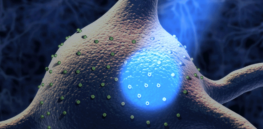
‘Chemical surgery’ could treat diseases by fixing genetic mutations
A breakthrough in “chemical surgery” that can correct a type of genetic mutation behind a host of diseases has been ...
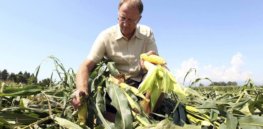
How one farmer stood up to anti-GMO activists and the Italian state—and won
As chair of the local farmers federation [Giorgio Fidenato, a small-holder farmer growing corn, tomatoes and soybeans in Italy] pushes for ...

Video: How glyphosate herbicide enables no-till, environmentally friendly farming
[Editor's note: Jake Freestone is the manager of an arable and sheep LEAF Demonstration Farm in Tewkesbury, England.] [N]o-till or zero-till, ...

Will advanced breeding technologies render GMO crops obsolete?
Genetically modified (GM) crop technology is not the answer to helping UK farmers produce more food, according to the head ...

Controversy walks hand-in-hand with the artificial womb, but is it warranted?
Research into the development of an artificial womb has sparked a wide range of conjecture from bioethicists who worry about ...

Should the government regulate gene-edited crops?
“They call us the food police.” That’s how Greg Jaffe described his work as director of biotechnology for the Center for ...

Should we use gene drives to eradicate rats and other pests?
The CRISPR gene editing tool enables very precise changes to the genetic composition of its host. While the technology is ...
Disease-resistant GM potatoes that reduce pesticide use ‘worked brilliantly’ in UK field trial
A genetically-modified (GM) potato designed to resist a devastating plant disease has worked “brilliantly” during the first year of field ...

Can any GMO documentary, pro or con, get the issue right?
Both films [Food Evolution and Island Earth] were fun to watch. They both also get a lot of the facts right. But ...
