


Daily Human Digest
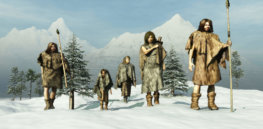
Early humans endured bitter cold without fire during the Plesitocene era
The Middle Pleistocene (125,000-780,000 years ago) was marked by periodic oscillations between a climate similar to today's and much cooler ...

Lunar DNA ark? Scientists want to cryogenically store the genes of 6.7 million species on the moon, just in case
[A “lunar ark” gene bank, could] be safely hidden in [the moon's] hollowed-out tunnels and caves sculpted by lava more ...
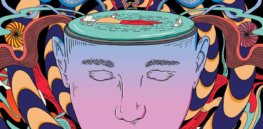
Is psychedelic-assisted group therapy the wave of the future?
Researchers are beginning to investigate psychedelic-assisted group therapy as a way to let patients connect more deeply, exploring the inner ...
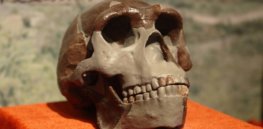
Survival of the brainiacs: Controversial new thesis says humans evolved smarter to capture smaller prey
As the largest animals on the landscape disappeared, the scientists propose, human brains had to grow to enable the hunting ...
Twin peak: Global twin rates at historic highs, and here’s why
Researchers analysed records from more than 100 countries and found a substantial rise in twin birthrates since the 1980s, with ...

Some animals engage in heinous behaviors — cannibalism, eating offspring, torture and rape. Why did evolution make that happen?
While it is true that rape, torture and murder are more commonplace in the animal kingdom than they are in ...

Can training make you a premier long distance runner — or are your abilities determined at birth?
All of our skeletal muscles are made up of a combination of two types of fibre: slow-twitch muscle fibres and ...

Author Simon Baron-Cohen on how autism has driven human innovation
In [cognitive neuroscientist Simon] Baron-Cohen's new book [The Pattern Seekers: How Autism Drives Human Invention], he argues that humans became ...
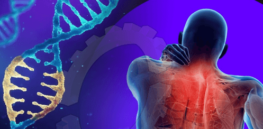
‘What we have right now does not work’: Gene editing aims to relieve chronic pain
In experiments on laboratory mice, researchers found that temporarily repressing a gene involved in sensing pain increases pain tolerance, lowers ...
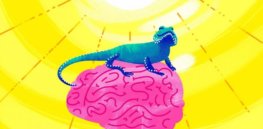
Pop psychology and the myth of the ‘lizard brain’
“As a neuroscientist, I see scientific myths about the brain repeated regularly in the media and corners of academic research,” ...
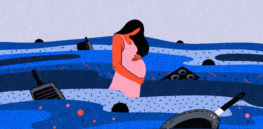
More than 50 environmental chemicals found in pregnant women and their newborns
Researchers have detected more than 50 new environmental chemicals lurking in people's bodies, the vast majority of which are little ...

Prehistoric men hunted and women gathered? New evidence suggests that’s too simple
Archeological evidence from Peru has revealed that some ancient big-game hunters were, in fact, women, challenging what science writer James ...
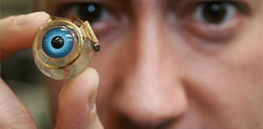
Bionic eyes: Generating visual perceptions and hope for those who cannot see
In the 1970s, [biomedical engineer William] Dobelle had shown that electrically stimulating visual brain areas (the visual cortex) caused people ...

Are humans wired by evolution to be couch potatoes? This evolutionary biologist believes so
A professor at Harvard and a keen marathoner – sometimes barefoot – [Daniel Liberman’s] life’s work in evolutionary biology makes ...
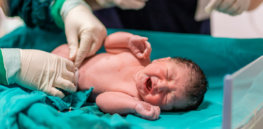
Video: What the lungs of newborns look like when they take their first breaths
[U]sing a delicate sensor-belt wrapped around the chests of full-term newborns moments after their delivery, a team of researchers from ...

Our ‘evolutionary superhighway’: How the brain connects smells and memories
Whereas other sensory systems are thought to have been re-routed during human evolution, [a new] study suggests that olfactory-hippocampal functional ...

While teenage medical claims fell during COVID lockdowns, mental health claims jumped by more than 20%
[T]he New York nonprofit [Fair Health’s] seventh [report] in a series on the pandemic is the result of analysis of ...

The placebo effect and pain reduction: Brain imaging helps explain how it works
Does the placebo [effect] change the way a person constructs the experience of pain, or is it changing the way ...
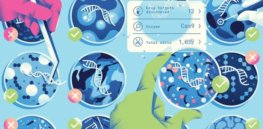
Jennifer Doudna on how CRISPR is moving out of the lab to transform medicine and revolutionize disease treatments
In 2021, we will see increased use of CRISPR-Cas enzymes to underpin a new generation of cost-effective, individualised therapies. With ...
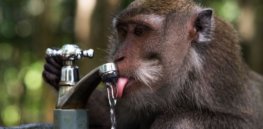
Humans are water-saving apes? Homo sapiens’ ability to run on less water may have driven our evolution
Our bodies are constantly losing water: when we sweat, go to the bathroom, even when we breathe. That water needs ...
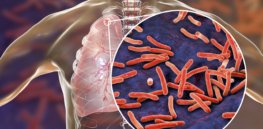
One gene dramatically increases our chances of getting tuberculosis. Here is how evolution mostly knocked it out
Tuberculosis is the deadliest infectious disease in human history, responsible for the deaths of about a billion people in the ...

What makes a face attractive? How AI interprets the subjective notions of human beauty
Researchers at the University of Helsinki and University of Copenhagen investigated whether a computer would be able to identify the ...

What does it mean to have a ‘near death’ experience?
Given that near-death experiences happen with limited warning, they are almost impossible to test. “We’re dealing with a very short ...
A protein inherited from Neanderthals may offer limited protection against COVID-19
Recent advances in proteomic technology - that is, the capacity to isolate and measure hundreds of circulating proteins at once ...
3 myths of how the brain works dispelled
As a neuroscientist, I see scientific myths about the brain repeated regularly in the media and corners of academic research ...
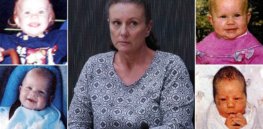
Kathleen Folbigg: Convicted serial baby killer could be exonerated as rare genetic mutations may explain her children’s deaths
Kathleen Folbigg is in jail for killing her children as infants between 1990 and 1999. [Recently] her supporters released a ...

Could common dietary supplement choline reduce the risk of Alzheimer’s?
The human gene for apolipoprotein E (APOE) comes in three variants. APOE4 is linked to a higher risk for Alzheimer’s, ...
