


Daily Human Digest
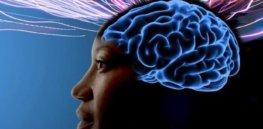
How far can we enhance the brain before human identity is lost?
Facebook recently announced it had acquired CTRL-Labs, a U.S. start-up working on wearable tech that allows people to control digital devices ...

‘Genome doping’: Gene-edited babies could change the world of athletics
With the taboo on human gene editing in the process of being shattered, children whose genomes have been modified before ...
Rethinking Huntington’s: Disease may have origins in the womb
From the first days of the tiny lab-grown organs’ development, primitive “progenitor cells” romped out of their birthplaces in the ...
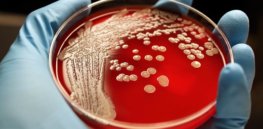
Deadly antibiotic resistance could be countered by gene drives
Where a gene drive that cuts and destroys plasmids may fail, a gene drive that cuts, pastes, and copies plasmids ...

Tracing evolution of mammalian hearing: Essential ear bones were once part of the jaw
One hundred and twenty million years ago, when northeastern China was a series of lakes and erupting volcanoes, there lived ...

Finding a new home: Humanity’s survival could depend on a 1,000-year space journey to Proxima b
Located in the triple-star Alpha Centauri solar system, Proxima b has a mass 1.3 times that of Earth and a ...

Free will doesn’t exist? Why we shouldn’t be swayed by this ‘flawed experiment’
One of the most fervent of late 19th century materialists, T.H. Huxley, described human beings as “conscious automata” with no ...
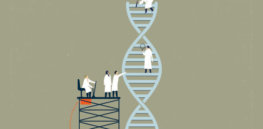
New CRISPR tool pinpoints potentially harmful off-target edits more efficiently
With the first CRISPR gene editing therapies now in clinical trials there is an increased urgency to be able to ...

Anxiety in dementia patients is often ‘overlooked, underestimated and not identified’
It’s not uncommon for people with dementia to roam around a lot and to be very restless, both day and ...

Pursuit of ‘speech prosthetic’ for people who’ve lost the ability to talk could be boosted by this discovery
One [area of the brain is called] the “hand knob,” which, as the name suggests, is a knobby region of ...

Distinctive ‘Habsburg jaw’ of medieval kings and queens was created by centuries of inbreeding, study suggests
Many of the kings and queens of the Spanish Habsburg dynasty, which ruled across Europe from the 16th to the ...
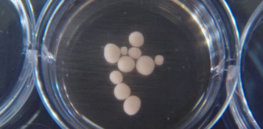
Lab-grown mini brains ‘perilously close’ to consciousness?
Neuroscientists at more than a hundred laboratories around the world are now cultivating small brains from human cells in glass ...

How ancient humans ‘self-domesticated’ their own faces to appear more friendly
One hypothesis for how humans transitioned from developing a robust Neandertal visage in maturity to retaining finer features throughout life ...
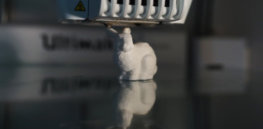
3D-printed plastic bunny contains its own blueprint coded in synthetic DNA
The kumquat-sized bunny, cute as it may be, isn’t a toy or a good luck charm. But if you cut ...

‘Proteomic clock’ could measure our true biological age through a blood test
A few hundred of the thousands of proteins circulating in our blood turn out to be a fairly accurate forecaster ...

Promise of treating Alzheimer’s with sensory stimulation: ‘Everybody can do it at home’
At SfN 2019, we interviewed Li-Huei Tsai, director of the Picower Institute for Learning and Memory in the Department of ...

Can we ‘program’ people through epigenetics to enjoy exercise?
Some people wake early every morning to run, bike, swim, or lift. For others, finding the motivation to work out ...

Does AI represent our best bet for extending human lives?
Co-founder and CEO [of Insilico Medicine] Alex Zhavoronkov said he believes there is no greater goal in healthcare today—or, really, ...

Rise of perfectionism and its toll on our mental health
Once an issue that affected a select few, perfectionism is now a growing cultural phenomenon, fueled by modern parenting and ...

ASMR: Being triggered by ‘ordinary sounds and sights’ may be more than pseudoscience
What do the sounds of whispering, crinkling paper, and tapping fingernails have in common? What about the sight of soft ...
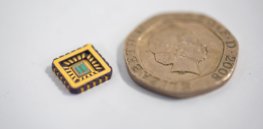
‘Paradigm-changing’: Artificial nerve cells could lead to treatments for Alzheimer’s, other brain disorders
Scientists have made artificial nerve cells, paving the way for new ways to repair the human body. The tiny "brain ...
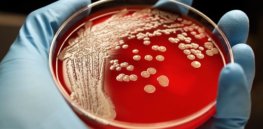
Viewpoint: Battling antibiotic resistance requires ‘detection, prevention, innovation’ to counter rising threats
The latest Antibiotic Resistance Threats Report, recently published by the Centers for Disease Control and Prevention, shows that antibiotic-resistant (AR) infections ...
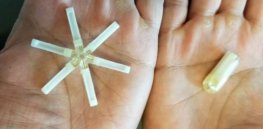
Once-a-month birth control pill could be possible with innovative design
Scientists say they have made a breakthrough on developing a contraceptive pill that only needs to be taken once a ...

Your dog may be paying closer attention to your words than you realize
Dogs pay much closer attention to what humans say than we realised, even to words that are probably meaningless to ...

Why finding a blood test for Alzheimer’s could be the key to new treatments
Alzheimer’s patients who were at earlier stages of the disease did better than those with more advanced cognitive decline [in ...
Does your DNA leave a unique identifying code? Not always, if you get a bone marrow transplant
Three months after his bone marrow transplant, Chris Long of Reno, Nev., learned that the DNA in his blood had ...
Why it’s so hard to call someone a sex addict: ‘Who’s to say what’s normal or abnormal’
Today we have a tiny number of true sexual compulsives who do things like getting repeatedly arrested for public masturbation. We ...
