


Daily Human Digest

Sperm test could predict odds of fathering child with autism
Some men who have an autistic child carry mutations linked to the condition only in their sperm, according to a ...

Can we use the brain’s ‘biochemical changes’ to predict—and prevent— suicide?
No field of scientific inquiry can single-handedly untangle a phenomenon as complex as suicide. But [Kees] van Heeringen and many ...
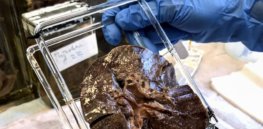
We’ve been dealing with measles for at least 2,000 years, genetic analysis suggests
In the 10th century, Persian physician Abu Bakr Muhammad ibn Zakariya al-Razi wrote about patients with fever, anxiety and full-body rashes — ...

Stepping in Goop: Gwyneth Paltrow’s Netflix series promotes ‘junk science, gibberish and unproven health claims’, says microbiologist
In the third episode of Goop's Netflix series, a female guest remarks that we women are seen as "very dangerous ...

Brain building block glutamate could be key to treating Alzheimer’s, schizophrenia, depression
Glutamate is often called the “major excitatory neurotransmitter” within the brain. It is the brain’s “go” signal. [Neuroscientist David] Baker ...

Why we’re seeing more cases of autoimmune disorder PANDAS—if it even exists
In 1998, Susan Swedo, then a pediatrician at the U.S. National Institutes of Health (NIH), first proposed PANDAS to explain ...

Bizarre deep sea microbe could help explain origins of ‘animals, plants, fungi and humans’
Two billion years ago, simple cells gave rise to far more complex cells. Biologists have struggled for decades to learn ...
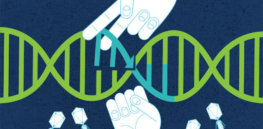
Developing a ‘kill switch’ to make CRISPR gene editing more precise—and safer
[Microbiologists] stumbled onto tools now known as anti-CRISPRs. These proteins serve as the rocks to CRISPR’s molecular scissors. And soon, ...

The psychology of risk: ‘Psychopathic traits regularly found in successful people’
One problem with research on psychopathy is that it largely only deals with criminals. [Psychiatrist Randi] Rosenqvist believes it would ...

‘Mini-computers’ found in our neurons could be key to developing more powerful AI networks
With just their input cables, human neurons can perform difficult logic calculations previously only seen in entire neural networks. To ...

Always late? Psychologist explains complex reasons behind a trait so annoying to others
Punctual people may believe that late people are passive-aggressive and that their time is more valuable than those who wait for ...
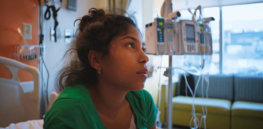
Teenager’s experimental gene therapy treatment could change the lives of millions of sickle cell patients worldwide
Meet Helen Obando, a shy 16-year-old who likes to dance when her body isn’t ravaged by the debilitating symptoms of ...

Video: In 40 years, babies could be made in the lab from skin cells
The "birds and the bees" as we know them are changing. A new process called in vitro gametogenesis (IVG) is ...

‘Living, self-healing xenobots’ made from frog stem cells could lead to new drug delivery system
They’re perfect strangers: biological entities that, up until this point, had no business being together. And yet, [microbiologist Michael] Levin ...

Autism may share genetic links to schizophrenia, bipolar disorder, depression and other psychiatric disorders
Some of the inherited variants implicated in autism also increase the odds of other conditions, including schizophrenia, bipolar disorder, depression ...
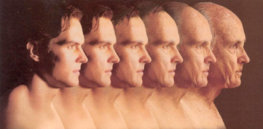
Aging is ‘truly personal’: You could have the immune system of a teenager and the metabolism of a 50-year-old
One 50-year-old has the nimble metabolism of a teenager, while another’s is so creaky he developed type 2 diabetes — ...
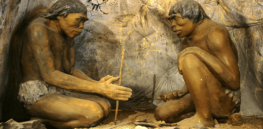
Extinct human ancestor Homo erectus evolved in Africa—not Asia—new fossil study suggests
Homo erectus reached the Indonesian island of Java at some point between 1.3 million to 1.5 million years ago, according ...

‘Strange’ twist for viral version of Parkinson’s: It may take decades for disease symptoms to appear
In recent years, a mysterious surge of a Parkinson’s-like disorder spread around the world, causing an estimated 10-15% of the ten million worldwide ...

How did early humans avoid being wiped out by tuberculosis?
Tuberculosis is responsible for as many as one billion deaths in the last 200 years alone, but its murderous history ...

Sex-linked mutations point to need for closer look at causes of autism in women, study suggests
Autism may stem from a different — and larger — set of genetic mutations in women than it does in ...

Genetic mutation blamed for mysterious heart condition killing young members of Amish community
[D]octors at the Mayo Clinic say they’ve uncovered the cause of a mysterious heart condition that had suddenly killed over ...

Can we add ‘cooking’ to the list of things that drove human evolution?
Theories about the driving forces of evolutionary differentiation that separated us from our ape relatives are not lacking. Toolmaking, predisposition to ...
Age isn’t the thing that saps our memories: ‘Experiencing new things is the best way to keep the mind young’
Twenty-year-olds don’t think, “Oh dear, this must be early-onset Alzheimer’s.” They think, “I’ve got a lot on my plate right ...

Video: Building a bionic prosthetic leg that ‘thinks for itself’
It’s no question that researchers, doctors, and engineers want to design more effective robotic limbs that can help paralyzed and ...

Exposure to different types of dirt may boost body’s immune system, study suggests
Differences in allergy incidence between the two sides of the Finnish-Russian border might have something to do with exposure to ...
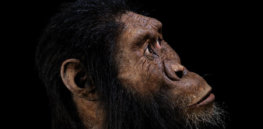
Past decade taught us how wrong we were about human evolution, including when our ancestors left Africa
In recent years, anthropologists around the world have discovered new human ancestors, figured out what happened to the Neanderthals, and pushed ...

Are we getting closer to understanding how our brains make memories?
How do memories work? That has been a burning question for over a century, since Richard Semon introduced the term ...
