


Daily Human Digest

Prehistoric ‘chewing gum’ contains Neolithic girl’s DNA, allowing scientists to reconstruct her face
Scientists in Denmark have squeaked out an entire human genome from a prehistoric piece of “chewing gum.” Made from birch ...

Viewpoint: There’s a repeatability problem with CRISPR experiments. Only ‘self-governance’ can fix it
Many scientists assume that if a chunk of a gene is missing then the protein that it encodes will not ...

Here’s a virus that CRISPR can’t touch—it could help researchers gain better control of the gene-editing tool
Bacteria and phages are likely locked in an arms race. The former evolve new kinds of scissor enzymes, and the ...

Non-addictive version of ecstasy ‘party drug’ emerges as potential treatment for PTSD, anxiety
MDMA, or ecstasy, once had the reputation of exclusively being an illicit party drug popular at raves and dance clubs ...

Children showing signs of autism should be treated before diagnosis is confirmed, under new guidelines
Pediatricians should start treating children who show signs of autism even before tests confirm a diagnosis, according to the newest ...
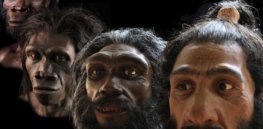
Our ancestors may have evolved the ability to talk 27 million years earlier than we thought
Some scientists have theorized that it only became physically possible to speak a wide range of essential vowel sounds when ...

Video: Neuroscientist Sergiu Pasca on his pioneering efforts to grow brain organoids from stem cells
When [Stanford University brain researcher Sergiu] Pasca started his own lab at the university in 2014, he continued working on ...
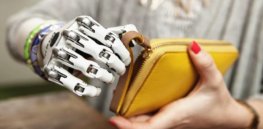
Future of amputations? New technique may help patients move prosthetic limbs like real ones
On this November morning, [surgeon Jason] Souza and Walter Reed’s director of surgery, Dr. Kyle Potter, have met Carty at ...

‘Grandmother hypothesis’ may explain why killer whales and humans evolved menopause
There's a rare human trait that doesn't often make it into debates about what makes our species unique: menopause. Humans ...

Infographic: These blood biomarkers could be critical to diagnosing, treating Alzheimer’s
Researchers are investigating a host of molecules found in the blood that could reveal pathological processes in the brain. Here ...

Underdiagnosed mutation in African American populations increases risk of heart failure
An underdiagnosed genetic mutation in people of African descent carries an increased risk for heart failure, according to a study ...
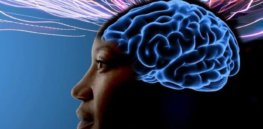
How far can we enhance the brain before human identity is lost?
Facebook recently announced it had acquired CTRL-Labs, a U.S. start-up working on wearable tech that allows people to control digital devices ...

‘Genome doping’: Gene-edited babies could change the world of athletics
With the taboo on human gene editing in the process of being shattered, children whose genomes have been modified before ...
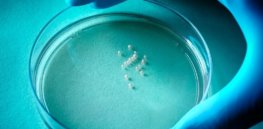
Rethinking Huntington’s: Disease may have origins in the womb
From the first days of the tiny lab-grown organs’ development, primitive “progenitor cells” romped out of their birthplaces in the ...
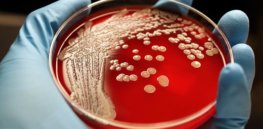
Deadly antibiotic resistance could be countered by gene drives
Where a gene drive that cuts and destroys plasmids may fail, a gene drive that cuts, pastes, and copies plasmids ...

Tracing evolution of mammalian hearing: Essential ear bones were once part of the jaw
One hundred and twenty million years ago, when northeastern China was a series of lakes and erupting volcanoes, there lived ...

Finding a new home: Humanity’s survival could depend on a 1,000-year space journey to Proxima b
Located in the triple-star Alpha Centauri solar system, Proxima b has a mass 1.3 times that of Earth and a ...

Free will doesn’t exist? Why we shouldn’t be swayed by this ‘flawed experiment’
One of the most fervent of late 19th century materialists, T.H. Huxley, described human beings as “conscious automata” with no ...
New CRISPR tool pinpoints potentially harmful off-target edits more efficiently
With the first CRISPR gene editing therapies now in clinical trials there is an increased urgency to be able to ...
Anxiety in dementia patients is often ‘overlooked, underestimated and not identified’
It’s not uncommon for people with dementia to roam around a lot and to be very restless, both day and ...
Pursuit of ‘speech prosthetic’ for people who’ve lost the ability to talk could be boosted by this discovery
One [area of the brain is called] the “hand knob,” which, as the name suggests, is a knobby region of ...

Distinctive ‘Habsburg jaw’ of medieval kings and queens was created by centuries of inbreeding, study suggests
Many of the kings and queens of the Spanish Habsburg dynasty, which ruled across Europe from the 16th to the ...
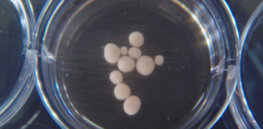
Lab-grown mini brains ‘perilously close’ to consciousness?
Neuroscientists at more than a hundred laboratories around the world are now cultivating small brains from human cells in glass ...

How ancient humans ‘self-domesticated’ their own faces to appear more friendly
One hypothesis for how humans transitioned from developing a robust Neandertal visage in maturity to retaining finer features throughout life ...
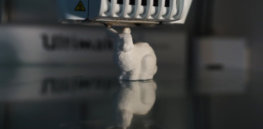
3D-printed plastic bunny contains its own blueprint coded in synthetic DNA
The kumquat-sized bunny, cute as it may be, isn’t a toy or a good luck charm. But if you cut ...

‘Proteomic clock’ could measure our true biological age through a blood test
A few hundred of the thousands of proteins circulating in our blood turn out to be a fairly accurate forecaster ...
Promise of treating Alzheimer’s with sensory stimulation: ‘Everybody can do it at home’
At SfN 2019, we interviewed Li-Huei Tsai, director of the Picower Institute for Learning and Memory in the Department of ...
