


Daily Human Digest

Gene therapy offers hope for untreatable CTE brain disorder
[Researchers from Weill Cornell Medical College] published a new study (“Anti-Phospho-Tau Gene Therapy for Chronic Traumatic Encephalopathy”) in Human Gene Therapy that ...

Collecting DNA samples from migrant detainees opens door to enhanced government surveillance
[T]he United States government will begin collecting DNA samples from thousands of people detained by immigration officials, including minors, and ...
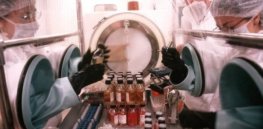
Virus used to deliver gene therapy treatments may increase liver cancer risk, study suggests
Just as gene therapy finally seems to be living up to its promise, a study has revived a lingering worry ...

Can a DNA test determine if your biological age matches your chronological age?
I consider myself to be a fairly healthy person, to my own standards at least. But does my DNA tell ...

Viewpoint: In the face a gene-editing revolution, President Trump should push for moratorium on human germline editing
In the face of the rapid development of the most powerful technologies ever invented — CRISPR germline gene editing, “artificial ...

Deeper understanding of our ‘sense of touch’ could lead to better prostheses
Imagine you’re holding a pen by the tip-side in between your thumb and index finger. You close your eyes and ...

‘Chicken or the egg’? We need to rethink our understanding of Alzheimer’s progression, study suggests
To the non-scientist, the argument of what came first, the chicken or the egg may seem a bit esoteric. Yet ...

Do genetics determine our political beliefs? Why twin studies may not be able to answer the question
In the late 1960s, researchers began to consider the interaction between genes and environment as a possible basis for all ...

Podcast: How old is your dog in human years? Genetic study offers a new way to answer that question
How old is your four-legged best friend? Common wisdom says that a dog ages seven years for every human year ...

‘Chilling’ solution to Fermi paradox: Are intelligent life forms destined to destroy themselves?
If we compress the history of the universe into a single year, Earth and our solar system formed around Labor ...

Neuroscience had a ‘transformative’ decade, giving us brain-computer interfaces, new research tools
I rarely use the words transformative or breakthrough for neuroscience findings. The brain is complex, noisy, chaotic, and often unpredictable ...

DNA to be collected from migrants in custody through Trump administration pilot program
The Trump administration will begin collecting DNA samples from some migrants in US Customs and Border Protection custody as part ...

Protein tangles may help predict where and how Alzheimer’s will strike the brain
Tangles of a protein found inside the brain cells of people with Alzheimer’s disease can be used to predict future ...

‘Almost no limit’: Synthetic biology has turned the stuff of science fiction into the stuff of science
Synthetic biology, or the application of engineering principles to the design of life, presents world-changing prospects. Could components of a ...

Genetic analysis reshapes our understanding of when humans first arrived in North America
For more than half a century, the prevailing story of how the first humans came to the Americas went like ...

Why it’s so difficult for human embryos to survive CRISPR gene editing
CRISPR may one day wipe out devastating genetic diseases throughout entire family lines, or even the human race. But to ...

‘Connecticut vampire’s’ identity revealed through genetic analysis of remains
Back in 1990, children playing near a gravel pit in Griswold, Connecticut, stumbled across a pair of skulls that had broken ...

BRCA nightmare: Genetic testing analysis changes—after preventive surgery
When she was in her early 30s, Katy Mathes decided to check her cancer risk. A genetic test showed a ...

Another benefit of regular exercise— ‘agile, fast-moving sperm’
Regular physical activity can keep a man’s sperm in tip-top shape, a new study suggests. The research was published [December 20] in ...

Why are Americans obsessed with unproven CBD supplements?
CBD belongs to a class of chemicals called cannabinoids, dozens of which have been identified in cannabis and hemp plants, ...

How whales got so big eating tiny krill. And why they don’t get bigger
Pound for pound, the blue whale’s reign is indisputable. At around 100 feet long and 100 tons in size, these ...

We don’t know enough yet to effectively pick embryos to get smarter, taller children, study says
Despite advances in understanding the combined effects of multiple genes on complex traits in humans, efforts to choose embryos based ...

Infographic: How exercise gives your brain a boost
Why does exercise affect the brain at all? Physical activity improves the function of many organ systems in the body, ...

Deconstructing the idea that consciousness is a ‘spooky’ illusion
These days it is highly fashionable to label consciousness an ‘illusion’. This in turn fosters the impression, especially among the ...

We can’t embrace machine learning in healthcare without ‘serious vetting’ of the underlying data
Given that machine learning in the health domain can have a direct impact on people’s lives, broad claims emerging from ...

Controversial treatment for dwarfism meets clinical trial goals. Is FDA approval coming?
A treatment for the most common cause of dwarfism met its goal of increasing height in a pivotal study, the ...

Pea-sized mini brains just developed brain waves for the first time
Mini-brains are just the size of a pea but capable of reproducing key brain functions. They are currently a hot research topic because scientists think they ...
