


Daily Human Digest
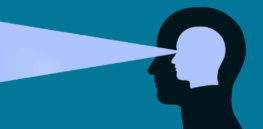
Why your brain filters out things you don’t need to see
Scientists have long known that our sensory processing must automatically screen out extraneous inputs — otherwise, we couldn’t experience the ...

23andMe venturing into business of recruiting patients for clinical trials
Consumer genetics giant 23andMe announced [September 26] that it would move deeper into the business of clinical trial recruitment, partnering with a ...

Paralyzed man walks, using exoskeleton suit controlled by brain implants
The news: A paralyzed man has walked again thanks to a brain-controlled exoskeleton suit. Within the safety of a lab setting, ...

3 scientists win Nobel Prize in medicine for work on cell’s ability to ‘sense and adapt to oxygen availability’
The Nobel Prize in physiology or medicine was awarded Monday to three physician-scientists from the U.S. and Britain — William ...

California man invites scientists to experiment with CRISPR on his rare disorder
On one level, Malakkar Vohryzek always knew what was wrong with him. For as long as he can remember — ...
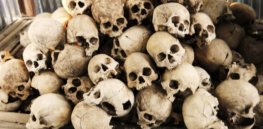
Infographic: Our skulls have been shrinking for 250 years—’our faces have begun to deform’
Science suggests that crooked teeth, overbites, narrow jaws, and crimped nasal airways are a modern phenomenon. Skeletal remains show that just 300 years ago, humans ...

Exploring origins of the female orgasm. Is it an ‘evolutionary throwback’?
The female orgasm might have evolved as part of a biological mechanism to induce ovulation, according to findings published [September ...

‘It’s not impossible’: Study claims yoga breathing techniques could ‘cleanse the brain’
Our brains are washed by a constant flow of cerebrospinal fluid, which plays the important role of carrying away waste ...

‘Mandela Effect’: What does mass misremembering tell us about human nature?
If you follow unusual theories online, you’ve probably heard of the Mandela Effect. It’s a phenomenon in which a large ...

60% of children with autism missed by this widely used screening tool
The most widely used screening tool for autism misses a large proportion of toddlers who are later diagnosed with the ...

Trump administration wants to collect DNA from detained immigrants
The Trump administration plans to vastly expand a program to collect DNA information from migrants in detention and enter it ...

From hominids to animals: Who lived in Siberia’s famous Denisova Cave?
For thousands of years, Siberia’s Denisova Cave was home to various bands of Neanderthals, Denisovans, and modern humans. But as ...

Robots gain ‘sense of tactile touch’ through light-based nervous system
This month, a team led by Dr. Rob Shepard at Cornell University [gave robots an artificial nervous system], with a seriously ...
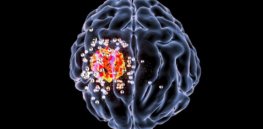
‘It’s unsettling’: Cancer cells use the body’s nerves to attack the brain, studies suggest
Tumour cells can plug into—and feed off—the brain’s complex network of neurons, according to a trio of studies. This nefarious ...
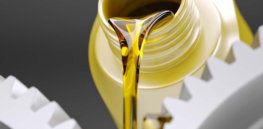
‘Turning electrons into chemicals’: Scientists seek alternatives to oil-based manufacturing processes
Black, gooey, greasy oil is the starting material for more than just transportation fuel. It's also the source of dozens ...

Will the future of CRISPR babies be decided by Russian president Vladimir Putin?
The future of genetically modified babies may lie in the hands of Russian president Vladimir Putin, Bloomberg reported over the weekend ...

‘Live life to the fullest’: Should autism research shift away from the search for a cure and focus on wellness?
“There’s no cure for autism and anybody who tries to sell you a cure is lying,” [Lizzie] Acevedo, a single ...
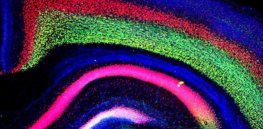
What’s behind human brain disorders? Mouse Genetics Project expects to yield many answers
The Sanger Institute Mouse Genetics Project is part of the international effort to discover the function of every gene in ...
‘Fight or flight’: How your bones may help you make that decision
In the face of fear, whether it be caused by a grizzly bear or an audience waiting to hear you ...

Hypersexuality a medical condition? Scientists find genetic links to compulsive sexual behavior
Although it can have a significantly negative impact on a person's quality of life, whether compulsive sexual behavior qualifies as a ...

Brain implants may one day boost our abilities to text, drive, communicate and think
An injection of Silicon Valley chutzpah has energised the field of brain-computer or brain-machine interfaces in recent years. Buoyed by ...
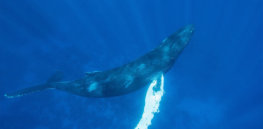
Did whales gain the ability to live in the water by shedding genes?
Like stripping down to swim, the ancestors of whales and dolphins may have shed some genes during their transition from ...

Examining toddlers’ brain waves may offer early diagnosis of autism
Certain patterns of electrical activity in the brain may signal autism in children with tuberous sclerosis complex (TSC), a related genetic condition ...

Anonymous no more: AncestryDNA test reveals identity of woman’s stem cell donor
In 2017, Holly Becker took an AncestryDNA test, and the results, she would only later learn, exactly matched those of ...

Gene therapy pioneer James Wilson makes a comeback after disastrous start
Twenty years ago, a young man named Jesse Gelsinger was injected with a large dose of gene-shuttling viruses designed in ...

When it comes to vision, computers are beating us at our own game
Does computer vision need inspiration from human vision at all? In some ways, the answer is obviously no. The information ...

World War I gave us our first personality test—to assess soldiers for risk of shell shock
Shell shock ultimately sent 15 percent of British soldiers home. Their symptoms included uncontrollable weeping, amnesia, tics, paralysis, nightmares, insomnia, heart ...
