


Daily Human Digest

Viewpoint: Why CRISPR embryo editing is not ‘morally urgent’: No one has to have a child
[He Jiankui’s CRISPR babies] brought to the surface common misunderstandings — even among scientists and ethicists — that reproductive uses of this ...

‘Brain drain’ increases genetic inequality between wealthy, poor regions in UK study
An unintended side effect of merit-based social mobility is that it stimulates selective migration; people with a higher education are ...

Reversal of fortune for ‘failed’ Alzheimer’s drug? Biogen now seeking FDA approval, based on new test data
An experimental treatment for Alzheimer's disease is headed to the Food and Drug Administration for approval—despite the fact that it ...

Only child syndrome? These kids are no more ‘selfish, narcissistic’ than others, study suggests
Wherever you fall in a group of siblings, there are plenty of stereotypes about the sort of person you are ...
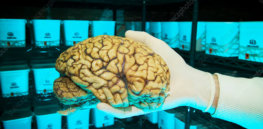
Astonishing efficiency, unlimited storage: What makes the human brain so powerful?
[A] team from Washington University in St. Louis combined neural recordings from rats with computer modeling to uncover one of the ...

Video: Two mutations join forces to create deadlier cancer
Sometimes the whole is greater than the sum of its parts. Researchers at Cold Spring Harbor Laboratory have discovered that ...

Medieval Europe’s devastating Black Death was caused by just two strains of the disease
The Black Death ravaged medieval Western Europe, wiping out roughly one-third of the population. Now researchers have traced the genetic ...

Conquering a fear of flying by ‘retuning’ the brain’s ability to calm itself
Fear of flying, or aviophobia, is an anxiety disorder. About 40 percent of the general population reports some fear of ...

Artificial intelligence can determine your ‘brain age’ by analyzing MRI scans
Delaying “brain age” may sound like the latest quick-fix gimmick on a late-night infomercial, but the science underlying the concept ...

‘Gross and dangerous”: Genetic test for same-sex attraction condemned by scientists
In August, a group of researchers published the results of a massive genome-wide association study on homosexual behavior. The take-home message ...

New CRISPR tool promises ability to reduce unintended consequences to almost zero, treat expanded range of diseases
A new form of the genome-editing tool CRISPR-Cas9 appears to significantly expand the range of diseases that could be treated ...

How fathers’ diets, lifestyle choices could impact their babies’ health
[E]merging science indicates that fathers play a more significant role in pregnancy outcomes than previously thought. … Traditionally, the father’s ...

What does a healthy human gut virome look like? Study shows that we have no idea
There’s a lot that scientists don’t know about the gut microbiota, and when it comes to the viruses present there ...

Consumer genetic health-test market expands: Ancestry launches new service, paired with professional counseling
Ancestry, the consumer genetics company that has until now focused on helping people understand their family history, on [October 15] ...

Are undiscovered antibiotics ‘silently waiting’ in our own bodies? Researchers scour microbiome for helpful genes
[A] study led by Dr. Mohamed Donia from Princeton University pushed the dark microbiome world into the light by targeting the ...

Why is it so hard to think straight when you’re tired? Here’s what’s going on in your brain
Most of us could use more sleep. We feel it in our urge for an extra cup of coffee and ...

‘Unexpected’ marriage practices, slavery, social inequality revealed in analysis of Bronze Age remains
A fascinating new study chronicles the family histories of European Bronze Age households, revealing the presence of surprising marital practices, ...

‘Defibrillator for the brain’: Implant could prevent epileptic seizures in autistic children
Kevin, who has autism and has had seizures since he was 8 years old, lies uncharacteristically still in the center ...

People with more active brains have shorter lifespans, study suggests
There are many factors that influence how long somebody lives. Some, like their genes, are out of their control. Others, ...
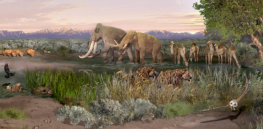
Studying human evolution faces major challenge: Our ancestors lived in ‘ecosystems unlike any found today’
To understand the environmental pressures that shaped human evolution, scientists must first piece together the details of the ancient plant and animal ...

‘Temporary hurdle’: Russia halts scientist’s effort to create more CRISPR babies
Russian health officials are playing down international concerns that a Moscow researcher plans to create gene-edited babies any time soon, ...

‘Connection is what makes life worth living’: Study suggests extroverts are happier
“There are benefits of introversion,” says University of California, Riverside, psychologist Sonja Lyubomirsky. “But research shows that extroverts are happier.” A ...

Two copies of a gene from only a single parent—This ‘genetic quirk’ may not be as rare as we thought
A supposedly rare genetic quirk might be more common than we think, according to new research out [October 10]. The ...

Are there subtypes of autism? Language regression study supports controversial hypothesis
Autistic children who lose words reach key milestones earlier than autistic children without language regression, according to a new study ...
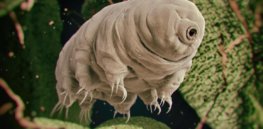
How can ‘water bears’ survive in outer space? ‘Fluffy cloud’ of protein may shield tardigrade DNA
Tardigrades may partly owe their ability to survive outer space to having the molecular equivalent of cotton candy. Water bears, ...
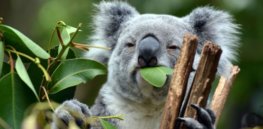
‘Marsupial-enabled time machine’: How a Koala virus is giving researchers insights into the human genome
A koala retrovirus, or KoRV, has been rolling through koala populations in Australia from the north to south. It’s passed among the ...

Battling insomnia with a host of high-tech hacks. Do they work?
In the US alone, [there’s] 82 million people who struggle with sleep. Given those figures, it’s no wonder there are ...
