


Daily Human Digest
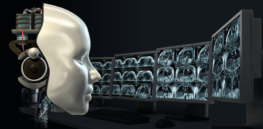
Viewpoint: ‘Long-promised AI revolution’ in healthcare delayed by shortcomings, including systems that are easily misled
Today, hundreds of startup companies around the world are trying to apply deep learning to radiology. Yet the number of radiologists who ...
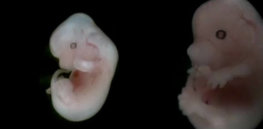
Create a fetus without an egg or sperm? Researchers have done it with mice
Reproduction used to be a simple thing: two parents, one egg, one sperm, one embryo, one baby. But on [October ...

ISIS leader al-Baghdadi’s remains may have been identified with new rapid DNA testing technology
On Sunday (October 27), President Donald Trump announced that US Special Operations forces had cornered Abu Bakr al-Baghdadi, the current ...

Humans ‘are not so special after all’: Neanderthals also knew how to start fires, evidence suggests
At some point, our ancestors harnessed the power of the flame to keep warm, cook food, produce new materials, shoo ...
Machines now read faster than we can. But do they understand the words?
In an April 2018 paper coauthored with collaborators from the University of Washington and DeepMind, the Google-owned artificial intelligence company, [computational linguist ...
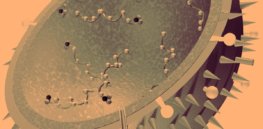
Programming CRISPR to fight viruses could lead to new treatments for Ebola, Zika
CRISPR is usually thought of as a laboratory tool to edit DNA in order to fix genetic defects or enhance ...
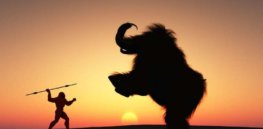
Neanderthals were well suited for ‘explosive’ short sprints, not long-distance marathons
Homo sapiens are well-designed for loping along for long distances across open landscapes—especially when compared to Neanderthals. They had legs and ...

Why the public’s limited understanding of science makes horror movies so terrifying
In a memorable scene from the 1931 horror classic Frankenstein, Dr. Frankenstein stands over his sentient monster, a beast he created from ...

‘Puzzle of a million pieces’: New study traces humanity’s birthplace to northern Botswana
[A] study, appearing [October 28] in the journal Nature, uses genetic, archaeological, linguistic and climatic evidence to argue that the ancestral homeland ...

Deafness edited out of human eggs by Russian researcher. No plans for gene-edited babies—yet
Russian biologist Denis Rebrikov has started editing the GJB2 gene, associated with deafness, in human eggs donated by women who ...
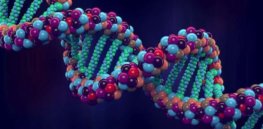
4 innovations—including stronger gene-editing skills—that would allow us to rewrite genomes from the ground up
The ability to read genomes has transformed our understanding of biology. Being able to write them would give us unprecedented ...

The frightening thing about military AI: It may be too easily fooled, ‘turned against it owners’
Last March, Chinese researchers announced an ingenious and potentially devastating attack against one of America’s most prized technological assets—a Tesla ...

‘Unlearning fear’: Why women are twice as likely to experience PTSD
[W]omen — both civilians and women from the military — are more than twice as likely as men to suffer ...

Have we already discovered life on Mars? And did we accidentally kill it?
In a recent opinion piece in Scientific American, former Viking Mars investigator Gil Levin fired up anew the argument over whether that ...
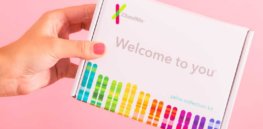
Consumer genetic tests shouldn’t be used to make health decisions, experts warn
People should not make health decisions based on genetic tests they do at home, experts have warned. The University of ...

Coping with death: Our brains are wired to think it only happens to other people
Warning: this story is about death. You might want to click away now. That’s because, researchers say, our brains do ...
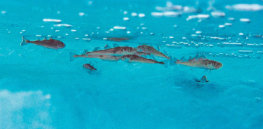
‘De novo genes’: How natural selection creates new genes from nothing
In the depths of winter, water temperatures in the ice-covered Arctic Ocean can sink below zero. That’s cold enough to ...
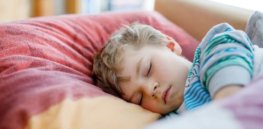
Could a pill make you need less sleep? This genetics research suggests it could happen
We all wish we could get by on less sleep, but one father and son actually can—without suffering any health ...

‘Superhero therapy’: How comic book characters can help us navigate life
Why adults flock to this kind of therapy speaks volumes about the importance of superhero stories—and the nature of the ...
Emerging field of ‘social genomics’ comes with ethical, societal risks: ‘Who’s going to benefit?’
By looking at the genomes of people living in former coal-mining areas, [geneticist Abdel Abdellaoui] has found genetic signatures associated ...
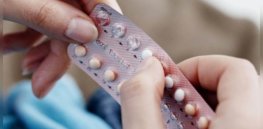
Brains and birth control pills: Oral contraceptives may affect learning, memory and the immune system
Sarah E Hill, a professor of social psychology at the Texas Christian University in Fort Worth, Texas argues we need ...
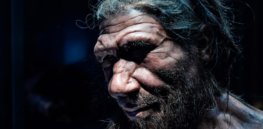
Inherited Neanderthal, Denisovan DNA may help with our metabolism, immunity and diet
Neanderthals and Denisovans went extinct some 35,000 to 40,000 years ago, but not before these closely related hominins interbred with ...

Tiny, lab-grown brains allow researchers to explore what makes humans different
Researchers are growing human, ape, and monkey brain tissue in the lab in order to understand what makes us different ...

Orange skin? That’s just one of the ways our bodies might evolve if we settle on Mars
Over time, we should expect a fair bit of evolutionary divergence between Mars settlers and the human population on Earth, ...

Could common infections be causing eating disorders?
Infections might, in fact, spark eating disorders in some people. For the study, Lauren Breithaupt, a clinical psychologist at Massachusetts ...
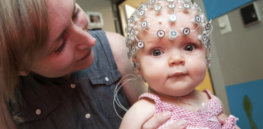
Baby brain wave patterns may offer early predictor of autism
Brain activity patterns in the first year of life may predict autism in infants at high risk for the condition, ...
Inherited learning appears to be real, through epigenetics. But we still aren’t sure how it happens
[S]ome researchers have found evidence that even some learned behaviors and physiological responses can be epigenetically inherited. None of the new ...
