


Daily Human Digest

Exercise creates a ‘unique microbiome’ in our guts. We don’t know why.
Teaming up with microbiologists and toxicologists from Rutgers and a pathologist from Oklahoma City, [researcher Sara] Campbell designed an experiment ...

‘Sputnik 2.0’: China wants to lead the world in CRISPR research
China is seeing an explosion in CRISPR-based animal studies and embracing the gene-editing technology with unrivaled zest and zeal—so much ...
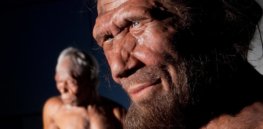
Believe it or not, Neanderthals were both athletic and artsy
They were sprinters. Previously believed to have been endurance runners, it is now thought Neanderthals favoured “more power sprint than ...

Experiencing self-awareness: How children discover who they are
[I remember] when I first became self-conscious, aware of myself as something weird, distinct from the rest of the world, ...

Viewpoint: Prenatal DNA intelligence predictors ignore environment’s role in IQ
When we examine the way DNA IQ predictors are generated, we see scientists grouping people with similar IQ test results ...

We’re inching closer to a new vaccine for Lyme disease. But will the public accept it?
As the threat of Lyme disease grows and fears surrounding it spread faster than the ticks that carry the infection, ...
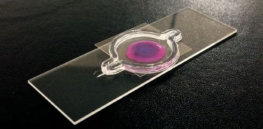
Infographic: ‘Why not print cancer?’ Here’s what we learn from building glioblastoma on a chip
If arranging cells in a particular formation was a good way to build cancer models that mimic what’s going on ...
Powerful CAR-T duo uses artificial ‘claws’ to grab and destroy HIV
Lengtigen, a biotech company based in Gaithersburg, MD, teamed up with researchers at the Albert Einstein College of Medicine in ...

1983 sex assault mystery solved by DNA testing
A Florida woman who woke up to a stranger sexually assaulting her 36 years ago may finally get justice after ...
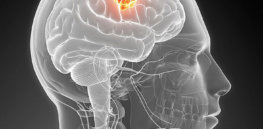
Electrical stimulation can ‘starve’ brain cancers, early study shows
Researchers have shown that electrical stimulation to the skull can starve brain cancers of vital nutrient-rich blood, opening the door ...

Answering key questions about CRISPR gene therapies
What is gene editing? Genome editing (also known as gene editing) is a group of technologies that provide scientists with ...

Have scientists discovered a new pain-processing organ under our skin?
It’s not common that researchers discover what could be an entirely new part of the human body. But a team ...

CRISPR ‘put to the test’ against inherited blindness, blood disease. Next up Duchenne muscular dystrophy, cystic fibrosis
Since its debut in 2012, CRISPR gene editing has held the promise of curing most of the over 6,000 known ...

A question of free will: How much of our behavior is determined by our genes?
Are our fates determined by the stars or by our actions? An age-old debate made no less contentious by reducing ...

Viewpoint: Elon Musk’s Neuralink dreams are a mix of reality and ‘science fiction’
So, how precisely is Neuralink pushing the envelope? ... A lot of Neuralink's vision may sound difficult to believe, but ...

Making a new generation of beauty products from viruses and bacteria
As scientists uncover more details about the skin microbiome, small startups and beauty giants alike are exploring how the trillions ...
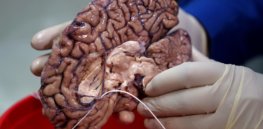
‘It’s very encouraging’: Experimental gene therapy shows promise for glioblastoma patients in clinical trial
An inducible, tumor-localized gene therapy has been tested for the first time in glioblastoma patients. The two-part approach, which involves ...
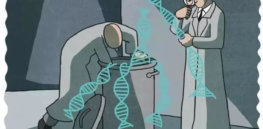
98.5% of our DNA is ‘junk’: But that doesn’t mean it doesn’t play a key role in disease, evolution
Would you purchase a book with over 98 percent of the text written in gibberish? Biology has no business in ...

New theory on the origins Alzheimer’s opens alternate research, treatment avenues
Alzheimer’s disease, the most common cause of dementia among the elderly, is characterized by plaques and tangles in the brain, ...
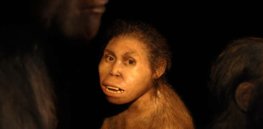
Podcast: Why did we survive, when the Denisovans and Neanderthals did not?
The Denisovans have long been one of the most elusive ancient human cousins, until now. In May 2019, scientists revealed ...

5 things we get wrong about psychopaths
There are a number of myths that pervade pop culture regarding psychopaths. Here is my take on some of the ...

Viewpoint: I wish I learned about my breast cancer risk from a genetic counselor instead of 23andMe
I opened the email from 23andMe, saying a report was ready for me to read. That click changed my life ...

What’s that smell? How our brains detect and cope with all the odors we encounter
Olfactory neurons in your nose have evolved some 400 odor receptors, and each neuron contains only one. Receptors are tuned ...
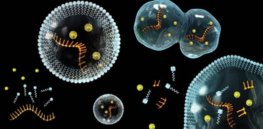
‘Utterly magical’: This ‘two-step dance’ may explain the origins of life
Go back far enough in time, before animals and plants and even bacteria existed, and you’d find that the precursor ...

Using synthetic biology to solve some of ‘the hardest problems in the world’, with new foods, medicines
Many of the products we use every day—plastics, cosmetics, clothing, fertilizers, and even aspirin—include molecular ingredients derived from petrochemicals. But, ...
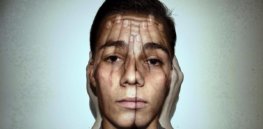
Anger, aches and pains: Anxiety manifests differently in men
Anxiety problems can look different in men. When people think of anxiety, they may picture the excessive worry and avoidance ...

3 ways neuroscience and AI can work together to help us understand how we think
The meteoric success of deep learning showcases how insights from neuroscience—memory, learning, decision-making, vision—can be distilled into algorithms that bestow ...
