


Daily Human Digest
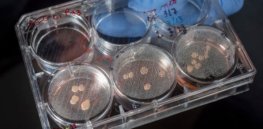
Lab-grown ‘mini brains’ with neural activity of pre-term infants could boost brain, disease research
Scientists have been trying to grow human organs—including kidneys, livers, skin and guts—from scratch well over a decade. These “organoids” are not ...

Viewpoint: There’s a problem with autism studies. They rarely use the same set of tools to measure results.
Clinical trials of autism treatments rarely use a consistent set of tools to measure efficacy, a new study suggests. Instead, ...
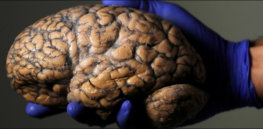
Chasing true understanding of the brain: Why progress may be dependent on ‘trial and error, and some luck’
Billions of dollars are flowing into research and neurotechnology projects like the U.S. Brain Initiative, Europe’s Human Brain Project, and ...

How CRISPR could help eradicate chronic pain
The street performer was only 10 years old. He put knives through his arms and walked on hot embers. By ...

‘Please forgive me’: Founder of Hope for Wholeness conversion therapy group now says he is gay
The founder of one of the nation’s largest conversion therapy programs, who spent decades leading the organization, now says he ...

Infographic: Meet Asgard archaea, a simple cell that just might look like one of our oldest relatives
The cells of all animals, plants, and fungi have an impressive complexity, with a variety of compartments specialized in various ...

Viewpoint: If you want your children to have healthier brains, don’t let them play tackle football
If U.S. Surgeon General Jerome Adams asked for our advice (he hasn’t), we’d recommend that he issue the following statement: ...

CRISPR creates ‘smart’ hydrogels that could lead to therapies capable of fighting multiple infections, diseases
Is there anything CRISPR can’t do? Scientists have wielded the gene-editing tool to make scores of genetically modified organisms, as ...

We can cure Alzheimer’s, schizophrenia, glioblastoma in mice. Why not humans?
Lab mice endure a lot for science, but there’s often one (temporary) compensation: near-miraculous recovery from diseases that kill people ...
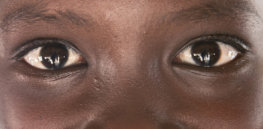
How math could explain the ‘great mystery of human vision’
This is the great mystery of human vision: Vivid pictures of the world appear before our mind’s eye, yet the ...

Online brain games can ‘beef up’ the elderly brain’s ability to multitask, study shows
A University of California, Irvine-led study has found that online brain game exercises can enable people in their 70s and ...

Unraveling the genetic mystery of Skeleton Lake, an ancient Indian site filled with hundreds of human bones
At the mysterious Skeleton Lake in northern India, the dead are talking, revealing surprises through centuries-old DNA. And it’s not ...

An argument for why no one should live past 75
[Physician Ezekiel] Emanuel vowed to refuse not only heroic medical interventions once he turned 75, but also antibiotics and vaccinations ...

FamilyTreeDNA shares customers’ genetic data with FBI. Founder calls it ‘the right decision’
Millions of consumers use genetic data to gain insight into family roots or learn about health risks. The boom has ...

A third of cancer drug clinical trials don’t report on race. Here’s why that matters
One-third of the clinical trials that led to new cancer drugs approved between 2008 and 2018 didn’t report on the ...

Personalized nutrition companies are more hype than help, scientists say
Vitamins and other dietary supplements are a $30 billion industry in the US. In addition to the bottles lining drugstore ...

‘The Intelligence Trap’: Book examines why smart people make irrational decisions
While decades of psychological research have documented humanity’s more irrational tendencies, it is only relatively recently that scientists have started ...

Inside the transhumanist quest for ‘super-longevity’
Transhumanism is a patchwork of beliefs about how technology will enhance the human condition, maybe radically so. There are Extropians ...

Gaming for catastrophe: Bioterrorism could create a pathogen ‘far worse than nature ever could’
In the darkened ballroom of the Mandarin Oriental Hotel in Washington, D.C., some of the finest minds in government are ...

DNA sequencing clinics catering to curious wealthy clients
Seizing on the surging popularity of at-home DNA testing kits, top academic medical institutions are opening clinics that promise to ...

Video: Does eating red meat increase cancer risk? Here’s what’s wrong with a recent study.
The old chestnut that eating red meat leads to cancer is back. A [recent] study claimed that eating red meat ...
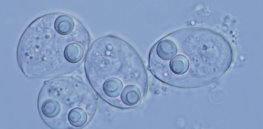
‘Wild theory’: Can aggressive cancers evolve into new species?
Aggressive cancers can spread so fiercely that they seem less like tissues gone wrong and more like invasive parasites looking ...
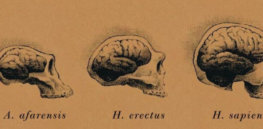
7 misconceptions about evolutionary psychology, including the idea that behavior is genetically determined
Evolutionary approaches to psychology hold the promise of revolutionizing the field and unifying it with the biological sciences. But among ...

Historical amnesia: Measles outbreaks remind us why it’s perilous to forget life before vaccines
I suffer, like most people, from a notorious Catch-22: Vaccines save us from diseases, then cause us to forget the ...

Alzheimer’s disease and drowsiness: Link could help us determine where the disease first attacks the brain
Alzheimer’s disease destroys command centers in the brain that keep people awake. That finding could explain why the disease often ...

Can this new blood test can predict your death 5-10 years before it happens?
Though predicting an exact day is far from likely, an experimental blood test may be able to tell an individual’s ...

If we classified aging as a disease, would it change the way we treat it?
What would change if we classified aging itself as the disease? David Sinclair, a geneticist at Harvard Medical School, is ...
