


Daily Human Digest

Can the flu cause Parkinson’s and other brain disorders?
One of the earliest links between influenza and neural dysfunction was a correlation between the 1918 Spanish flu, caused by ...

We have so much genomic data—we need AI to help us grapple with it
Genomics is set to become the biggest source of data on the planet, overtaking the current leading heavyweights – astronomy, ...

Creating rare marijuana compounds with GM yeast could lead to a ‘blockbuster drug or two’
[Genetically modified brewer’s yeast] is churning out cannabinoids, the compounds found in marijuana. Researchers led by Jay Keasling, a professor ...

Alzheimer’s disease targeted with gene therapy trial
There’s a test for Alzheimer’s risk that genetic counselors don’t like to talk about. It’s not that they’re hiding the ...

Autism or OCD? Why it can be challenging to tell the difference
At first glance, autism and OCD appear to have little in common. Yet clinicians and researchers have found an overlap ...

Viewpoint: Creation of synthetic DNA demands ethical boundaries for its use
A study published [February 21] expands the redesign of the 4-billion-year-old genetic code from a four-nucleotide base-pair alphabet to an eight-base-pair ...

Why a happy marriage might be influenced by genetics
The secret to a happy marriage lies in the genes, scientists have discovered, as new research finds a predisposition not to be ...

Viewpoint: Why the crusade against ‘toxic masculinity’ ignores ‘real-life conditions’
Over the past several years, toxic masculinity has become a catchall explanation for male violence and sexism. The appeal of ...

CRISPR’s lengthy patent legal battle could finally end—in a tie
Like a couple of heavyweight boxers who just keep slugging it out, the University of California Berkeley (UCB) and the ...

Drugs developed as cancer treatments show promise against autism
An experimental compound that blocks two enzymes involved in gene expression improves social behavior in young mice, according to a ...
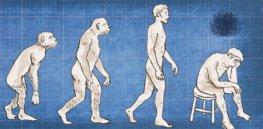
‘Good Reasons for Bad Feelings’: Understanding evolution’s role in anxiety, depression and making us human
[In] the thought-provoking Good Reasons for Bad Feelings, [evolutionary] psychiatrist Randolph Nesse offers insights that radically reframe psychiatric conditions. In his ...
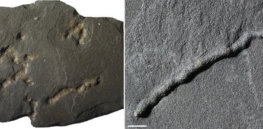
Do these fossilized ‘tracks’ mean life gained mobility 600 million years earlier than we thought?
On February 11, Abderrazak El Albani, a sedimentologist at the University of Poitiers in France, published a study in Proceedings of the National ...

Crime scene conundrum: Your DNA can wind up on something you never even touched
A 10-second handshake could transfer a person’s DNA to an object that the person never touched. In handshaking experiments, people ...

Do you crave sweets when you’re stressed? Blame it on your brain
Although our brain accounts for just 2 percent of our body weight, the organ consumes half of our daily carbohydrate ...

Who were the Denisovans? This Siberian cave could offer answers
Samantha Brown didn’t have high hopes when she opened the ziplock bag containing some 700 shards of bone. It would ...

‘Genetic crapshoot’: Two studies suggest clinical use of CRISPR hampered by off-target editing
The version of CRISPR whose selling point has been its precision suffers, ironically, from the same shortcoming that has dogged ...

Popular autism ‘signaling imbalance theory’ challenged, suggesting new drugs ‘may have little value’
An analysis of four mouse models negates certain assumptions underlying the “signaling imbalance theory,” a popular hypothesis about autism’s origins ...

Stem cell therapy ‘sold as a miracle cure’ linked to 17 bacterial hospitalizations
Over the past year, at least 17 people have been hospitalized after being injected with products made from umbilical cord ...

Why it might be possible for children to inherit their parents’ morals
A new baby is often welcomed with speculation about whether they got their eyes and nose from mom or dad, ...

Infrared vision? We’ve now given it to mice and humans could be next
[Researchers Tian Xue and Gang Han] modified the vision of mice such that they were able to see near-infrared light ...

Why growing up poor could hurt your brain in old age
In 2004, a study titled “The Long Arm of Childhood” found that whether children were rich or poor could influence their health ...

Far from ape-like: Neanderthals walked upright, just like us
Neanderthals walked with an upright posture just like modern humans, according to a new analysis. Over the years, reconstructions of ancient ...

Can vaccines be supercharged by CRISPR, creating ‘one-and-done’ virus protection?
Vaccines are risky or ineffective in people with compromised immune systems, they don’t even exist for several viral diseases, and ...

Crime scene investigators couldn’t tell identical twins’ DNA apart. Until now
One night in November 1999, a 26-year-old woman was raped in a parking lot in Grand Rapids, Mich. Police officers ...

70% of teens see mental health, depression as a ‘major struggle’ for their generation in Pew survey
In the past decade, young people in the United States have borne the brunt of some of the most highly ...

This small startup wants to change FDA clinical trials by making control groups unnecessary
Could a startup founded by two guys in their 20s change the way medical researchers study patients? The Food and ...
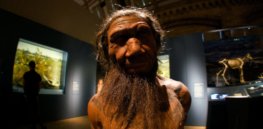
Were Neanderthals doomed by their inbreeding?
Mounting evidence suggests Neanderthals also had a habit of inbreeding, or conceiving with close relatives. Several studies have now reported ...
