


Daily Human Digest

Robot peer pressure and why we may need to fear ‘artificial stupidity’
When the robot revolution arrives, we all know the plot: Smarter machines will supersede human intelligence and outwit us, enslave ...

‘Zombie gene’ could explain why elephants rarely get cancer
[B]igger animals, which have more cells, should have greater occurrences of cancer. By that reasoning, elephants, with hundreds of times ...

Simulating near-death experiences with hallucinogenic drug DMT
Not everyone who is close to death—or thinks they are, at least—has a “near-death experience.” But those who do often ...

‘Remarkable’ love child: Here’s what happened when a Neanderthal met a Denisovan
In a remarkable twist in the story line of early human evolution, scientists have announced the discovery of “Denisova 11”—a ...

Study shows link between autism and widely banned pesticide DDT
Mothers with high levels of the pesticide DDT in their blood during pregnancy are more likely to bear children who ...

Is it possible for tired people to ‘spread’ their misery to others?
[A] new study out of the University of California, Berkeley suggests that poor sleep can be a nightmare for our social lives ...
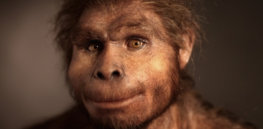
Viewpoint: Here’s why it’s ‘moronic’ to suggest that Homo erectus was lazy
[Y]ou’ve probably seen a headline or two (or twelve) touting a new discovery about our long extinct human relative, Homo erectus ...

Base Editing: New CRISPR technique could improve ability to safely edit human embryos
A new CRISPR technique could prevent humans from passing on a potentially life-threatening disorder, according to Chinese researchers. An estimated ...

Heart disease risk: New genetic test could offer stronger early detection
You know your cholesterol, your blood pressure ... your heart gene score? Researchers say a new way of analyzing genetic ...

What’s the line between life and brain death? Artificial intelligence offers hope of digital simulation
Since the invention of bypass machines in the 1950s, which can artificially maintain circulation and respiration, death has come to ...

Alpha: Examining Hollywood’s tale of dog domestication
Long ago, before your four-legged best friend learned to fetch tennis balls or watch football from the couch, his ancestors ...
Bringing us closer to ‘once-in-a-lifetime’ hemophilia treatment with experimental gene therapies
Scientists are edging closer to defeating a longtime enemy of human health: hemophilia, the inability to form blood clots. After ...
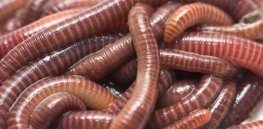
Mapping worm neurons to learn more about human memory
Although memories seem ethereal, scientists believe that they may be stored in the connections between neurons called synapses. In theory, ...

DNA links Nevada inmate to 34-year-old unsolved murders in Colorado
The murders were as inexplicable as they were gruesome: separate killings six days apart in 1984 near Denver that claimed ...
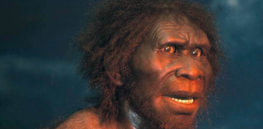
Did laziness drive early human relative, Homo erectus, to extinction?
Homo erectus may have gone extinct because they were lazy, according to research from the Australian National University. Scientists claim ...
Genetic crystal ball? Forecasting 5 serious diseases with algorithm that checks 6.6 million DNA spots
Scientists have created a powerful new tool to calculate a person’s inherited risks for heart disease, breast cancer and three ...

Seeking to optimize athletic performance through DNA analysis
Athletic Genetix promises to help athletes gain an edge (with reports personalized to individual sports) and to assist consumers in reaching ...

Video: Looking back at groundbreaking twins research—and its impact on genetics
“I have looked at the data, and I’m collecting the data, and I’m still absolutely astounded. I still haven’t settled ...
Are mental disorders linked to the tweaking of genes in human evolution?
The same recent evolutionary changes that make humans prone to bad backs and impacted wisdom teeth may also tweak genes ...
Ancient genetic oddity makes whales and other aquatic mammals deadly susceptible to common pesticides
Over the past 50 million years, a group of small, hoofed mammals gradually evolved into today’s whales and dolphins. In ...
Why other primates can’t talk: It’s all in the brain
Compared to humans, most primates produce a limited range of vocalizations: At one end of the spectrum, there’s the Calabar angwantibo, ...

A more modest goal for CRISPR: Making chemotherapy ‘a bit less terrible’ for patients
Ambitious efforts to prevent or beat cancer are important, but we can’t overlook or undervalue the incremental breakthroughs that could ...

Treating autism with serotonin
Boosting levels of the chemical messenger serotonin makes mice that model autism more social, according to a study published [August ...

Google hopes to fix the racial bias problem in artificial intelligence through tech summer camps
Oakland-based nonprofit AI4All [will] expand its outreach to young underrepresented minorities and women with a $1 million grant from Google.org, the technology ...

‘Stuck on the spin cycle’: Probiotic supplements linked to ‘brain fog’
Given their current popularity, you might assume that probiotics—capsules containing a mix of “good” bacteria that are said to rebalance ...

Genetically modified hormone opens doors to personalized fertility treatments
An Israeli biotechnology firm based in Be’er Tuvia in southern Israel has developed a new-generation fertility treatment through the manipulation ...
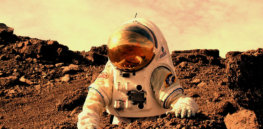
Genetically modified astronauts? Why humans may need to be redesigned for deep-space missions
NASA is now preparing for a human mission to Mars, but if our descendants ever shrug off their terrestrial bonds, ...
