


Daily Human Digest

Preparing for motherhood: Do the father’s genes play a role?
[A] father may have the ability to dictate a mother’s attentiveness to their offspring—before it’s even born. The paternal genes ...

Reasons to be wary of the ‘untamed wilderness’ of dog DNA tests
The claims that dog DNA-testing companies make can seem all but definitive: One quick cheek swab can not only tell ...

Study sparks fresh debate over an old theory on the cause of Alzheimer’s
In the long-running debate over just what causes Alzheimer’s disease, one side looks to have scored a victory with new ...

Differences in brain reward system may explain why autistic people are less interested in socialization
The brain’s system for sensing pleasure and reward shows unusual activation patterns in people with autism, according to an analysis ...

Blossoming brains—Why some people suddenly become geniuses or musical savants
Savant syndrome comes in different forms. In congenital savant syndrome the extraordinary savant ability surfaces in early childhood. In acquired ...

Fighting cancer with help from the body’s internal clock
Chi Van Dang generally declines to discuss the science that made him famous. ... Instead of doing so, Dang [a ...
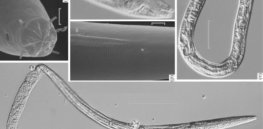
Ancient worms resurrected after spending more than 32,000 years on ice
A team of Russian scientists is lining themselves up to be the opening cast of a John Carpenter film. Earlier ...

Here’s the thing about hallucinations: They’re not ‘categorically good or bad’
As late as the 18th century, hallucinations in their various forms were considered independent diseases or syndromes. In 1821, Alexis ...

Alien signal or damp squib? Rio 2.0 scale promises to help judge
When a team of Russian astronomers reported in 2015 that a telescope in the Caucasus region had intercepted a mysterious ...

What can we learn from studying GWAS—Genes of large swaths of people?
In the quest to separate nature from nurture, scientists seeking to understand the contribution of genetics have more tools. A ...

When is it ok to edit the genome of a human embryo? Americans have mixed opinions
We’ve reached the point in scientific and technological advancement that editing our own genomes, or those of humans not yet ...

Sperm carries more than just a father’s genetics
Eat poorly, and your body will remember—and possibly pass the consequences onto your kids. In the past several years, mounting ...

Why the idea of solving problems with unconscious thought is ‘fanciful’
The great French mathematician and physicist Henri Poincaré (1854–1912) took a particular interest in the origins of his own astonishing ...

CRISPR may help pave the way to cross-species organ transplants
Modern transplant technology is already pretty miraculous. Doctors can transfer anything from faces to hands to genitals between patients, keep ...

Autism diagnosis, treatment often complicated by accompanying conditions
More than half of people on the [autism] spectrum have four or more other conditions. The types of co-occurring conditions ...

Investigational Alzheimer’s drug shows promise
An investigational Alzheimer’s drug significantly slowed patients’ cognitive decline in a large clinical trial, unexpected and unprecedented results that could ...

Genes play a role in educational achievement, but not as much as your parents’ education does
What's more important, genes or environment? …The advent of genomics has given us a new perspective on the role of ...
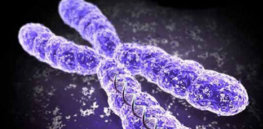
Using gene editing to merge an organism’s chromosomes into ‘one giant molecule’
Complex organisms have complex genomes. While bacteria and archaea keep all of their genes on a single loop of DNA, ...

Improved DNA testing identifies 9/11 victim 17 years after attack
The remains of a man killed during the Sept. 11 terror attack in New York have been identified 17 years ...

Man whose rare blood type saved millions of babies retires from donating after 60 years
James Harrison, known as the "Man With the Golden Arm," has donated blood nearly every week for 60 years. After ...

Viewpoint: Media’s misrepresentation of artificial intelligence could derail promising technology
In June of [2017], five researchers at Facebook’s Artificial Intelligence Research unit published an article showing how bots can simulate ...

Why it’s difficult to declare the end of an Ebola outbreak
The World Health Organization on [July 24] declared the official end of the latest outbreak of Ebola in the Democratic ...

What is CRISPR? And why should you care?
If you haven’t heard of CRISPR yet, the short explanation goes like this: In the past six years, scientists have ...

Genetic data share: 23andMe partners with drugmaker GlaxoSmithKline
23andMe customers might just play a role in helping create one of Big Pharma’s next blockbuster drugs. On [July 25, ...

DNA could be key to identifying remains of US soldiers turned over by North Korea
The U.S. military remains released by North Korea on Friday [July 28] will be sent to a military lab in ...

Elephants rarely get cancer. Can humans borrow their genetic strategies?
Elephants have 100 times as many cells as humans. But they seldom get cancer. This is surprising, because cancer is ...

Alternative medicine a scam? New book exposes the lack of scientific rigor of ‘complementary’ treatments
As the world’s first professor of complementary medicine, Dr. Edzard Ernst set out to apply rigorous scientific standards of evidence ...
