


Daily Human Digest

Fighting aging: Mutation found in Amish population adds 10 years to lifespan
New research now shows that some humans possess a genetic equivalent to [an anti-aging] drug. A small number of Amish people in ...

Gene therapy boost: FDA positions for faster reviews of new treatments
The Food and Drug Administration on [November 16] issued new guidelines to speed the introduction of treatments involving human cells ...

Viewpoint: Ethical arguments against gene-edited embryos will crumble as technology advances
[Editor's note: Michael White is a genetics professor at Washington University in St. Louis.] [S]cientists have developed an easy way to ...
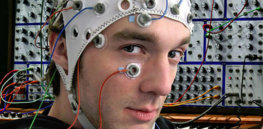
Our brains grow and shrink when we learn—which is how we continue to absorb knowledge
Our past understanding of the brain would suggest that new knowledge requires new brain cells, and as a result our ...
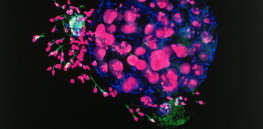
What makes a female? How XX embryos destroy male reproductive tissue
A protein called COUP-TFII is necessary to eliminate male reproductive tissue from female mouse embryos, researchers report in the Aug. 18 Science. For ...

Can gene tweaking lower our cholesterol? Using CRISPR and nanotechnology in mice
U.S. researchers have used nanotechnology plus the powerful CRISPR-Cas9 gene editing tool to turn off a key cholesterol-related gene in ...

Viewpoint: Genetic engineering’s benefits extend far beyond GMO crops and controversy
In discussing biotechnology, too much controversy is focused on the crops developed by Monsanto and its competitors. Genetic engineering is ...

How tracing the evolutionary family tree of all female lab mice will help improve medical research
Adam and Eve, a pair of black mice, lived for less than two years and never left their home at ...

Can the microbiome join DNA and fingerprints in the CSI toolkit?
Some scientists argue that our individual microbiomes are unique enough that they can be used to help identify the perpetrators ...

Are ‘gene drive’ trials too risky for field studies?
In 2013, scientists discovered a new way to precisely edit genes — technology called Crispr... One of the more intriguing ...

Video: CRISPR gene editing in real time
[Researcher Osamu] Nureki’s paper was published in Nature Communications Friday, and by early morning, the video that astonished the room in [a CRISPR ...

Viewpoint: We need a conversation about gene editing and eugenics
[Editor's note: Karin Christiansen is head of research at the Centre for Health Technology at the Faculty of Health, VIA ...

Siddhartha Mukherjee: Gene research critical in fight against cancer
The human genome is integral to understanding the complex history of human health and disease. Dr. Siddhartha Mukherjee is a ...

FDA likely to approve hereditary blindness gene therapy
[A]nother gene therapy is on the cusp of approval, this time to treat a form of hereditary blindness. If given ...

A gene-editing first: Scientists try to edit a living human’s DNA
Scientists for the first time have tried editing a gene inside the body in a bold attempt to permanently change ...

Biopesticides: Creating a mosquito-fighting bacteria wasn’t easy—or fast
[A]fter decades of international scientific effort, a new mosquito biopesticide (a pesticide that uses natural bacteria) has been approved. And it only took a year and ...

Veterans’ suicide attempts linked to gene expression
Though they only compose 8.5% of the U.S. population, veterans make up 18% of all suicides. Complicating matters is that ...

Viewpoint: We need constraints on artificial intelligence
If there’s nothing magical about our brains or essential about the carbon atoms that make them up, then we can ...

Saving the Galapagos: Gene drives could help rid invasive pests
Eradicating invasive species can be a brutal job. On the island of Floreana, a plan to eliminate the rodents that ...

World Anti-Doping Agency says ‘no’ to gene editing in sports competitions
The battle between sports cheats and testers is poised to enter a whole new arena. The World Anti-Doping Agency has ...

Measuring intelligence and IQ, and the problems that presents
For more than a century, IQ tests have been used to measure IQ. But their use is hotly debated by ...

Dog genome project: How your breed originated
From the 80-kilogram Great Dane to the 1-kilogram tiny teacup poodle, there seems to be a dog for everyone. Now, ...

Fighting antibiotic ‘superbugs’—DNA sequencing helps in the battle
The successful effort to contain an outbreak of the bacterium Staphylococcus aureus (S. aureus) at a UK hospital demonstrates the ...

DNA profiles of 500,000 people put online by UK Biobank in massive research effort
U.K. Biobank [recruited] 500,000 volunteers for a massive study on the origins of disease. In addition to collecting blood and urine, ...

Personalized health care? Precision medicine finally coming of age
Precision medicine means that doctors will use patients’ medical histories, genetic information and relevant research to create a treatment plan ...

How genes affect children’s unique views of the world
A new study co-led by Indiana University that tracked the eye movement of twins finds that genetics plays a strong ...

Asteroid that killed dinosaurs had only 1-in-10 chance of causing extinction
The smack of the asteroid against Earth released energy on the order of billions of atomic bombs. Dinosaurs were the cataclysm's most famous ...
