


Daily Human Digest

Asteroid that killed dinosaurs had only 1-in-10 chance of causing extinction
The smack of the asteroid against Earth released energy on the order of billions of atomic bombs. Dinosaurs were the cataclysm's most famous ...

Could ‘superantibiotics’ save us from rising drug resistance?
The need for new classes of antibiotics has repeatedly been emphasised, with researchers turning to some of the most extreme environments on ...

Viewpoint: There’s no reason to panic over human germline editing
[Editor's note: Hank Greely is a professor of law and genetics at Stanford University.] Controversy has raged about editing human ...

Brain autopsy of murderer Aaron Hernandez shows severe CTE damage
For the first time since announcing former NFL star Aaron Hernandez's CTE diagnosis in September, Boston University neuropathologist Dr. Ann ...

Ethical debates swirl around gene-editing decisions
[Editor's note: Joselin Linder is the author of the book "The Family Gene: A Mission to Turn My Deadly Inheritance ...

Rodent-like creature may be our earliest ancestor
The earliest known ancestors of the mammal lineage that includes everything from humans, to blue whales, to pygmy shrews may ...

Lung cancer progression linked to enzyme that promotes epigenetic changes
In a study published in Nature Communications, researchers from Nanjing University in China have identified an enzyme that promotes lung ...

Oldest known human fossils rewrite Homo sapiens history
Hundreds of thousands of years ago, around 62 miles west of what would eventually become Marrakesh, a group of people ...

US government pushes precision medicine research with Fitbit giveaway
In his 2015 State of the Union, President Obama announced the Precision Medicine Initiative — a massive research project designed ...
Naming genetic diseases: There’s more to it than you might think
An effort is underway to streamline the way we name genetic diseases, with an emphasis on imparting useful medical information, ...
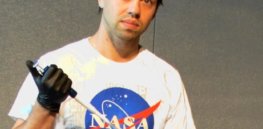
The quest to make CRISPR gene editing as easy as a smartphone app
[Biohacker Josiah Zayner] lives and works in Oakland, California, where he's converted a house into a scientific lab. Here, he ...
New error-free DNA sequencing method could diagnose rare diseases
A virtually error-free new method of DNA sequencing could one day be used to diagnose extremely rare cancers and hereditary ...

Challenging the RNA origin of life theory
The current consensus holds that life emerged from an ‘RNA-world’, first named by Nobel Laureate Walter Gilbert in 1986. This ...

FDA lightens up on ‘outrageous’ direct-to-consumer genetic information ban
Food and Drug Administration (FDA) head Scott Gottlieb is reeling in his agency's outrageous four-year ban on direct-to-consumer genetic testing. Under the ...

Can’t get motivated? You may be able to blame your genes
Being apathetic may feel like following the path of least resistance. But studies of apathy in the brain show otherwise ...

Getting behind the genetics of high-altitude adjustments
People who both travel to and live at high altitudes typically cope with lower oxygen levels by increasing red blood ...

Alcohol addiction: Can we blame our ancient ancestors?
[M]illions of years ago, being able to consume alcohol was likely vital to survival: our ancestors evolved to metabolize booze right around ...

‘Kelp highway’–not a land bridge–likely brought first humans to the Americas
For decades, students were taught that the first people in the Americas were a group called the Clovis who walked ...

Microsoft’s foray into the quest to cure cancer
As Digital Journal has recently reported Microsoft has recently launched Healthcare NeXT, which is a cloud-based, artificial intelligence and research project ...
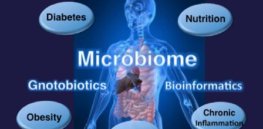
Gut microbiome could influence response to cancer treatment
When [cancer] drugs work, the immune system tramples tumors into oblivion. But they don’t always work—in fact, cancer drugs can ...

Deep freeze: Will climate change awaken long-frozen diseases?
I visited Greenland because, lately, the land here has gone soft, and disquieting things threaten to wake in it. … ...
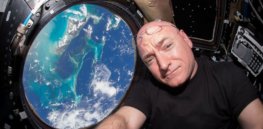
NASA Twins Study finds thousands of epigenetic changes in astronaut Scott Kelly
When astronaut Scott Kelly returned to Earth after a year floating about the International Space Station, he was noticeably different from his ...

Viewpoint: It’s time to stop drawing links between mercury and autism
[Editor's note: Emily Willingham is a science writer and co-author of The Informed Parent: A Science-Based Resource for Your Child's First Four ...

Will we learn anything from the brain of Las Vegas shooter Stephen Paddock?
The brain that sat in the skull of the Las Vegas shooter [Stephen Paddock] as he planned out his attack, ...

Epigenetics and addiction: Enzyme could help treat cocaine, alcohol and opioid dependence
Previously, it had been studied that an epigenetic drug could alter DNA methylation in the brain during drug withdrawal with hopes in ...

Video: Combating aging in our lifetime
[A] new video from Kurzgesagt presents several technologies close to completion that could make a big impact on how we ...

Mars conundrum: How do we explore without contaminating the Red Planet?
Space exploration experts worry over what will happen if a human expedition introduces Earth's microbes to Mars. Are those concerns ...
