


Science Literacy Project Daily Digest

‘Shockwaves in the global food chain’: Spain, Poland, Hungary beg European Commission for impact assessment on Farm to Fork plan pesticide cutbacks in face of Ukrainian invasion
EU member states have called for a new impact assessment on the European Commission’s proposal to slash the use and ...

These key grizzly bear genes keep them diabetes-free over long winter hibernations — offering clues to how we might better treat the disease in humans
If a human ate tens of thousands of calories a day, ballooned in size, then barely moved for months, the ...

‘When we exercise, we’re not just doing it for ourselves’: Why going on a run today could benefit your future grandkids
Exercising now is good for you. But could it also be good for your future children and grandchildren? ...
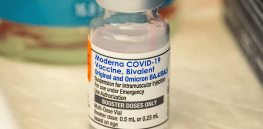
How safe are the new COVID vaccine boosters?
In case you haven’t heard, there’s now a new set of vaccine booster shots that protect against the latest variant ...

Viewpoint: BRAIN 2.0 — US government pouring billions into understanding the genetics of the human brain. Rightwing Federalist society raises ‘dangerous’ spectre of government mind control
The U.S. government is pouring billions of dollars into understanding genetics and the human brain, and most consequentially, how to ...

Viewpoint: Lawyers spend hundreds of millions of dollars on pushing ‘inaccurate and baseless claims’ about common products like Roundup and talcum powder
Plaintiffs’ lawyers are relying more and more on traditional and social media to bolster litigation, often pushing inaccurate and baseless ...

Viewpoint: Daily Wire’s Candace Owens rolls out ludicrous conspiracy diatribe vilifying mainstream media, COVID vaccines and Bill Gates’ biotechnology advocacy
Candace Owens: This is a headline in Evie magazine. The World Economic Forum wants to make you allergic to beef ...

Viewpoint: The UK could be CRISPR crop pioneers — but only if ‘overly restrictive and outdated’ gene-edited crop ban falls
In May, the United Kingdom introduced a bill that would allow the commercial cultivation and sale of gene-edited crops, which are functionally banned under ...

62% less pesticides: What could be the consequences if Italy follows Europe’s mandate to cut use of crop protection chemicals in half?
Encouraged by the circle-beating attitude of politics, industries and associations, the European Commission is asking Italy to reduce pesticides by 62 ...

This genome sequencing machine can decode a person’s genetic code twice as fast as before — driving costs down to just $200 a pop
Ten years ago, it cost about $10,000 for researchers to sequence a human genome. A few years ago, that fell to ...

Is the ‘7-year itch’ real? The science behind why some relationships seem to struggle as time goes on
You would think that the longer a couple has stayed together, the closer they would feel towards each other. And ...

‘Olfactory training’: 5% of COVID survivors have long-lasting smell and taste problems. Here’s what can help recover their senses
Without smell, you may not recognize the telltale signs of fires, natural gas leaks, poisonous chemicals or spoiled food and ...

Viewpoint: Bringing back extinct animals — Can breakthroughs in gene editing technology offset humanity’s dicey environmental stewardship track record?
Today, the only surviving members of the white rhino species are two females at a conservancy in Kenya, Najin and ...

Viewpoint: European farm groups raise alarms about unrealistic and unscientific EU targets to dramatically cut back on pesticides
The draft of the EU plant protection regulation contains two specific reduction targets: The first target is to reduce the ...

Viewpoint: Toxicologist explains why we should be grateful for chemicals — and the safety labels that come with them
Everyone needs to drink dihydrogen monoxide (yep that’s water) or at least drink other fluids that contain a lot of ...

Kenya lifts 10-year old ban on importation and planting of GMOs
Kenya's Cabinet lifted a ban on the importation and planting of genetically modified crops and animal feeds that had been ...

CRISPR-pedia: Everything you need to know about gene-editing our way to a lower-carbon, more productive farming future
The world population is growing. At the same time, climate change is making it more difficult to grow many important ...
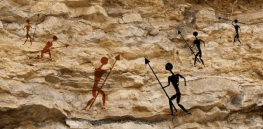
Viewpoint: Challenging the ‘us vs. them tribalism myth’ — No, humans are not programmed by evolution to be in conflict with others
More than 200 million people were killed in the 20th century due to war and acts of genocide. Many of ...

Why do some people suffer mild COVID while it debilitates others? Gene variant plays decisive role
It may be the most baffling quirk of COVID: What manifests as minor, flu-like symptoms in some individuals spirals into ...

CRISPR co-creator Emmanuelle Charpentier: ‘Studying microbes can solve some of the biggest problems facing humanity, including how our metabolisms and brains work’
In early September, CRISPR co-creator Emmanuelle Charpentier traveled to Yerevan, Armenia to be one of the main speakers at the ...
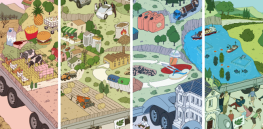
Viewpoint: European Commission must prioritize agricultural biotechnology or ‘the 2050 zero carbon emissions target will remain a mirage’
"Without further investments and simplification of procedures, the zero emissions target will remain a mirage. To achieve this, the European Commission must ...

The brain genetics behind feeling sick
Infections are often associated with symptoms that aren’t directly tied to the pathogen, such as lethargy and loss of appetite ...
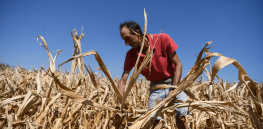
Viewpoint: Facing unprecedented drought, Europe debates embracing sustainable, climate-flexible, insecticide-reducing genetically modified crops
Europe’s summer of drought has been impossible to ignore. Rivers dried up, exposing the skeletons of warships and ancient buildings. Images captured by ...
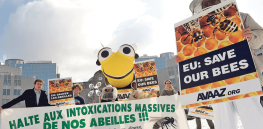
EU bans food imports with neonic pesticide residues starting in 2026
The European Commission announced [September 27] that imports of products containing residues of harmful insecticides known as neonicotinoids will be ...
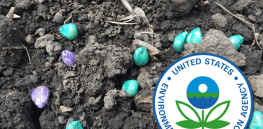
Environmental Protection Agency denies Center for Food Safety petition to ban neonicotinoid pesticides
The Environmental Protection Agency denied a petition September 28 that asked the federal agency to more closely regulate a group ...
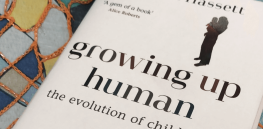
‘Uniquely helpless’: ‘Growing Up Human’ discusses why our species has such an extraordinarily long childhood
Despite all the advice books written for parents about infancy and childhood, there have been surprisingly few treatments of childhood ...

Brain map: $126 million project to decipher the brain and better understand traumas and disease
With a five-year, $126 million grant from the National Institutes of Health (NIH), a team led by Salk Institute scientists ...
