


Science Literacy Project Daily Digest

How robots are filling in for bees and helping pollinate Japan’s apple orchards
According to the estimate of the Japanese government, the number of bee swarms in Japan has seen a 40% reduction ...

Montreal becomes first Canadian jurisdiction to ban glyphosate
Montreal will be the first municipality in North America to completely ban the sale of more than 100 pesticide products ...

CRISPR, fluorescent proteins, optogenetics: Three life-enhancing technologies inspired by nature
Watson and Crick, Schrödinger and Einstein all made theoretical breakthroughs that have changed the world’s understanding of science. Today big, game-changing ideas are less ...

The intriguing brain science of left-handedness
Handedness is one of many functional left-right differences in the brain. Specifically, in left-handers, the motor cortex in the right ...

Sex or food? When deprived of both, dinner wins out — at least for fruit flies
Animals make behavioral choices every day. But how do they prioritize one need over another—especially when those choices are both ...

Synthetic foods: They sound unappetizing — but they could revolutionize agriculture
[Just five years ago, Upside Foods] developed a biological process to grow synthetic meat products by taking stem cells from ...
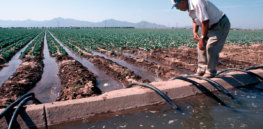
How GMOs can help farmers tackle climate change
Going forward into the future, agricultural scientists using techniques such as gene editing can help make crop and livestock species ...

Centenarians have unique genetic characteristics. Here’s why studying them might help us solve the mystery of longevity
A recent perspective article on human longevity focuses on socioeconomic standards and health care. In our opinion the authors could ...
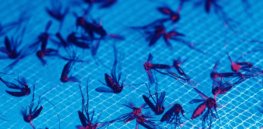
‘Phenomenal advancements’ in gene drive technology to eradicate disease-carrying mosquitoes
Gene drives are selfish genetic elements that are transmitted to progeny at super-Mendelian (>50%) frequencies. Recently developed CRISPR–Cas9-based gene-drive systems ...

Can the clean meat revolution address agriculture’s ecological challenges?
For a cutting-edge biotechnology, cellular agriculture is actually a fairly straightforward process. It begins with stem cells, usually harvested from ...

Viewpoint: ‘The debate on glyphosate in Canada is populist, chaotic, political and simply unsettling’
Canadians had until July 20 to comment on the federal government’s proposal to increase the amount of glyphosate herbicide residue ...

Biotechnology research and development is the cutting edge of Africa’s hoped-for sustainable green revolution
What is needed to build a sustainable and resilient food system in African countries? This was one of the questions ...

‘Ghost lineages’: Discovering extinct species in modern animal DNA
Either before, during, or shortly after their migration to the [Tibetan] plateau, H. sapiens got friendly with Denisovans, while their ...

Misinformation trifecta: How disinformation spreaders weaponize science
Recently it has become more apparent to me that often there is a common strategy to weaponizing misinformation. It’s likely ...

Is borderline personality disorder genetic?
Borderline personality disorder (BPD) is a mental health condition characterized by instability in moods, self-image, and behavior. People with BPD ...

Why is life genetically programmed to die?
Epidemics have a way of making one wonder about death. To put it plainly, in the raw form it takes ...

Academic study: ‘We challenge the widespread appraisal that organic farming is the fundamental alternative to conventional farming for harnessing biodiversity in agricultural landscapes’
Biodiversity continues to decline rapidly, despite decades of repeated national and international policy efforts. Agricultural intensification is a major driver ...

New and emerging technologies — combined with low-tech existing solutions — could pave the way to net-zero emissions agriculture
New and emerging technologies could pave the way to net-zero carbon emissions agriculture in the next two decades, according to ...

The debate over sustainable food systems needs a new ecosystem
Europe needs more sustainable food systems to cope with dramatic changes to our natural environment, economic instability, and rapid societal ...

How epigenetics is poised to revolutionize food, farming and animal agriculture
Epigenetics studies the chemical compounds and proteins that can attach to DNA and direct the actions to turn a specific ...

Biodiversity surprise: In Quebec, there are 25% more species than 500 years ago, challenging ecosystem catastrophists, Nature reports
[Mark] Vellend, who teaches at the University of Sherbrooke in Quebec, Canada, poses a question to his students every year: ...

Biotech beauty: How technology advances are revolutionizing the skin care, cosmetics and beauty market
Until recently the beauty industry could be split into two camps. In one corner, there’s high-tech, lab-made contenders – like ...

Rethinking ‘The Omega Man’: How viruses alter human DNA
[W]e're celebrating 50 years since the release of The Omega Man, the 1971 film based on Richard Matheson's novel I ...

6.3 billion tons of plastic: That’s how much waste we’ve generated. Fungus and bacteria might be part of the solution
Samantha Jenkins was studying a number of types of fungus in a research project for her company, when one of ...
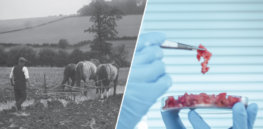
‘So far, the clean meat industry has proven more adept at churning out optimistic timelines than it has at offering consumers an alternative to meat from animals’
So far, the [clean meat] industry has proven for more adept at churning out optimistic timelines than it has at ...

On average, women live 5 years longer than men. It’s mostly genetics
Around the world, women live longer, on average. So why do women tend to outlive men? Two of the main ...

How climate change shaped evolution in the Middle East
Researchers at the University of Birmingham and the Wellcome Sanger Institute, along with their international collaborators, have uncovered signals in ...
