


Science Literacy Project Daily Digest

Black women are six times more likely than White women to develop tumors that lead to breast cancer. Do genetically-based racial differences play a role?
Compared with white women, Black women are 40% more likely to die of the disease, and twice as likely if ...

Massive ‘dragon man’ skull found in Chinese well reveals possible new hominid family tree branch more closely related to modern humans than Neanderthals
The discovery of a huge fossilized skull that was wrapped up and hidden in a Chinese well nearly 90 years ...

‘Protein transition’: Everything you need to know about the coming clean, cultured, alternative meat revolution
The cultured meat revolution is also sometimes called ‘the protein transition’ and its advocates are confident that this transition will ...

Viewpoint: Regenerative ranching – promoted by organic activists from Vandana Shiva to the Organic Consumers Association — has turned out to be a massive scam
While the regenerative potential of many agricultural techniques is widely accepted among ecologists, the inclusion of ranching is disputed. ...

Is Emotional Intelligence a real and measurable quality?
Emotional intelligence, the ability to regulate and perceive emotions, is the subject of much debate amongst scientists and the public ...

Decades-past DDT exposure shown to ‘haunt’ our bodies for three generations or more
Friends and family often ask Barbara Cohn, an epidemiologist at Oakland's Public Health Institute, why she studies the effects of ...

Is Bill Gates behind the release of disease-fighting sterile GMO mosquitoes in Florida?
A multi-year research project to genetically modify Aedes aegypti, a mosquito species that is known to carry and transmit infectious ...

How California is teaming up with conservation groups to rescue the western monarch butterfly from extinction
Monarch butterflies, known for their distinctive orange and black pattern, once flocked to California in the millions, spending the winter ...

Concerned about depression? Wake up an hour earlier
People who tend to go to bed and wake up earlier have significantly lower risk of major depression, according to ...

‘If humans are so smart, why do women menstruate? Who thought that was a good idea?’ Interview with ‘Evolution Gone Wrong’ author Alexander Bezzerides
Okay, humans, if we're so smart, why do our backs hurt so much? Why do we cry? And menstruation, who ...

Puppy love: Dogs are born to understand people. Here’s how culture and evolution worked together
The fate of dog and man has been entwined for millennia (exactly how long is still a question, with estimates ...

‘There’s so much misinformation swirling around the internet’: Are pesticides really safe and necessary?
Here are 5 things you may not know about pesticides — from their long backstory to their development and testing ...

Viewpoint: Culture is more powerful than genes to human evolution, researchers claim
In a new study, University of Maine researchers found that culture helps humans adapt to their environment and overcome challenges ...

Tough time recovering from jet lag? US government-university partnership developing implantable ‘living pharmacy’ to control our circadian clocks
A Northwestern University-led team of researchers has signed a cooperative agreement with the Defense Advanced Research Projects Agency (DARPA) to develop a ...

1/3 of 1%: Alternative protein sources such as Impossible Burger still represent a tiny share of consumer purchases — but polling shows consumers are open to switch
If you had three options in front of you: farm-raised beef, lab-grown meat and Impossible Foods protein — what would ...

Viewpoint: Can regenerative agriculture save the beleaguered coffee industry from climate change devastation?
[A]fter generations of cultivating coffee as a crop, irresponsible farming practices such as poor water management and dependency on harmful ...

Our DNA can store a staggering amount of information in an almost inconceivably small volume
The prevailing long-term cold-storage method, which dates from the 1950s, writes data to pizza-sized reels of magnetic tape. By comparison, ...

Beyond dopamine: The science behind how and why the brain works to make us happy
[Dopamine is] one of the many, many chemicals (aka neurotransmitters) found in the human brain, where it has many functions ...

Viewpoint: Evolution is more than a Darwinian ‘selfish gene’ battle to the death
The idea that selfishness and greed are drivers of evolution, and therefore possess underlying virtue, has been around for over ...

Video: Here’s how synthetic flies could become a major tool in the quest to control insect-borne diseases
CRISPR-based technologies offer enormous potential to benefit human health and safety, from disease eradication to fortified food supplies. As one ...

Gene editing can prevent eucalyptus from becoming invasive
Gene editing can prevent eucalyptus — a tree highly valued in Kenya and elsewhere for its hardy timber, wood fuel ...

Can we grow chickpeas on the moon? It’s possible — and here’s why we just might want to do it
Lots of people get ideas, but when you’re a Stanford biophysics Ph.D. candidate who has already sent a lander to ...
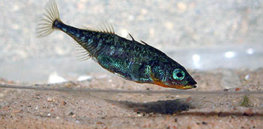
‘Natural selection in real time’: Which species are most likely to adapt to climate change?
Climate change is exacerbating problems like habitat loss and temperatures swings that have already pushed many animal species to the ...

Population bomb, in reverse: Too few babies — not too many — is emerging as a major global problem
In Japan, people buy more diapers for the elderly than babies... And the population growth rate in the U.S. is ...

Viewpoint: Thinking about carbon as a crop
“The idea behind carbon farming is pretty simple — remove excess carbon from the atmosphere and store it in the ...

The smartest person in the cockpit: How Artificial Intelligence is guiding the emerging travel boom
A storm cell near Oklahoma City was likely to turn into a thunderstorm around the time Flight 1405 took off, ...

False link: No, milk does not increase cholesterol levels
A study published in the International Journal of Obesity looked at three large population studies and found that people who ...
