


Science Literacy Project Daily Digest

Going back to your office for work may increase your productivity — and your weight. Here’s why
With millions of Americans vaccinated against COVID-19, many who have worked from home over the past year will be heading ...

Colombian university develops next-generation oil-producing transgenic crops
In products as common as wine, beer, cotton, flowers and others from the food sector such as soybeans and corn, ...

Viewpoint: ‘Overhyped, speculative, and fear mongering’ — How biotechnology critics have lobbied to mislead the public on the science of GM crops
Most of the issues raised in available literature against GMOs on the grounds of health and environmental risks, and national ...

CRISPR gene editing on the cusp of adding new gene drive tools to control disease-carrying mosquitoes
[D]espite decades of effort, vaccines have, for many [diseases like malaria and dengue], proved tricky to develop. Better, then, to ...

How genetic genealogy helped solve this 50-year old case of a teenage girl’s murder
Barry Lee Whelpley, 76, was arrested [June 2] at his home in Minnesota for the 1972 murder of Julie Ann ...

Brainless hydras can tell us a lot about the significance of sleep
It does not have a brain, or even much of a nervous system. And yet, new research shows, it sleeps ...

Viewpoint: ‘A toxic soup of insecticides, herbicides and fungicides is wreaking havoc’ on soil in farms around the world
Like citizens of an underground city that never sleeps, tens of thousands of subterranean species of invertebrates, nematodes, bacteria and ...

Video: GLP’s Jon Entine at Aspen Institute conference — Why organic advocates should stop demonizing biotechnology and embrace a sustainability-focused ‘all tools in the agriculture toolbox’ philosophy
Advancing gene editing could be one tool to reduce chemical use in agriculture, but it faces the critical judgment of ...

Cell-based breast milk for mothers and babies inches towards reality
Durham, North Carolina-based women-founded startup Biomilq has successfully farmed human breast milk outside the body, the company has announced [June ...

Viewpoint: Precision education? Genetic tests purporting to ascertain students’ educational capabilities under fire
Genetic tests claiming to predict people’s intellectual aptitudes or how much education they are likely to get are readily available ...

Too smart for our own good: How artificial superintelligence could lead to humanity’s demise
Imagine systems, whether biological or artificial, with levels of intelligence equal to or far greater than human intelligence. Radically enhanced ...

Coronavirus quarantines have caused a huge spike in ‘cybersickness’
The pandemic has forced most of us online at incomparable rates. It’s where we’ve worked, taken classes, attended parties, and ...
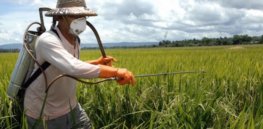
Viewpoint: ‘Smart pesticide use’ — Here’s a way we can protect crops while preserving beneficial insects
Currently, products are developed and marketed to kill pest insects immediately. This has become the goal of crop treatments, and ...

Farmers warn Mexico’s GM corn ban will raise food prices
Mexico’s farmer associations are teaming up and pushing back through legal battles in opposition to a presidential decree to ban ...

CRISPR offers hope for controlling African swine fever
New vaccine trials hold great promise in the management of an East African strain of African swine fever (ASF), one ...

‘They offer a magical vision of a better future but not in this world’: In Foreign Policy, social scientists opposed to conventional agriculture spark fierce organic vs intensive farming debate
A recent back and forth has stirred up controversy over at Foregin Policy. Are “Big Ag” and intensive farming destroying ...

Viewpoint: Is aquaculture good for the planet? Here’s a carbon footprint sustainability snapshot
Reliable figures on the carbon footprints of different aquaculture species are hard to find – not least due to the ...

Humanized pigs: How scientists bioengineered swine with human immune systems to accelerate research on viruses, vaccines, cancer and stem cell therapeutics
The U.S. Food and Drug Administration requires all new medicines to be tested in animals before use in people. Pigs make ...

‘Mixed-handers’ make up less than 1% of the world’s population — except in the NBA where 1 in 12 stars play and write with different hands. What’s going on?
LeBron James writes with his left hand, eats with his left hand and uses his dominant left hand for almost ...

Viewpoint: New York’s ‘Birds and Bees Protection Act’ targeting neonicotinoid pesticides doesn’t protect either and would hurt farmers
[Recently,] the New York legislature began advancing the Birds and Bees Protection Act. If it passes both chambers and is ...
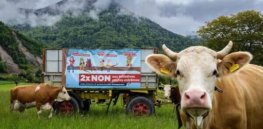
Swiss voters ‘overwhelmingly’ reject activist-proposed synthetic pesticide ban, referendum results show
Voters in Switzerland on [June 12] overwhelmingly rejected a measure that would have banned the use of artificial pesticides in ...

Beer and sustainable farming: How brewing waste can disinfect soil and increase yields
Despite the simplicity, beer brewing generates substantial amounts of by-products, including large amounts of spent grain, which are difficult and ...

Is machine-based mind control on the near horizon?
Laser beams, ultrasound, electromagnetic pulses, mild alternating and direct current stimulation and other methods now allow access to, and manipulation ...

COVID’s positive side-effect: fewer contagious illnesses. How can we make that last?
Many of us have likely noticed what the data is bearing out: Strict social distancing and masking protocols not only ...

Could the current fascination with ‘regenerative agriculture’ spur production of more sustainable eggs?
Over the past decade, producers have skillfully persuaded consumers to pay four times the price for a dozen eggs that ...

Space wine: How sending grapevines into orbit could protect the wine industry from devastating impacts of climate change
[A] group of scientists is cultivating the next generation of mutant grapes, which they hope will be resistant to shocks ...

Ditching disposable: How a circular food system — where waste becomes new products — could boost food security and the economy
Linear economies follow a “take-make-dispose” plan in which raw materials are collected, transformed into a product and used until discarded ...
