


Science Literacy Project Daily Digest

Vaccine in development that could protect honeybee populations from pesticide poisoning
The solution is about the size of a grain of pollen, and when ingested by bees, allows the creatures to ...

Viewpoint: ‘It’s banned in Europe fallacy’ — How advocacy groups weaponize EU’s questionable ‘precautionary’ bans on genetic engineering and chemicals
The argument, in a nutshell, asserts that something is dangerous or likely dangerous simply because it is banned in some ...

‘Uncertain and confused’: Sri Lankan farmers facing government’s ‘misguided’ ban on all synthetic chemicals fear sustainable farming will be unattainable
The [Sri Lankan Cabinet of Ministers recently] approved President Gotabaya Rajapaksa’s proposal to ban the importation of chemical fertilisers. In ...

Forest of the future: Maine conservationists plant American genetically modified chestnut trees in hopes of reviving near-dead species
Though some are still scattered across the country, the [American] chestnut has been functionally extinct for 70 years. But science ...

50,000 years ago, the Negev desert was home to consorting humans and Neanderthals
A recent reexamining of artifacts from the Boker Tachtit archaeological excavation site in Israel’s central Negev desert has found that ...

CRISPR 3.0: A giant leap forward in the quest for climate-conscious farming
In a study in Nature Plants, Yiping Qi, associate professor of Plant Science at the University of Maryland (UMD), introduces a ...

Despite breakthroughs in understanding why we age, slowing the inevitable is proving impossible
Backed by governments, business, academics and investors in an industry worth $110bn (£82.5bn) – and estimated to be worth $610bn ...

80% less greenhouse emissions generated: The world’s first cell-based, lab grown meat factory just opened in Israel
Israeli biotech company Future Meat has opened what it claims to be the “world’s first industrial cultured meat facility,” a ...

Suffering from a broken heart? It’s shocks the brain, impacts us like a mild heart attack and disproportionately affects women
Takotsubo syndrome, also known as broken heart syndrome, is a rare, reversible condition with symptoms mimicking a mild heart attack ...

Cow-free milk? Chicken-free eggs? Inside the quest to create real animal proteins with fermentation
[S]cientists are figuring out how to make animal protein without using any animal cells at all – by using fermentation ...

‘Why is the US so retrograde when it comes to biotech?’ — ‘Supertrees’ engineered to capture more carbon stir anti-GMO backlash
Capitalizing on trees’ ability to function as natural carbon capture machines, Reddit’s former CEO is now running a company that ...
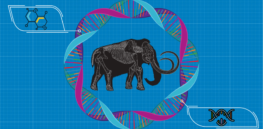
Here’s an update on the (quixotic?) CRISPR gene editing project to revive the defunct woolly mammoth
As CRISPR allows scientists to splice individual genes that program for specific characteristics into the genome of living species, it ...

Drinking and evolution: Why do we seem programmed to consume alcohol if it’s bad for our health?
At sites in eastern Turkey, dating to perhaps 12,000 years ago, the remains of what appear to be brewing vats, ...

Does ‘intensive agriculture’ make pandemics more likely? That’s the claim. Here are the facts
Animals can cause diseases in humans. That won't surprise you. What may surprise you is to read that these diseases ...

Viewpoint: Why banning neonicotinoids is a well-meaning but misguided strategy to protect bees and other pollinators
Unfortunately there is quite a bit of dis-and misinformation about what harms bees. For instance, [Maine] lawmakers recently passed a ...

Cow methane ‘burps’ are one of the largest contributors to carbon emissions. Could bovine genetic selection reduce climate change impacts?
Using genetics… scientists have isolated the gene in cattle which causes excess methane production. Through selective breeding, it claims this ...

Israeli scientists have used gene editing to extend the life expectancy of mice by 23 percent. Can it be done to humans?
Researchers at the Bar-Ilan University in Ramat Gan, Israel said they’ve been able to increase the supply of SIRT6, a protein ...

Viewpoint: Can we adequately feed 10 billion people by 2050? Dutch scientists say yes, but the key is genetic engineering breakthroughs
The goal is to produce twice as much food using half the land and half the inputs. These changes are ...

Facing an uncertain, climate-altered future, here is how scientists are revamping crops
[A new wheat variety called] Kernza brings higher yields and can contain more seeds per stem than average wheat. And ...

‘No-kill meals’ made from lab-grown meat promise huge environmental and ethical benefits. What are the downsides?
We have pescatarians, vegans, flexitarians, locavores and of course vegetarians. But what’s the word for those of us who make ...

Study: Quagmire surrounds the use and misuse of race in identifying and preventing health disparities
In the 18th and early 19th centuries, Carl Linnaeus and Johann Blumenbach used “race” to taxonomically classify human types. Linnaeus ...

The horrific scale of the 1921 Tulsa race massacre has not been fully catalogued — until now, using forensic analysis of remains found in a mass grave
Forensic scientists and archaeologists investigating a mass grave near the site of the 1921 Tulsa Race Massacre have unearthed skeletal ...

These genetically-modified poplars are easier to cut down — and can produce more bioethanol
Wood mainly consists of cellulose, hemicellulose, and lignin… In [genetically] modified poplars, one of the molecules involved in the production ...

Genome editing helps African researchers develop disease-resistant banana varieties
Though breeding programs using genome editing remain in their infancy on the African continent, public research institutions are leading the ...

Viewpoint: ‘Lefty food and farm’ group’s implacable opposition to genetic engineering imperils life-saving virus research, writes Mother Jones
[Recently, the Center for Food Safety] sued the National Institutes of Health in an attempt to force the agency to ...

CRISPR milestone: Crippling transthyretin amyloidosis disease now treatable through gene editing, paving way for addressing other genetic diseases
[65-year-old Patrick] Doherty found out he had a rare, but devastating inherited disease — known as transthyretin amyloidosis — that ...

Higher breast cancer rates in Black women linked to healthcare access more than genetics, concludes study challenging other findings
The poorer breast cancer outcomes and higher death rates among Black women are most likely the result of racial disparities ...
