


Science Literacy Project Daily Digest

How the human brain resembles drug dealers in Albuquerque
David Eagleman, 50, is an American neuroscientist, bestselling author and presenter of the BBC series The Brain, as well as ...

Viewpoint: Hard truths about regenerative agriculture — When marketing hype is embraced as policy
Words like artisan, craft, sustainable, and now regenerative are used to promise something better to the consumer, but at the ...

CRISPR gene drives have been deployed in plants — opening the way to breeding resilient crops better able to withstand drought and disease
With a goal of breeding resilient crops that are better able to withstand drought and disease, University of California San ...

Viewpoint: How does the scientifically bankrupt claim glyphosate poses harm to humans remain popular? By dishonest ‘reporting,’ including from scientists who put ideology over evidence
The Conversation bills itself as a website designed to “Unlock the knowledge of researchers and academics to provide the public with ...

Russia positions itself as a world leader in genetically edited cows
Researchers from Ernst Federal Science Center for Animal Husbandry, Skoltech, Moscow State University and their colleagues have produced the first ...
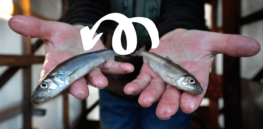
Infographic: Gene transfer mystery — How ‘antifreeze’ genes jumped from one species to another without sex
It isn’t surprising... that herrings and smelts, two groups of fish that commonly roam the northernmost reaches of the Atlantic ...

Intellia’s disease-eradicating CRISPR tool is injected directly into the bloodstream. Here’s why that’s such a big deal
CRISPR gives us the ability to correct genetic mutations, and given that such mutations are responsible for more than 6,000 ...

How a blobby, brainless, bright yellow slime mold is redefining our understanding of human cognition
This slime mold species has thrived, more or less unchanged, for a billion years in its damp, decaying habitats. And, ...

Food from thin air? Transforming carbon emissions into protein could clean up pollution and reduce land needed to feed billions of people
Around the world, forests are being cut down to grow protein-rich soya to feed to animals. Using solar power to ...

Viewpoint: Concerned about biodiversity but wary of biotechnology innovation to achieve it? Your fears are misplaced
Some individuals worry about the unintended consequences of intervening with nature, including the use of genetic technology as well as ...

Persuasion machines: AI can now debate humans. We still win — for now
Stand aside, Siri and Alexa. An IBM team led by artificial intelligence (A.I.) researcher Noam Slonim has devised a system ...

Recycling on steroids: Making new clothes out of spoiled milk
Did you know that 116 million tons of dairy products are wasted globally, with about half lost before even reaching ...

‘Despite the challenges of misinformation, the technology has enjoyed the confidence of farmers, researchers and policymakers’: Bt insect-resistant cotton celebrates 20 years of increased productivity
In the year 2022, Bt cotton will complete two decades of cultivation in India. Despite the challenges of misinformation, the ...

‘We create mosquito sex parties’: How an eco-friendly, AI-guided release of sterile mosquito females might control the scourge of disease-carrying insects
Jerusalem-based Diptera.ai has figured out a way to use AI to fight the growing threat of mosquitoes, which are spreading ...

‘Cutting nickel-size holes in your skull and plunging in metal-tipped electrodes’: Could deep brain stimulation cure drug addiction?
After nearly two decades of hardcore drug addiction — after overdoses and rehabs and relapses, homelessness and dead friends and ...

An instinct for numbers? Ancient humans and even some animals evolved the ability to count
Although researchers once thought that humans were the only species with a sense of quantity, studies since the mid-twentieth century ...

Can next-generation agriculture become a climate change solution — rather than a carbon generator?
Carbon farming includes a variety of agricultural methods aimed at sequestering atmospheric carbon into the soil. These farming practices can ...

Survey: Consumers are willing to embrace gene edited foods if they understand their sustainability and health benefits
Consumer acceptance of gene edited foods. That’s the title of a research paper co-authored with Vicenzina Caputo and Valarie Kilders ...

Is this skull unearthed in Israel the ‘missing link’ in human evolution that scientists have been hoping for?
[A newly discovered] hominin, or early human, has been named Nesher Ramla, after the site outside the city of Ramla ...

How tall will your children be? Here are the nature versus nurture factors
We often consider our height as being unchangeable, determined by our genetic make-up from when we were conceived. After all, ...

Looking past the aducanumab approval fiasco: 70 Alzheimer’s drugs are in the clinical pipeline
Researchers and drug makers have labored fruitlessly for decades to develop treatments that can slow [Alzheimer's] disease’s progression. More than ...

Kenya on track to commercialize GM maize by 2022 to increase yields, cut pesticide use
Whether it is ugali, a popular dish prepared from maize flour and often accompanied by meat, vegetables and pulses, or porridge, ...

South Africa has reaped major benefits from GM maize, study finds
Genetically modified (GM) maize has greatly improved food security in South Africa, reduced environmental damage and helped smallholder farmers achieve ...

Is the FDA up to the task of reviewing the coming onslaught of lab-made cell-based meat and seafood?
One of the most innovative food products expected to enter U.S. markets in coming years is cell-cultured meat and seafood ...

Why sickle cell disease is a perfect target candidate for CRISPR gene editing
When the gene-editing technology CRISPR/Cas9 was discovered in 2012 by Berkeley biochemist Jennifer Doudna and collaborator Emmanuelle Charpentier, it changed ...

Considering using green tea extract, guar gum or acupuncture to lose weight? Think twice, studies show
A new comprehensive study published in the journal Obesity on June 23 has found that dietary supplements do not result in ...

When it comes to evolution, could humans be more impactful than nature?
The composition of our air and water is different from what it was even a few decades ago. There is ...
