


Science Literacy Project Daily Digest

Popularity of GM, insect-resistant eggplant grows in Bangladesh as more farmers discover its yield-boosting benefits
With reduced costs of pesticides and increased yield, BT brinjal farmers say their profits have increased manifold. “After preparing a ...

How dogs evolved into our best friends
Dogs diverged from wolves more than 27,000 years ago, choosing to live alongside and evolve with humans. Published in the ...

Bayer asks federal judge to toss lawsuit demanding cancer warning label on glyphosate weedkiller
Monsanto is again asking a Delaware judge to toss a lawsuit that demands a cancer warning label on its weedkiller ...

‘Selfish sperm’: Why men generate it and how it drives evolution
[L]ike all animals, we are biologically driven to try and pass our genetic material on to the next generation, and ...

Viewpoint: CRISPR crops offer many benefits. Governments should teach the public about them
Tomatoes that use technology to efficiently modify genes will be sold as the first "genome-edited food" in Japan by the ...

With GM salmon and lab-grown meat poised to hit the market, 2021 could be a turning point for food technology
The landscape is already changing. The first cell-based chicken appeared on a Singapore restaurant menu in late 2020, and several ...

3 pioneering African nations embrace gene editing to boost food security, farmer incomes
Kenya, Nigeria and Eswatini are taking the lead on genome editing in Africa as they see its potential in boosting ...

Diseases once thought incurable are now on the cusp of treatments. It’s because of CRISPR. Here’s a primer
Like many other advances in science and medicine, CRISPR was inspired by nature. In this case, the idea was borrowed ...

Are we ready for therapeutic gene editing of embryos?
[W]e know that natural nonsense mutations in the PCSK9 gene protect against high cholesterol. Subsequent work has led to PCSK9 ...

How the fossils ‘Lucy’ and “Ardi’ changed our understanding of human history
The discovery of [Lucy,] Australopithecus afarensis, advanced science in numerous ways. First, it illuminated one of the greatest mysteries of ...

Viewpoint: Reducing the number of Down syndrome births is a form of eugenics
No one should underestimate the complexity and difficulty of deciding whether to test for Down syndrome or terminate a pregnancy ...

Could lab-grown plants offset agriculture’s environmental footprint?
Researchers at MIT have developed a new method for growing plant tissues in a lab — sort of like how ...
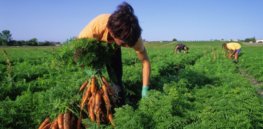
Viewpoint: ‘A big mistake’: How Europe’s pro-organic Farm to Fork initiative will harm consumers and farmers
The targets set as part of the “Farm to Fork” strategy could have disastrous consequences for the [EU’s] economy as ...

Lab-grown meat is here: Restaurant in Singapore begins serving chicken made in a bioreactor
By the time you read this, a group of friends at a restaurant in Singapore will have shared a three-course ...

Can dogs see optical illusions too?
Psychologists use visual illusions all the time to study the shortcuts the human brain uses to extract information about the ...

Nipples seem useless in men – so why do they have them?
Males and females do, in fact, start from the same genetic blueprint. Embryos, in their first weeks, develop structures with ...

Type 1 diabetes is caused by eating too much sugar, and four other myths about the disease
According to a Centers for Disease Control and Prevention report, 34.2 million Americans had diabetes in 2018. Of those, only 1.6 ...

Gene editing immunizes canola against nasty fungal disease, and may cut farmer dependence on fungicides
Field trials confirmed greenhouse trial results of a new canola trait that’s sclerotinia resistant. Cibus is an independent trait developer ...

China makes progress on biotech crop development in race to achieve food self-sufficiency
Cultivating secure, stable and advanced seed varieties is key to China's ongoing efforts to beef up food security, especially in ...
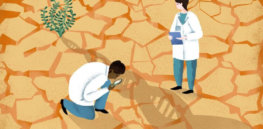
Technology vs. global warming: How genomics, remote sensing and big data can safeguard our food supply
In a bid to help one of the world’s most important cereal crops survive hotter, drier conditions, the Foundation for ...

Video: How will CRISPR and other forms of gene editing revolutionize our world?
Gene editing has the potential to eliminate genetic diseases and save lives. But one scientist has crossed an ethical line ...

Who were the first Caribbean populations? Ancient DNA rewrites history
An international team led by Harvard Medical School’s David Reich analyzed the genomes of 263 individuals in the largest study of ancient ...

Roundup on trial: Law firms spent $91 million in one year to recruit plaintiffs for glyphosate-cancer suits
In 2019, an estimated $91 million was spent on ads seeking clients to pursue Roundup-related claims, making it the No ...

Once battling starvation, some developing countries now face rising obesity rates. What’s causing it?
In 1975, four percent of school-age kids were overweight and the NCD Risk Factor Collaboration says that was up to ...

Bugs for dinner? EU officials find edible mealworms pose ‘no safety concerns’
Edible insects got one step closer to Europeans’ kitchens this month. The European Food Safety Authority released a scientific opinion on ...

‘Exercised’: New book by a biological anthropologist says humans are cut out to nap, not exercise – Here’s how we can overcome our evolutionary destiny
Want to feel bad about skipping a workout? Blame evolution. Daniel E. Lieberman argues this theory in his new book ...

Video: Is lying an innate human trait?
Everyone lies. Even you and even me. We lie about small things and we lie about big things. We lie ...
