


Science Literacy Project Daily Digest

Regulate all chemicals in food? Two experts say that’s an ‘absurd (and impossible) exercise’
A recent CNN article about the FDA oversight of chemicals in foods is puzzling. Author Sandee LaMotte regurgitates a ludicrous demand by ...

Fear and anxiety may not be as separate as we have come to believe
[It’s commonly believed that] fear is a more basal response to an immediate threat thought to be controlled by the ...

How extensively did the Vikings explore the Americas a millennium ago?
Around the year 1000, Leif Erikson set sail from Greenland and landed first in ‘Stone-slab land’, then ‘Forest land’ and ...

CRISPR-edited poplar trees could cut carbon emissions during paper production
Researchers led by prof. Wout Boerjan (VIB-UGent Center for Plant Systems Biology) have discovered a way to stably finetune the ...

Male sexual desire linked to brain gene
The locus of male sexual desire has been uncovered in specific regions of brain tissue where a key gene named ...

CRISPR pioneers Emmanuelle Charpentier and Jennifer Doudna awarded 2020 Nobel Prize for Chemistry
The 2020 selection for the Nobel Prize in Chemistry goes to two scientists who share credit for identifying and developing ...

Goodbye gin and tonics? Invasive plant disease threatens juniper berries used to make gin
The gin industry, which is worth £3.2bn to the UK economy, has the potential to be devastated by an invasive ...

Fraud investigation reveals 3-continent-wide organic fruit trading ‘scam’
In January 2017, Chilean customs inspectors acted on a tip from a whistleblower: The country's prized crop of raspberries was ...

Deep waters of the Black Sea are a window into the first stages of evolution
In the deep waters of the Black Sea, scientists found microbes that can make membrane lipids, a layer that surrounds ...

Regenerative dentistry could restore damaged teeth
Teeth develop through a complex process in which soft tissue, with connective tissue, nerves and blood vessels, are bonded with ...

Where are the world’s biodiversity hotspots and why do they matter?
Ecologists have long sought to understand why some areas of the planet are extraordinarily rich in species. The research set ...
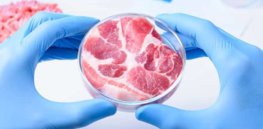
Generation Z accepts GMOs, but 72% not ready to eat lab-grown meat, survey shows
It wasn’t long ago that a U.S.-based study found that 77 percent of Generation Z are just fine with food ...

Meet the cyborg who can help decode the human brain
His motion capture suit, sensor-embedded gloves, and virtual reality eyewear were already enough to turn heads. But what stopped people ...

Pesticide safety basics: How does the EPA protect consumers from harmful chemicals?
In our blogs, we often reference Environmental Protection Agency (EPA) safety levels or “tolerances” when discussing [pesticide] residues. But how ...

Gene-edited plants and animals: Our secret weapons in the battle to slow climate change?
Nearly 200 nations signed on to the Paris Agreement in 2016, pledging to reduce their countries’ greenhouse gas emissions. By ...

Viewpoint: EU approves new herbicide resistant GMO soy for human and feed consumption, but won’t allow its farmers to grow it
[EU regulators recently] approved Bayer’s new XtendFlex soybeans for food and animal-feed use. Bayer’s latest GMO is resistant to three ...

Can you really exercise your brain?
Who wouldn’t want a better memory? After all, our recollections are fragile and can be impaired by diseases, injuries, mental ...

Contemplating human extinction
Whether designer pathogen or malicious AI, we now recognize many ways to die. But when did people first start actually ...

Race and ADHD: Clear evidence of genetically-based racial differences in proclivity and effective treatments
[T]here may be key genetic differences in the causes of attention-deficit hyperactivity disorder (ADHD) between African Americans and people of ...

‘We have absolutely no idea what the adverse effects of that could be’: What’s the science skinny on ‘brain boosting’ supplements
Nootropics, also called smart drugs, have become one of the fastest-growing segments of the supplement industry. They’re marketed as products that can ...

Spillover effect: Could GMO disinformation shake public trust in other scientific innovations?
In 2016, the World Economic Forum listed online digital misinformation as one of the leading threats to modern societies. Campaigns ...

Cuban president says GM crops and agroecology can help sustainably boost food production
One of the Cuban government’s priorities is to achieve the highest possible agricultural production with the decisive contribution of science ...

Viewpoint: Pesticide residues on food could be 100,000 times higher—and still wouldn’t harm your health
The idea that “nonorganic” produce, typically referred to as “conventional” produce, is unsafe to eat is pervasive, and it largely ...
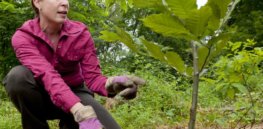
No evidence GMO chestnut trees harm humans, animals or the environment, developers tell USDA
Researchers at the State University of New York College of Environmental Science and Forestry (ESF) have developed Darling 58 American ...

How mindfulness meditation can enhance mind control
[Researchers] conducted a large-scale human study enrolling subjects in a weekly 8-week course in simple, widely-practiced meditation techniques, to test ...

Viewpoint: There are only two sexes. That doesn’t invalidate the biological reality of transgenderism
There’s no need to reject how biologists define the sexes to defend the view that trans women are women. When ...

Have humans hit an evolutionary wall? Top scientists offer their views
Our Stone Age ancestors who were faster runners avoided being trampled by mammoths and were more likely to have children ...
