


Science Literacy Project Daily Digest

Meat industry may back its cell-based competitors to gain foothold in health food market
According to Andrew Noyes, the head of communications for Just Inc., meat companies are discussing the possibility of helping cell-based meat ...

Why teaching evolution is still difficult in many public schools
[November 12] marked the 50th anniversary of the Supreme Court’s decision in Epperson vs. Arkansas, which struck down the state’s ...

Plant scientist Kevin Folta: Claims about glyphosate in orange juice are ‘brilliantly devious’
Since 2013 the science communication community and wacky food activists learned something important — you can fill a table with creepy numbers, ...

Why are strawberries so big? The genetics behind ‘up-sizing’ fruits and vegetables
Once upon a time, there was a land where food was not guaranteed everyday. Children were searching woods to pick ...

Why some Canadian farmers don’t want glyphosate-tolerant GMO wheat
Delegates attending the Keystone Agriculture Producers’ (KAP) advisory council meeting [in Manitoba] Nov. 12 passed a resolution .... to lobby ...

Better livestock breeding could help bring Uganda’s farmers out of poverty
“Kafuuzi!” Grace Bwogi shouted. A black and grey goat turned in the caller’s direction before shifting her gaze and continuing ...

Making a push for synthetic biology in Europe
Within a few years synthetic biology has evolved from being a new player in the molecular biology and biotech arena, ...

Citizen scientists are tackling agriculture’s toughest challenges
The power of citizen science to contribute to both science and society is gaining increased recognition, particularly in physics and ...
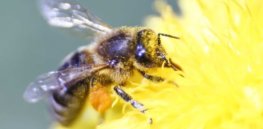
Mapped British honey bee genome could help safeguard hives against infectious disease
Efforts to protect the UK's native honey bees could be helped by research that maps their entire genetic make-up. Experts ...

‘Low to non-existent’ safety risks and higher yields support widespread adoption of GMO crops, researchers say
The anticipated world population growth emphasizes a need to produce more food on less land. Cutting-edge technologies, including genetic engineering, can ...

Countering severe peanut allergies through oral immunotherapy
Mom Monica Glover said the family discovered Ellis' peanut allergy when she was about 3. … Glover seized the opportunity ...

Genetic basis for fruit and vegetable shapes helps tell the story of plant evolution
From elongated oblongs to near-perfect spheres, vegetables come in almost every size and shape. But what differentiates a fingerling potato ...

Some wild bee populations are declining. What can we do about it?
In recent years, a significant amount of attention has been paid to the numerous threats that are facing the honeybee ...

Lab-grown ‘mini brains’ are similar to those of premature babies and why that’s a concern
‘Mini brains’ grown in a dish have spontaneously produced human-like brain waves for the first time — and the electrical ...

Let’s approach the GMO conversation with ‘cooler heads’ in 2019
As consumers strive to become more aware of food-production terms and practices, they often bludgeon farmers with a body of ...

Time Magazine’s coverage of glyphosate-cancer trial is ‘crying out for balance,’ biologist says
TIME magazine has a story on DeWayne ‘Lee’ Johnston who took Monsanto to court claiming RoundUp caused his non-Hodgkin lymphoma ...
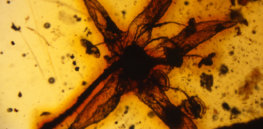
Why Darwin’s ‘abominable mystery’ may not be all that mysterious
For 140 years, scientists have been trying to explain what Charles Darwin described as “an abominable mystery”. Darwin was bothered by evidence ...

Rewired brain: Faulty autism gene may affect expression of other genes
TBR1 is among a select set of genes with strong ties to autism. The new findings explain that connection: Mutations in TBR1 may disrupt ...

‘Have and have nots’: Future of biotech is human modification
[I]n the next decade, the phrase [“have and have nots”] might mean "modded or unmodded"—as in, "have you been modified?" ...

Chinese researcher’s claims of gene-edited babies prompts investigation
A Chinese researcher who claims to have created the first gene-edited babies, He Jiankui of the Southern University of Science and ...

GMO cotton not to blame for farmer suicides in India, expert reconfirms to UN panel
An expert on Genetically Modified Organisms (GMOs) from India has told a UN conference on biodiversity that GMO cotton growing ...

Kenya will push for 10-year moratorium on foods produced with synthetic biology
Kenya will press for a moratorium on introduction of laboratory generated foodstuffs produced through synthetic biology when the Conference of ...
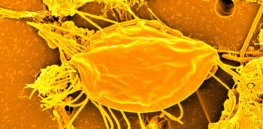
This tiny creature gives us a ‘completely new branch on the tree of life’
Canadian scientists have identified microscopic creatures that are so unlike anything seen before, they had to create an entirely new ...

Low-gluten, high-fiber wheat varieties may begin to hit the market next year
Last winter, Paul Sproule read an article regarding niche wheats being developed by Arcadia Biosciences, a Davis, California, agricultural biotechnology ...

DNA test for your dog? Here’s what your vet thinks about it
[T]he direct-to-dog-owner market has become bigger and more crowded: Embark, DNA My Dog, and Paw Print Genetics are just a few ...

New biocontainment strategy could prevent spread of GMO microbes in the wild
Hiroshima University (HU) researchers successfully developed a biocontainment strategy for …. GMOs. Their new method prevents genetically modified cyanobacteria from ...

Experts must counter ‘simplistic’ anti-GMO narrative with facts, says neurologist Steven Novella
The Pew Research Center has recently published a large survey regarding American’s attitudes toward food, including genetic modification .... There ...
