


Science Literacy Project Daily Digest

‘Cutting-edge’ artificial cells could boost precision medicine efforts
No biologist would mistake the microscopic "cells" that chemical biologist Neal Devaraj and colleagues are whipping up at the University ...

Uganda’s young cassava farmers want access to GMO crops
Though Uganda’s Parliament passed a biosafety bill [the week of November 26], it remains unclear whether it will benefit a ...

Targeting sperm in the quest for a contraceptive that doesn’t use hormones
Scientists are trying to create a new kind of contraception with a novel tactic: tangling up sperm so they can’t ...

‘Scarier than we knew’: Dementia-causing prions can spread through the eyes
One of the strangest things that can sicken us—a rogue misfolded protein that destroys the brain, known as a prion—is ...
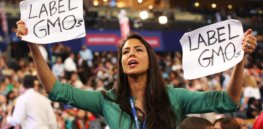
Why did CNN interview the ‘food babe’ about the romaine lettuce E. coli outbreak?
The Food and Drug Administration’s urgent warning about a romaine lettuce E. coli outbreak left many Americans wondering .... what ...

Not so-sterile brains? Researchers find harmless bacteria living there
In the latest example of bacteria being "literally everywhere," scientists appear to have found evidence of microbes living harmlessly in ...

How do scientists counter ‘fake news’ in the era of InfoWars?
Within the scientific community, much attention has focused on improving communications between scientists, policy makers, and the public. ... [W]henever ...

Artificial vs natural? Ocean Spray sued for using synthetic flavor in its cranberry juice
Ocean Spray, the company that makes several popular cranberry juice drinks, is battling a class-action lawsuit brought by two plaintiffs ...

Attacking Parkinson’s with ‘reprogrammed’ stem cells
Japanese neurosurgeons have implanted ‘reprogrammed’ stem cells into the brain of a patient with Parkinson’s disease for the first time ...

French regulators launch re-evaluation of glyphosate products
The National Health Security Agency (ANSES) is tightening [its] grip around the herbicide king [glyphosate]. On December 15, it will withdraw ...

Only half of psychology studies can be replicated. That’s a big problem
Over the past few years, an international team of almost 200 psychologists has been trying to repeat a set of ...

How anti-GMO groups and ‘Russian trolls’ influence public perceptions of science
A new opinion poll suggests that Russian trolls, aided by anti-GMO groups such as the Center for Food Safety and ...
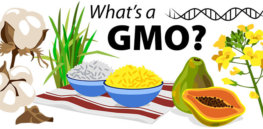
GMOs 101: Experts break down the basics of crop biotechnology
An online search for “GMO” returns more than 88 million results — a tangled mess of frightening images, dense data, ...

‘Wild and frightening possibilities’: How AI and genomics could affect reproduction
[Jamie] Metzl is a senior fellow at the Atlantic Council and author of the upcoming book Hacking Darwin: Genetic Engineering and ...

Climate change spurs research to develop heat-tolerant rice, wheat
Wheat with DNA tweaked to beat the heat, and redesigned rice that can flourish in hot, dry conditions. Work is ...

What if you think you’re Black, but your DNA test disagrees?
Three years ago, when Sigrid E. Johnson was 62, she got a call from a researcher seeking volunteers for a ...

Controlling harmful soil microbes may be key to protecting biodiversity
An international team led by researchers at The University of Manchester have discovered why some plants "live fast and die ...

GMO crops may be necessary to counter impacts of climate change, study shows
New research suggests that the type of yield gains made possible by genetic engineering (GE) will be needed to offset ...

Podcast: Countering the ‘culture of alarmism’ surrounding modern farming
The culture of alarmism is an unending and relentless drumbeat that everything sold in the grocery store, every piece of ...

This mom and gardener doesn’t fear glyphosate—and says we shouldn’t either
One of the perpetual battles I’m fighting these days is countering the misinformation about pesticides that gardeners like me responsibly ...

GMO corn doubles crop yields in Paraguay, report shows
The use of transgenic maize doubled the production of the cereal in Paraguay during two decades of variety planting. A ...

Is there any evidence to support ‘leaky brain’ theories?
Three years ago Mark Crislip wrote about leaky gut syndrome for SBM. He said, “because of an almost complete lack of supporting basic ...

How will gene editing impact agriculture? Experts offer 10 predictions
In the U.S., it’s full speed ahead for gene editing in animal agriculture. In August, the biotech company Recombinetics, based in ...

How air pollution could increase risk of autism
Prenatal exposure to ambient air pollution was associated with an increased risk of autism spectrum disorder, a new study finds ...

UN rejects gene drive moratorium, but agrees to some limits
Nations rejected a proposal to temporarily ban the release of organisms carrying gene drives — a genetic-engineering technology designed to ...
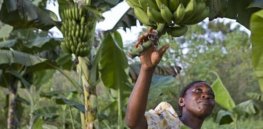
Newly passed biosafety bill in Uganda aims to ensure ‘safe development’ of GMO crops
Parliament has passed the Genetic Engineering Regulatory Bill, 2018, formerly known as the National Biotechnology and Bio-safety Bill. The bill ...

There is a ‘broad scientific consensus’ on GMO crop safety, expert affirms
Despite the long enunciated national policy of safe, responsible use of modern biotechnology, a few local government units in the ...
