


Science Literacy Project Daily Digest

Land sparing or land sharing: How do we feed the world while protecting the environment?
It is one of the biggest questions in conservation: Should we be sharing our landscapes with nature by reviving small ...

Searching for the genetic links to ADHD risk
If you have ADHD, chances are higher that your siblings do, too. Estimates differ as to how strong the connection ...

‘Overblown’ fear of biotech crops hinders scientific progress, Nobel laureates warn
Winners of this year’s Nobel prize for chemistry say overblown fears about genetically modified foods risk preventing society benefiting from ...

Are dogs really all that smart? This study says ‘no’
If you are convinced your dog is a genius, you may be disappointed in the conclusions of a study just published ...
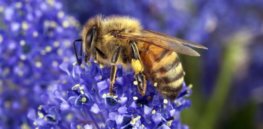
Edible vaccine may protect honey bees from deadly microbial infections
A growing number of honey bees die each year due to pesticides, vanishing habitats, poor nutrition and climate change, with ...

Transplanted uterus leads to successful birth of baby girl
A team of doctors in Brazil have announced a medical first that could someday help countless women unable to have ...

Human, Neanderthal mating was more than just a ‘one night stand’, study suggests
Once upon a time, prehistoric humans and our ancient Neanderthal cousins met and procreated. Except, that ‘once upon a time’ ...

Can we restore ‘sight’ with brain implants, electrical currents?
In a sense, our eyes are sophisticated cameras; the brain’s visual cortex runs the software that tells us what we’re seeing. … What about ...

PEW survey: Half of Americans believe GMOs pose health risks and are linked to use of food additives
A new Pew Research Center report shows an American public that is closely divided over [food] additives, and genetically modified (GM) crops ...

Viewpoint: Why we need to better understand sexual orientation, gender identity in autism
In contemporary media, portrayals of autistic people are typically stereotyped and conventional: heterosexual, cisgender and, more often than not, naïve ...

A farmer’s ‘naughty list’: Activists, celebrities and lawyers who spread the most misinformation in 2018
That’s right: it’s almost time for the jolly old fat man to visit homes around the world to deliver presents ...

Have GMO crops cut herbicide use? A tale of two conflicting studies
We have planted millions of acres of genetically-engineered (GE) crops, a vast majority of which are resistant to herbicides. In ...

Converting thought to speech: Brain implants could help paralyzed patients communicate
[Neurosurgeon Ashesh Mehta] was operating on [an] epilepsy patient to determine the source of seizures. But the patient agreed to ...

Genome surgeons target genetic disease at the source
[Delaney Van Riper] was born with a rare genetic disease called Charcot-Marie-Tooth, or CMT, which is slowly eroding her nerve cells’ ...
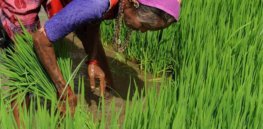
GMO crops may help keep arsenic out of India’s food supply
An Indian scientist in the UK is working on a way to grow crops in arsenic contaminated soil, a study ...
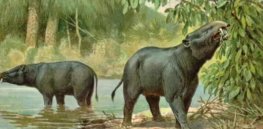
Why humans may not be to blame for ancient African mammal extinction
New research has disputed a longstanding view that early humans helped wipe out many of the large mammals that once ...
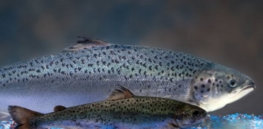
Canada launches new safety review of AquAdvantage GMO salmon
CBC News has learned AquaBounty’s genetically modified salmon is going through a new federal risk assessment. Environment and Climate Change ...
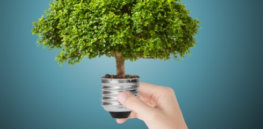
We need to produce 56 percent more calories by 2050—can we do it sustainably?
If the world hopes to make meaningful progress on climate change, it won’t be enough for cars and factories to ...
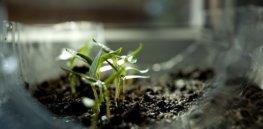
‘Switching off’ genes could speed efforts to breed disease-resistant plants
Researchers from [the French Agricultural Research Centre CIRAD] recently showed that inactivating a gene, RECQ4, leads to a three-fold increase ...
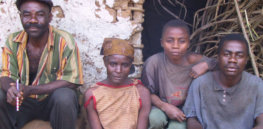
Missing data? African study shows why we need to expand the human reference genome
The human genome sequence, first published in 2001, has some important information missing. The latest version of it, called GRCh38, ...
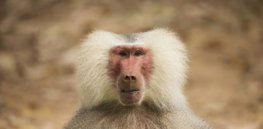
Baboons given heart transplants from genetically engineered pigs—humans could be next
In four adjacent enclosures transplantation researcher Bruno Reichart kept four happy baboons. … Most importantly, he says, they were healthy ...
GMO crops and herbicides: A ‘win-win’ for farmers and the environment, plant scientist Wayne Parrott says
A fertile soil is a microbial wonderland .... a tiny ecosystem too small to see with our eyes. Yet, the ...

How Russian ‘disinformation’ could threaten our biosecurity
In a series of increasingly confrontational statements, Russia has suggested that the Pentagon is establishing a chain of bio-weapons labs ...

Farmers, here’s what the public wants to know about food
Tyson Foods is the biggest U.S. food company .... [E]arlier this year it formed the Trendtellers Council and packed it ...
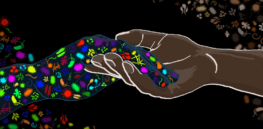
Are our microbes part of us? ‘Radical upgrade’ of evolutionary theory
Look closely enough at any plant or animal and you will discover a riot of bacteria, fungi and viruses forming ...

Viewpoint: DNA fitness test claims are ‘misleading’
The sales pitch is compelling: By revealing the secrets locked inside your DNA, genetic testing can optimize your workout gains ...
Rejecting GMO crops is a risky decision, experts say
Every new or improved technology, regardless of its particular field or application, can involve risk, potential risk, or perception of ...
