


Science Literacy Project Daily Digest

Alien limb syndrome: Understanding how brain injuries can rob the sense of free will
When Ryan Darby was a neurology resident, he was familiar with something called alien limb syndrome, but that did not ...
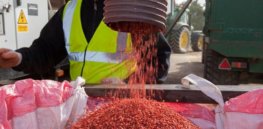
UK farming minister says neonicotinoid ban has boosted pesticide use
[UK] Farming Minister George Eustice has admitted the recent ban on neonicotinoids has actually increased overall pesticide use. Mr Eustice made ...

Is evolution denial an attempt to ‘make humans special’?
Evolutionary biology has always been controversial. Not controversial among biologists, but controversial among the general public. This is largely because ...

Revolutionary hybrid plant clones could cut costs for farmers
Plant biologists at the University of California, Davis, have discovered a way to make crop plants replicate through seeds as clones ...

Can gene therapy offer a cure for sickle-cell disease?
[I]n November, six months after [21-year-old Manny] Johnson became the first patient to receive an experimental therapy aimed at curing ...

Fight against fall armyworm in Africa hindered by ‘anti-GMO sentiment’, scientist argues
Though anti-GMO sentiment is restraining agricultural advancement in the developing world, an Iowa State University agronomist hopes his research will ...

Searching for keys to cancer resistance in the genome of giant tortoise Lonesome George
An international research team has discovered several variants in tortoise genomes that potentially affect six of the nine hallmarks of ...

Viewpoint: FDA’s plan to regulate gene-edited animals as drugs is a ‘failed policy’
Some bureaucrats in the Trump administration seem not to have gotten the memo about deregulation being good for innovation, the ...

‘Interesting puzzle’ created by hand tools found near long-vanished Arabian rivers
Nearly 200,000 years ago, at the confluence of two long-vanished river systems in the heart of Arabia, people climbed a ...

Do GMO American chestnut trees pose a threat to the environment? Two new studies say no
Two new studies on the environmental impact of transgenic American chestnut trees provide evidence that the trees have no harmful ...

Can we feed a growing world population without using yield-boosting technologies?
The production of food has environmental impacts, there is no way around this .... Nature is ruthless and weeds will ...
NIH blocks research using fetal tissue, prompting calls of ‘scientific censorship’
Researchers at the National Institutes of Health have been ordered not to acquire new fetal tissue for their research since ...
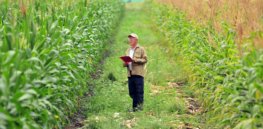
Is climate change ‘robbing’ our food of nutrients?
Is it possible to starve yourself of nutrients while simultaneously gaining weight? .... According to a growing body of research, ...

Delayed diagnosis? In some children, autism traits become ‘significantly more pronounced over time’
Some autistic children don’t show traits of the condition until age 5 or later, new research suggests. Others show a ...

Treating depression with brain-stimulating implants
[A] new study out of the University of California, San Francisco, published [November 29] in Current Biology, seems to offer an intriguing ...

Viewpoint: Science needs to embrace the difference between sex and gender—without abandoning the past
Lots of sites, including three scientific societies, have rejected the new Health and Human Services guidelines that provide a classification of ...
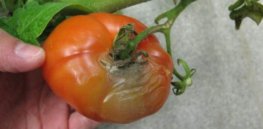
Using biotech to turn plants into ‘antifungal factories’ could protect against disease
Researchers [at the Centre for Research in Agricultural Genomics (CRAG) in Spain] have developed a biotechnological tool to produce .... antifungal ...

Viewpoint: Criticism of GMO crops in India is ‘deeply flawed’
A review article, “Modern technologies for sustainable food and nutrition security,” which appeared in the November 25 issue of the ...

Startling discovery: Ancient mixed-race girl had Neanderthal and Denisovan parents
[T]ens of thousands of years ago, modern humans encountered Denisovans – and had sex with them. It is a startling ...

Will gene editing boost food production? The potential of a ‘revolutionary technology’
Genome-editing tools provide advanced biotechnological techniques that .... have been utilized in a wide variety of plant species to characterize ...

Video: Glyphosate and other health ‘boogeymen’ aren’t causing all diseases
Should John Oliver decide that he’s had enough, perhaps because generating sarcasm is exhausting, there is someone who can slip ...

Artificial placentas could transform research into miscarriages, still births and other pregnancy disorders
Scientists have grown “mini placentas” in a breakthrough that could transform research into the underlying causes of miscarriage, stillbirth and ...

Should law enforcement have a universal genetic forensic database?
The idea of the government having access to every citizen’s DNA might sound like an Orwellian nightmare, but recent events suggest we’re ...

GMO bacteria could help resolve Africa’s plastic pollution ‘menace’
African scientists are calling for investments in the application of biotechnology to deal with the world’s plastic pollution problem. They ...
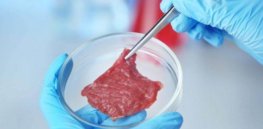
Lab-grown meat is coming soon—but will anyone eat it?
As 2018 wraps up, the average American is poised to have eaten 222 pounds of beef over the course of ...

Mitochondrial DNA can be passed on from fathers, too
You probably learned two things about mitochondria in high school biology. First, they’re the powerhouses of the cell. Second, you ...

Viewpoint: Intensive agriculture is the only way to sustainably feed the world
[In December], the World Resources Institute (WRI) released a comprehensive study embracing agricultural intensification as the only way to simultaneously close what ...
