


Science Literacy Project Daily Digest

‘Baby bust’—Why fertility rates are plummeting around the world
There has been a remarkable global decline in the number of children women are having, say researchers. Their report found ...

How GMO crops can be engineered to ‘rehydrate’ after intense drought
Scientists at the RIKEN Center for Sustainable Resource Science in Japan have found that the protein NGA1 is critical for ...

How we can improve mortality rates for people with mental illnesses
[P]eople with serious mental illness die 10 to 25 years earlier than the general population. It’s not difficult to understand why. Even ...

Evolved adaptation: Challenges to Darwin’s belief that mutations are random and neutral
When Charles Darwin articulated his theory of evolution by natural selection in On the Origin of Species in 1859, he ...

How plants have shaped the course of human history
Quinine (Scientific name: Cinchona) is a plant that has influenced the course of human history. Used for centuries by the indigenous ...

Brains of fetuses could suffer from exposure to marijuana
Marijuana has been legalized in some capacity in 31 U.S. states, in large part due to a softening stance around ...

Genetic engineering is changing our food. An expert explains everything you should know
SCIENTISTS CONTINUE TO find new ways to insert genes for specific traits into plant and animal DNA. A field of promise—and ...

Epigenetic clues could assist crime investigations by revealing age range, lifestyle habits of suspects
[The] field of forensic epigenetics [uses] the markers that sit on top of DNA and modify it’s expression, rather than the ...
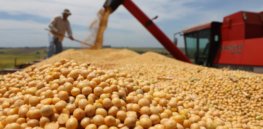
Gene silencing could ‘fool’ plants into surviving harsh environments
By temporarily silencing the expression of a critical gene, researchers fooled soybean plants into sensing they were under siege, encountering ...

‘It’s not too late’: The quest to reverse autism at any age
[T]he average age of diagnosis for a child with autism is over four years. Because of late diagnoses, many of ...

‘Soylent,’ ‘clean meat,’ ‘Impossible Burger’: What we call food is just as important as how it tastes
When we talk about the food of the future, we conjure images from science fiction: the pureed brown stuff in ...

Resurrecting Earth’s ancient enzymes in quest to make more effective drugs and chemicals
In the 1990 Michael Crichton novel "Jurassic Park," scientists resurrect extinct species, with disastrous, page-turning consequences. But what if the ...

Hypoallergenic foods: Genetic engineering could help prevent 30,000 US ER visits annually
Hortense Dodo has genetically engineered a hypoallergenic peanut. But she isn’t targeting people with peanut allergies. Not directly, anyway. ...

Epigenetic changes in plants could help produce food crops better suited to harsh environments
The sequence of genes passed on to daughter cells or offspring isn't the only factor that determines the traits of ...

If aliens exist, we could signal them with a massive laser…and why that’s a bad idea
If extraterrestrial life exists in our neck of the Milky Way, how would we make our presence known to one ...

Creating life from the ‘bottom up’: Can we make cells from scratch?
There were just eight ingredients: two proteins, three buffering agents, two types of fat molecule and some chemical energy. But ...

GMO ‘frankenwheat’ for breakfast? A closer look at popular but misleading food memes
Ever play a game of telephone when you were a kid? You start with a message, whisper it in someone’s ...

‘Blinding speed’: How an ice age led to the populating of the Americas
Tens of thousands of years ago, two gigantic ice sheets smothered the northernmost parts of what has since been named ...

Gene sequencing could help researchers breed cold-resistant crops
When temperatures fall below 32 degrees, crops exposed to the elements undergo biochemical changes designed to protect cells from cold ...

Audio: Greenpeace, UK farmers and chemical industry square off over neonicotinoid pesticide ban
The debate over neonicotinoids continued ... during a BBC Radio segment as farmers, environmentalists and the chemical industry weighed in on ...

‘Synthetic media’: How AI could make the era of ‘fake news’ far worse
In the emerging world of “synthetic media,” the work of digital-image creation—once the domain of highly skilled programmers and Hollywood ...

Can loneliness and isolation damage the brain?
Mice yanked out of their community and held in solitary isolation show signs of brain damage. After a month of ...

We should stop saying biotechnology can ‘change the world,’ expert argues
It is common to hear claims that biotechnology will solve many of the world’s most perplexing problems. For example, a ...

‘Transcontinental pollination’: How migrating insects enable plants to mix
Metabarcoding, a technique of mass DNA sequencing, allows for tracing migratory routes of insects, an understudied subject due to technical ...

Meet Grunya Sukhareva, the forgotten woman who defined autism
[In 1924,] a gifted young doctor, Grunya Efimovna Sukhareva, saw [a 12-year-old] boy. Caring and attentive, she observed him with ...

Forget Old McDonald, farmers must communicate consumer benefits of modern agriculture
Most farmers are reluctant to talk about modern agriculture. Our own industry advertisements promote the image of a farm with ...

Did Neanderthals have their own language?
Did Neanderthals have language? Before trying to answer that, I should admit my bias: I’m team Neanderthal. As an anthropologist ...
