


Science Literacy Project Daily Digest

Using DNA to reunite immigrant families shows why genetic screening ‘should be widely embraced’
As the U.S. government struggles to make good on its promise to reunite all 3,000 children and parents who were separated ...

Building a better brain model by harnessing the power of AI
Neuroscientists have a lot of data on the brain—we can see it, take pictures of it, study it. But for ...

Remnants of ancient society found in Ecuador’s cloud forest
In the 1850s, a team of botanists venturing into the cloud forest in the Quijos Valley of eastern Ecuador hacked their way ...

Viewpoint: Here’s how to separate science from marketing hype on food labels
If your head starts spinning when trying to make healthy and budget-friendly food choices, you’re not alone. Take a look ...

How biotechnology can help feed a growing world population
According to the U.N., the world’s population is expected to grow to 9.7 billion in 2050 and further increase to 11.2 billion ...

Why our earliest memories are often imagined
If life is but a tapestry, then memory is the thread. But some of those threads may simply be imagined: ...

Expensive tastes? Testosterone linked to quest for status symbols
Whether it’s in his choice of top-shelf alcohol at the club, the watch on his wrist or the clothes he ...

Video: Inside the quest to improve farm animal welfare by tweaking their genes
For nine nerve-racking months beginning in the summer of 2014, Dan Carlson waited for his lab experiments to be born ...

Questioning EU neonics ban: Pesticides are ‘not a curse but a blessing’
Plant protection products and green genetic engineering [tools] are not a curse but a blessing, says Dr. Klaus Schlüter, a ...

Thinking like mom: Fatherhood makes male brains more maternal
The amount of time bat-eared fox fathers spend monitoring their young is an even bigger predictor of pup survival than maternal investment ...

Viewpoint: Why the term ‘GMO’ contributes nothing to debates over food safety
Many people believe that a so-called “genetically modified organism” (GMO) is a term that has some significance for interpreting the ...

How do we know if probiotics are safe if studies don’t report risks?
As consumer interest grows in probiotics and other supplements that claim to regulate gut microbes, experts are posing a critical ...
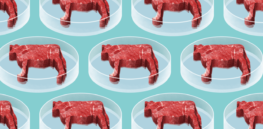
Viewpoint: Lab-grown meat could lead to a ‘greener, safer, and more humane future’
An emerging body of research unequivocally confirms the need to shift our diets away from a dependency on animal agriculture, ...
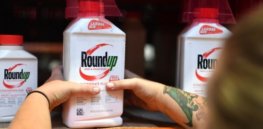
Monsanto defends its internal testing in Roundup cancer trial
A Monsanto scientist denied on [July 24th] that the company based its assertions that its Roundup weed killer doesn’t cause ...

Several European Union nations rebuked over efforts to sidestep neonicotinoid ban
At least two EU countries continue to use emergency exemptions to sidestep a ban on pesticides that scientists believe harm ...

Are farmers struggling to control weeds in the face of dicamba herbicide restrictions?
If there is one thorn in the side of Missouri farmer Tommy Riley, it’s pigweed. ...Riley told members of the ...

Deadly brain disease could be treated in the womb with gene therapy
A research team from the UK and Singapore showed that a neurodegenerative condition called Gaucher disease, which can be fatal, ...

USDA, World Health Organization butt heads over use of antibiotics in agriculture
The Trump administration is resisting the World Health Organization’s effort to sharply limit antibiotic use in farm animals... ... The WHO ...
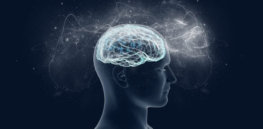
Why our brains are in the business of predicting the future
According to [the] “predictive coding” theory, at each level of a cognitive process, the brain generates models, or beliefs, about ...

One researcher’s unorthodox approach to understanding memory
Mostafa “Neo” Mohsenvand often walks around with a fisheye lens on a smartphone strapped to his chest and a black, ...

Infographic: Examining shared genetics of different psychiatric disorders
People who have autism, schizophrenia and bipolar disorder may have different challenges, but the ailments might arise from a common ...

Why is there so much ‘fear and loathing’ of anything biotech?
In this era marked by Grand Canyon-sized divides among Americans, there’s one subject that seems to unite people, no matter ...

Do omega 3 supplements protect against heart disease? New evidence says ‘no’
New evidence published [July 18] shows there is little or no effect of omega 3 supplements on our risk of ...

Could a good night’s sleep ‘clear away’ Alzheimer’s plaques from our brains?
Neuroscientist Barbara Bendlin studies the brain as Alzheimer’s disease develops. When she goes home, she tries to leave her work ...

Viewpoint: CRISPR crops have a chance to avoid the trust issues that plague GMOs
The National Academies of Sciences, Engineering, and Medicine on [July 18th] released a report on how to address the most pressing problems of American ...

Can you inherit a laugh? Book explores this and other genetics questions
Why are people today often taller than their ancestors? If you have blue eyes or red hair, does that mean your children will ...

Ahead of EU decision on new breeding techniques, Belgium acknowledges field trials of CRISPR-edited corn
Silently, the Flemish Institute for Biotechnology (VIB) has been conducting a field trial with [CRISPR-edited] maize for a year and a ...
