


Science Literacy Project Daily Digest

Video: Genetic Literacy Project founder Jon Entine on GMOs and ‘chemophobia’
In this episode of The Dissenter, Ricardo Lopes interviews Genetic Literacy Project founder Jon Entine about bioengineering, GMOs and "chemophobia." Ricardo ...

‘Will people eat it?’: The public opinion battle over CRISPR gene-edited food is just beginning
Zachary Lippman, a plant biologist at Cold Spring Harbor Laboratory, stood among 2 acres of his experimental crops, including some ...

What fossilized teeth tell us about human evolution
Examining the fossil record through the lens of evolutionary developmental biology may help scientists reassess the evolutionary history of humans ...
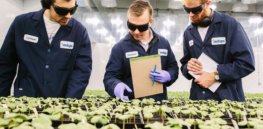
Agricultural tech startup Indigo uses microbes to improve crops
In humans, a healthy microbiome—the universe of bacteria, fungi, and viruses that lives inside all of us—is increasingly recognized as critical ...

Geneticist Alison Van Eenennaam: ‘First World’ anti-GMO activists perpetuate starvation in developing countries
Needed GMO technology to help citizens in Third World countries is being thwarted by activist groups in First World countries ...
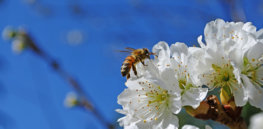
Not just pesticides: Honeybee health impacted by habitat loss, nutrition, pathogens and more
Around 2006, beekeepers and scientists started talking about something called colony collapse disorder. CCD at that time was a new phenomenon; suddenly whole hives of ...

Travel to Mars: Can gene therapy help us clear deadly radiation hurdle?
An international group of researchers has come up with a new plan to help astronauts survive high-level radiation in space ...

Some in Germany’s Green Party reconsidering long-held opposition to GMOs and genetic engineering
Genetic engineering is the devil's tool of the agricultural industry, dangerous to health and the environment. Or so you could summarize the ...

Hidden half of us: ‘You’re more microbe than you are human’
More than half of your body is not human, say scientists. Human cells make up only 43% of the body's ...

Can humans reproduce in space? NASA wants to know
If the thought of conceiving in space or the potential of one day giving birth there seem unimaginable and far-fetched ...
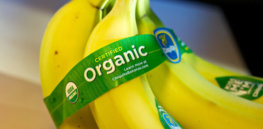
Viewpoint: Why ‘organic’ should be redefined to include GMOs
The challenges of sustainable food production without damaging the environment for a growing human population have increased considerably. The current ...
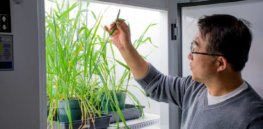
Will public embrace CRISPR crops if they can help feed our growing population and protect the environment?
Experts estimate we’ll be eating the first CRISPR produce — likely strawberries or another type of fruit — within five ...

Aftershock of Monsanto being stripped of its patent control over Indian Bt GMO cotton: It may doom domestic crop research, too
Sections of the government, egged on by powerful Andhra seed companies, are probably cheering the judgment of the Delhi high court’s ...

Traits of masculinity: What does it mean to ‘be a man’?
There are commonalities of human behavior that extend beyond any geographic or cultural boundary. Every known society has a sexual ...

Podcast: How anti-GMO activists used ‘fake news’ to attack University of Florida plant scientist Kevin Folta
In this episode, [Liz Haswell and Ivan Baxter] talk to Kevin Folta, Professor and Chairman of the Horticultural Sciences Department ...

23andMe founder Anne Wojcicki: No need for experts to interpret direct-to-consumer breast and ovarian cancer tests
My company, 23andMe, recently received FDA authorization for the first ever direct-to-consumer genetic test for an inherited risk for cancer. Specifically, it tests for ...

Evolution of the eyebrow and why it’s so important for communication
Modern humans might never have raised a quizzical eyebrow had Homo sapiens not lost the thick, bony brows of its ancient ...

All yeast strains likely descended from common ancestor in China
When scientists in France set out to sequence 1,000 yeast genomes, they looked at strains from all the places you ...

Viewpoint: Precision medicine based on white populations could ‘reinforce existing societal and economic inequalities’
Sequencing the human genome has shown us that we are mostly all made up of the same stuff, but it’s ...

Viewpoint: Both pro- and anti-GMO factions often lose sight of sustainable farming goals
In pursuit of sustainability, shoppers are reaching for the organic apple or the GMO-free chips. But if we truly want ...

Video: John Franz invented the herbicide glyphosate—is he a farming hero or villain?
Who's the man behind Glyphosate, and why is he winning some of the highest honors in science if his invention ...

Discovery of ancient finger in Saudi Arabia suggests humans left Africa 20,000 years earlier than assumed
It’s just a lone, boney middle finger, but the scientists who found it say it’s the oldest directly dated fossil ...

‘Natural traveler’? Humans may not be responsible for sweet potato’s migration from South America to Pacific
Of all the plants that humanity has turned into crops, none is more puzzling than the sweet potato. Indigenous people ...

Viewpoint: Gene editing in agriculture shouldn’t be regulated, whether applied to crops or animals
CRISPR has changed the way alterations are made; so in the past year the FDA clarified their position, any intentional ...

7 ways CRISPR gene editing is changing the world
Here are a few ways researchers are already using [CRISPR] to make the world a better place; 1. Produce transplant ...

The high price of food labels
Many people assume that organic and non-GMO foods are more expensive, but is that really the case? In the recently ...

Trellises not trees: Human populations have split, reformed and remixed over millennia
The ingrained notion – that there has only ever been one species of human being, Homo sapiens – is a latterday fiction ...
