


Science Literacy Project Daily Digest

Stem cell implants could provide ‘functional cure’ for type 1 diabetes
Last week, two people with type 1 diabetes became the first to receive implants containing cells generated from embryonic stem cells to ...

CRISPR revolution: How scientists are turning gene-editing hype into food and medical breakthroughs
The powerful gene-editing tool is becoming ubiquitous, appearing in the media with ever increasing frequency. But it's more than just ...

Viewpoint: Genetic data from criminals could help solve crimes and save lives
Three years ago in Albemarle County, Virginia, Jesse Matthew Jr. abducted and murdered promising 18-year-old University of Virginia student Hannah ...

Genome destruction: CRISPR used to remove entire Y chromosome in mice
Researchers have managed to wipe out an entire mouse chromosome using CRISPR-Cas9. They aimed numerous double-strand breaks at either the ...

Ebola ‘family tree’ suggests virus becomes more deadly as it evolves
From 2013 to 2016, western Africa faced an enormous outbreak of Ebola in which 28,616 people fell ill and 11,310 ...

Why do consumers prefer organic to conventional produce when both use pesticides?
What gets overlooked by [activist] groups are the reports from the USDA itself that show that even organic foods have ...
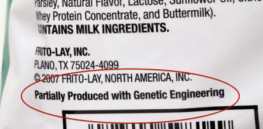
Controversy over GMO labeling has not increased public health concerns, survey finds
The Food Demand Survey has been conducted nationwide and monthly since May of 2013. In November of 2014, two states ...

Kenya to provide farmers with insect resistant Bt cotton seeds in pilot trials
A genetically modified cotton seed variety with high resistance to the Boll worm infestation is due to be released to ...

Conventional and biotech breeding methods together could revive the American chestnut tree
American chestnuts once dominated the Eastern woodlands. They were beautiful, tall trees with wide canopies and large white flowers. ...
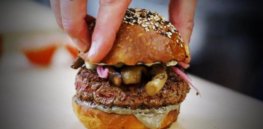
FDA questions safety of Impossible Burger’s veggie patties made with genetically engineered yeast
One of the chief selling points of the Impossible Burger, a much ballyhooed plant-based burger patty, is its resemblance to ...

We each have 3 billion base pairs in our genome. Artificial intelligence can help us sort it out.
Genes carry the information that make you you. So it's fitting that, when sequenced and stored in a computer, your ...
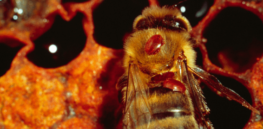
Central bee health threat—Varroa mite parasite—may be manageable using oregano oil
The ectoparasitic mite Varroa destructor is responsible for the death of millions of honey bee (Apis mellifera) colonies worldwide. Testing ...

Have the BRCA mutation? Debating a precautionary mastectomy? Your genes may provide a guide
A new study offers a better understanding of the risks, by age, associated with the BRCA1 and BRCA2 mutations. It ...

Could vertical farming revolutionize agriculture?
Plenty is no ordinary farm. Instead of growing greens outdoors, the farm grows its food on glowing, LED-lit 20-foot-tall towers inside ...

Genetically engineered coral might bring bleached coral reefs back to life
A coral reef takes thousands of years to build, yet can vanish in an instant. The culprit is usually coral ...

Census shows monarch butterfly population not in decline, but scientists challenge findings, blaming milkweed loss
Monarch butterfly populations have taken a nosedive over the last 20 years, according to researchers who monitor the number of ...

Information is power? Why insurance companies are concerned about the boom in consumer genetic tests
If a genetic test could tell whether you are at increased risk of getting cancer or Alzheimer’s, would you take ...

Scientists hoping to prevent two crop-eating caterpillar species from combining to form ‘super pest’
Australian-led research could help save the world's farmers more than $6 billion lost every year to its most voracious caterpillars ...

Are transgender people born that way?
A consortium of five research institutions in Europe and the US, including Vanderbilt University Medical Center, George Washington University and ...

Is life a ‘cosmic accident’ or do humans have a higher purpose?
Does humanity exist to serve some ultimate, transcendent purpose? Conventional scientific wisdom gives the answer as a definitive no. … According to [physicist Lawrence ...

Is there a genetic link between Alzheimer’s and higher childhood IQs?
Mutations of the amyloid precursor protein gene are known to be involved in the development of Alzheimer's disease. Now, new ...

Human germline editing ethics proposal: ‘No human pregnancy’
A team of genetics experts has issued a policy statement recommending that research on editing human genes in eggs, sperm and early ...

Ancient corn genome could unlock secrets of crop diversity and adaptation
[Kelly Swarts, a quantitative geneticist, and her] team sequenced the genomes of fifteen 1,900-year-old maize cobs found in [a Utah ...

Why hobby beekeepers may present the biggest threat to honeybee health
The much-publicized decline of the nation’s honeybee population is greatly exaggerated, according to the organizers of a new [Indiana] beekeeping ...

Some Catholic ethicists decry human embryo gene editing as ‘immoral’
Researchers in Oregon have announced that they have successfully altered genes in a human embryo for the first time in ...

Genetic drug-sensitivity tests can predict response to tuberculosis treatment in hours
Research led by scientists at Harvard Medical School reveals that when it comes to predicting response to treatment and risk of dying, ...

Farmers’ ‘double whammy’: Drift damage from dicamba herbicide and then its subsequent ban
An advanced weed-killing chemical has twice come back to haunt Arkansas farmer John Weiss. The herbicide, known as dicamba, has ...
