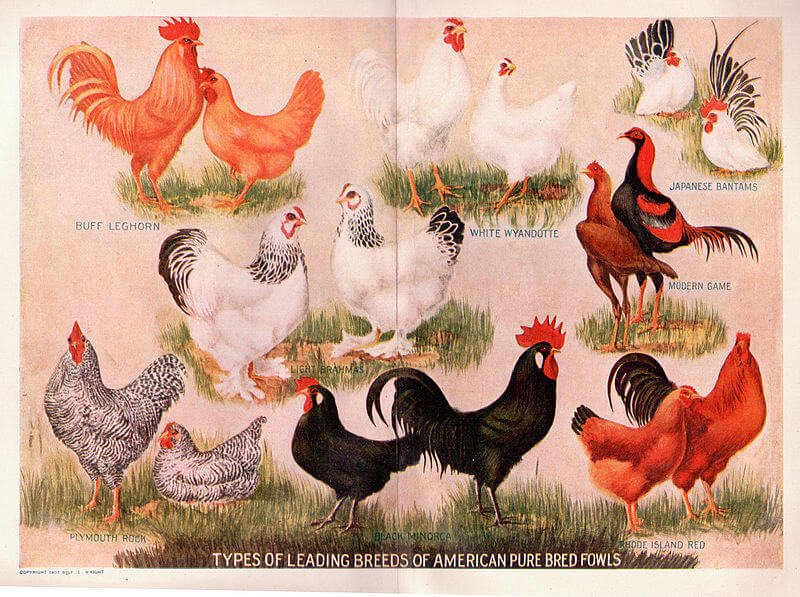
Consider the chicken. This bird is ubiquitous but hardly homogeneous. The variety of uses we’ve been able to coax out of the chicken’s genome is impressive. Nature’s Ewen Callaway gives a sample:
The animals have been bred for eating, egg-laying and fighting. And in the case of one particularly vocal breed, the creatures have even been strapped to the masts of Polynesian boats to act as foghorns.
Then there are the fancy chickens, bred into an assortment of increasingly absurd configurations like this seemingly blind fellow. Not to mention naked-necked chickens, which scientists are studying in the hopes of finding the genetic recipe for heat-resistant poultry.
As Gregor Larson, evolutionary geneticist at the UK’s Durham University, tells Callaway: “Chickens are polymaths.”
Larson is a senior scientist on a project called Chicken Coop, which is short for “The Cultural and Scientific Perceptions of Human–Chicken Interactions project.”
While the chicken’s expansion Eastward from its origins in Southeast Asia have been the subject of intense genetic scrutiny, how humankind helped the chicken move West — and changed its genome in the process — is poorly known. The Chicken Coop team makes the argument for their research on the site:
Given the social significance of this species (whether as a provider of foodstuffs, their widespread use in cock-fighting or within magic and medicine) and their growing popularity as domestic pets, a detailed analysis of their natural and cultural history in the West is long overdue.
Such a study has the potential to inform on poultry-borne diseases, food security and environmental ethics, issues of particular importance at a time when billions of people rely on mass-produced chickens as a source of sustenance.
These are the practical benefits, but because of their close association with humans, unraveling the history of our fowl friends is necessarily also a process of unraveling our own history. A study earlier this year used ancient chicken genomes to dispute the long-standing claim that Polynesian seafarers beat Europeans to South America.
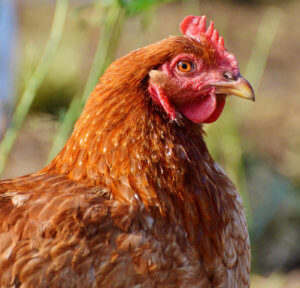



The Chicken Coop project, only five months old, has already turned up some surprises. The characteristic yellow legs of European chickens are a traceable mutation. Callaway explains:
Because these mutations are so common in contemporary chickens, Larson’s team and others assumed that humans influenced these traits through selective breeding early in the course of domestication.
But DNA from chickens recovered at archaeological sites across Europe, spanning the period from around 280 bc to ad 1800, has turned that idea on its head. In an analysis published last month, Larson’s team reported that none of 25 ancient chickens would have had yellow legs […] So even 200 years ago, chickens may have been very different from those we know today.
As is often the case with genomic research, a better understanding of the past may help improve our future. The Chicken Coop project hopes to find clues in the bones and genes of ancient chickens as to how diseases developed and spread through the species as we toted it around the world with us. Perhaps these clues will lead us to unlock still more from this polymath poultry.
Read Ewen Callaway’s original article at Nature News & Comment: “Chicken project gets off the ground“
Kenrick Vezina is Gene-ius Editor for the Genetic Literacy Project and a freelance science writer, educator, and naturalist based in the Greater Boston area.
Additional Resources:
- Chicken Coop project site
- “Chicken genomes and human history: What can the DNA of our animal associates can reveal about our past?” Kenrick Vezina | Genetic Literacy Project
- “Breeding heat-resistant livestock for a post-warming world: A worthy endeavor?” Kenrick Vezina | Genetic Literacy Project